

What’s going on out on the land?

Early Days In The Lives of White-tailed Deer Fawns
There was a sudden movement directly under where my foot was about to land. Something large and pale brown jostled about and I quickly called out and stumbled back. It took me half a second to realize that the large pale brown shape that was moving away from me was a White-tailed Deer fawn. Reflecting afterwards, I realized that I didn't know much about fawns, so I had to find out more...
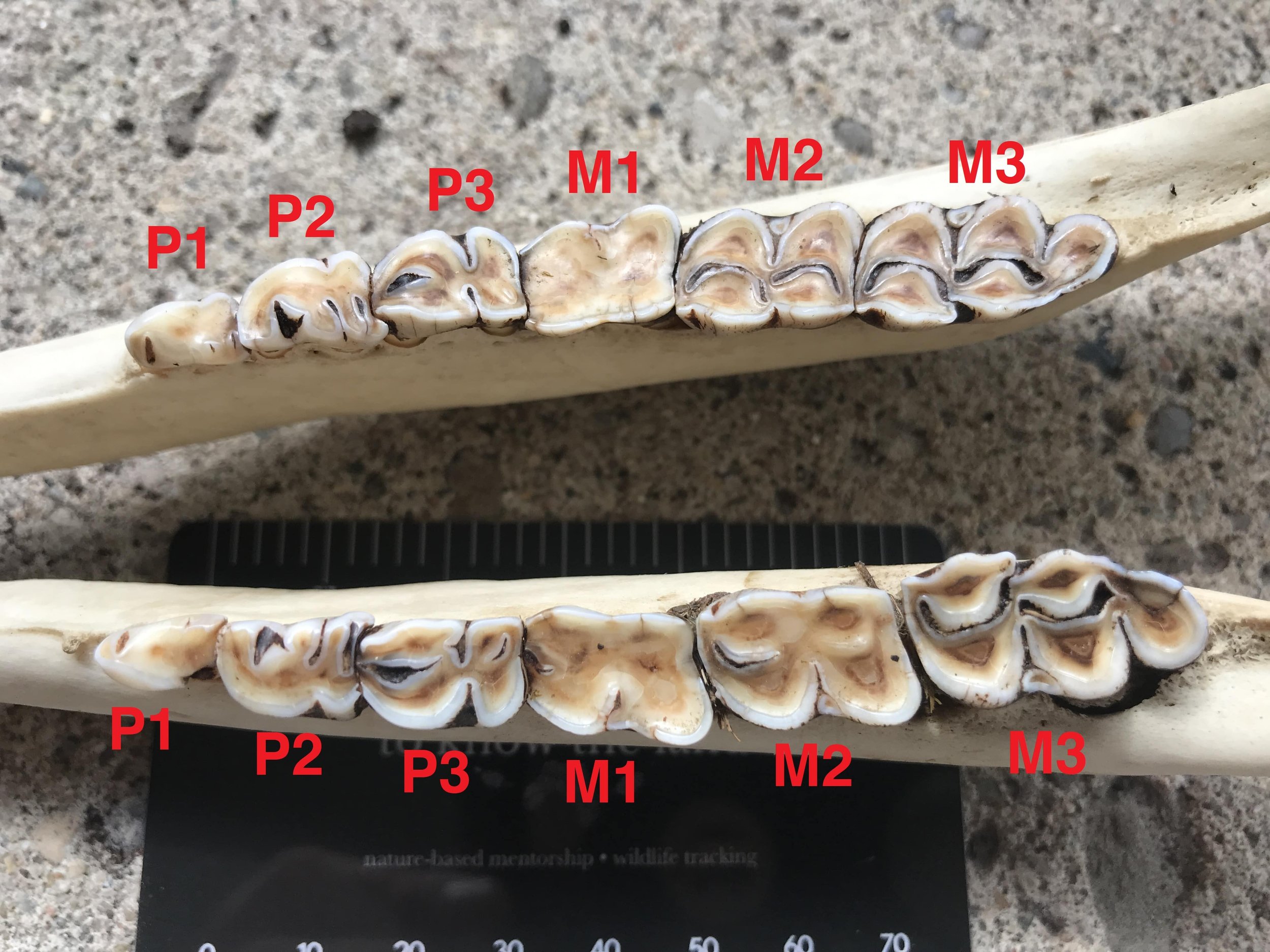
How To Age A White-tailed Deer by Looking At The Teeth pt. 2 : Older Deer
At the end of April I was attending a Track and Sign Evaluation. On the second day of the two day eval we came across a female White-tailed Deer carcass and were asked the question of how old the dead Deer was when she died. We were given three options to choose from based on what we could see. The three options were: A) 1-3 years, B) 4-7 years, or C) 7 and up.
Well, when I got home I started I realized I had a lot more research to do.
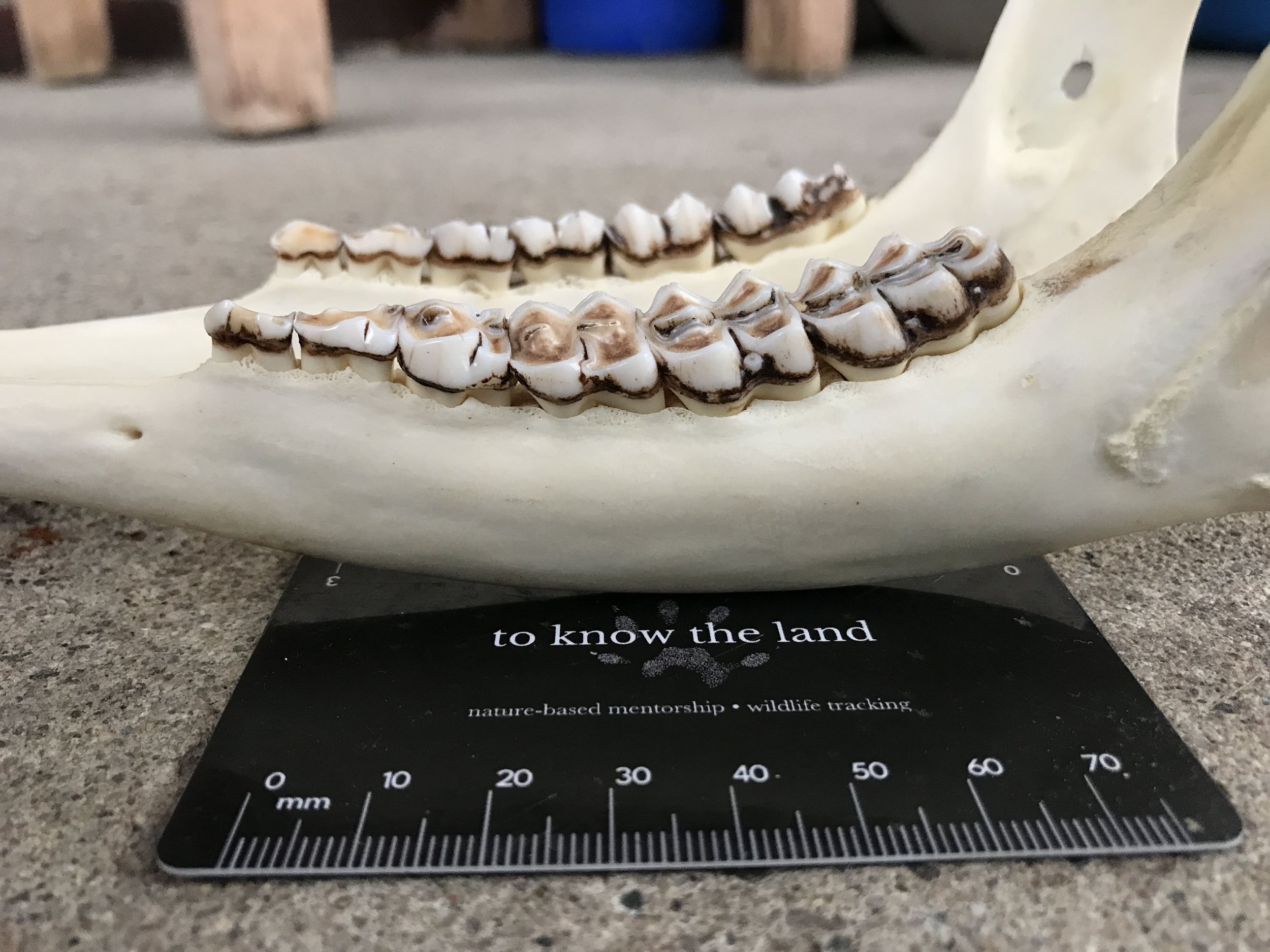
How To Age A White-tailed Deer by Looking At The Teeth, pt. 1 : Younger Deer
A lot has been studied and written about on the topic of White-tailed Deer. But despite reading a ton of it, I still find it trying to find all the various pieces of information and put it all together, unless I write it up myself. Here is my attempt to consolidate and better understand how we can come to know a deer’s age at the time of their death by looking at the teeth which remain.
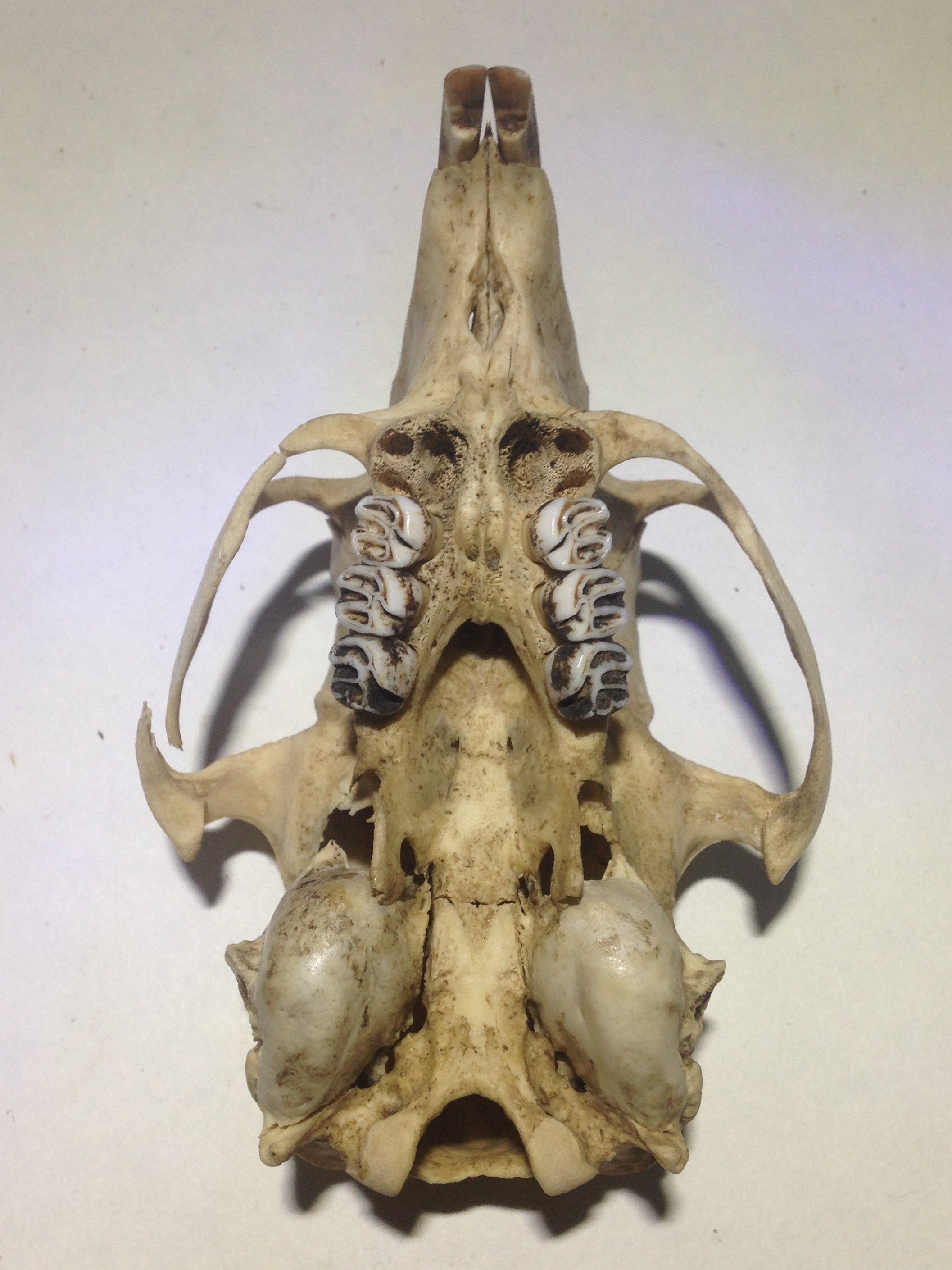
A Basic Guide to Non-Human Mammal Dentition
I am so grateful to have a partner who is willing to sift through my writing and show me things I have overlooked or left out. One of the things that was pointed out to me recently was that in a previous post I assume that folks know what I am talking about in regards to dental formula of Red Foxes and Coyotes. I knew I was bored of writing in the last one and didn’t want to side track too much, so I decided I would write a quick introduction to the teeth of mammals.
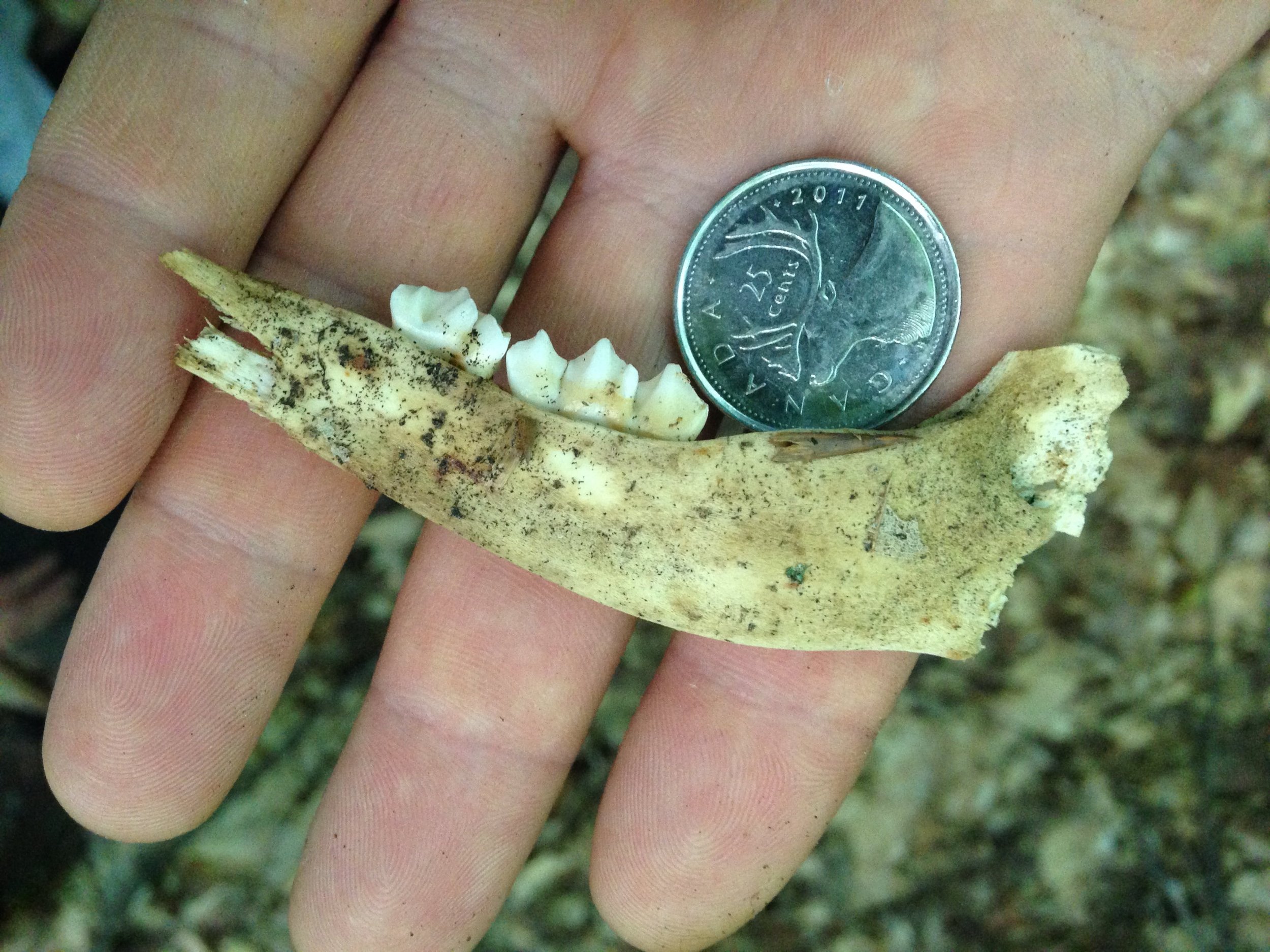
A mystery while tracking in Lake of Bays, 2022.08.13
The skill set of identifying a fresh trail with certainty in the jumbled quilt of the Summer forest floor is definitely an art and science with which I have little purchase… but a skill set that I do feel a growing confidence about is bone identification, and while making our way up the hill in the leaf little there was a small mandible laying fairly exposed with the lingual surface (the side which would be closest to the tongue in the living animal) facing the canopy.