A Short List of Bugs I have Eaten
I am very much interested in the edibility of invertebrates. Recognizing that most of the world commonly consumes insects and other inverts, I get to wondering why we in the Northern parts of Turtle Island/North America don’t really consume them. Yes, we do partake in the by products of insects, such as honey (bee vomit), or the products of insect labour (pollination of all of our fruits and vegetables), but not so much the bugs themselves.
In light of this wondering, I have been setting out to learn as much as I can about which insects I can eat, and how I can learn to prepare them. Below I will be creating an ever expanding list of insects and other inverts I have eaten and how I have prepared them.
Larvae
Goldenrod Ball Gall Fly (Eurosta solidaginis)
Description of invert : Tephritidae family. Fruit fly larva. Pale yellow to creamy coloured larva, about 5 mm long, though sometimes longer, sometimes shorter.
Where and when to find them : On stems of Goldenrods (Solidago spp.) of the Canada Goldenrod complex. Appear around July, but persist until the following Spring.
Preparation : Break apart the galls and look inside for the larva. Consumed raw.
Flavour profile : Sometimes tastes like butter, but sometimes a bit more bland. Later in the Winter through to early Spring, larvae may be “crunchier”.
Nutritional info : none available.
Notes : This was the first insect I began consuming regularly and continue to share with my own students. A favorite “party trick” of naturalist guides and nature walk leaders is to consume the larvae in front of a group of new naturalists. I am not above it.
Acorn Weevil (Curculio glandium)
Description of invert : Curculionidae family. Pale larva of a beetle, up to 9 mm long though often smaller, with reddish brown, or mahogany coloured “face”. Ridged throughout. Quite mobile (see video link at bottom of page).
Where and when to find them : I have found them when gathering Red Oak (Quercus rubra) acorns in early Autumn, but can also be found on Bur Oak (Q. macrocapus) and likely other native Quercus species.
Preparation : Consumed Raw.
Flavour profile : Slightly buttery and a bit nutty, though sometimes fairly tasteless.
Nutritional info : none available.
Notes : Female Acorn Weevils lay their eggs in the immature acorns within which the larvae feed and develop. When the mature acorn falls to the ground, the fully developed weevil burrows into the soil to overwinter. Look for a small hole in the sides of mature acorns to note the presence of weevils.
You may not get to eat the acorns, but you’ll get to eat the weevil!
Canada Thistle Gall Fly (Urophora cardui)
Description of invert : Tephritidae family. Yellowish larva.
Where and when to find them : Found during the growing season of host plant, Canada Thistle (Cirsium arvense). Located within an slightly tubular gall along the main stalk of the thistle. Often multi-chambered and containing multiple larvae.
Preparation : Consumed Raw.
Flavour profile : Again, slightly buttery, though sometimes fairly tasteless.
Nutritional info : none available.
Notes : Species introduced to Turtle Island/North America to help counter widespread growth of host plant, Canada Thistle (Cirsium arvense).
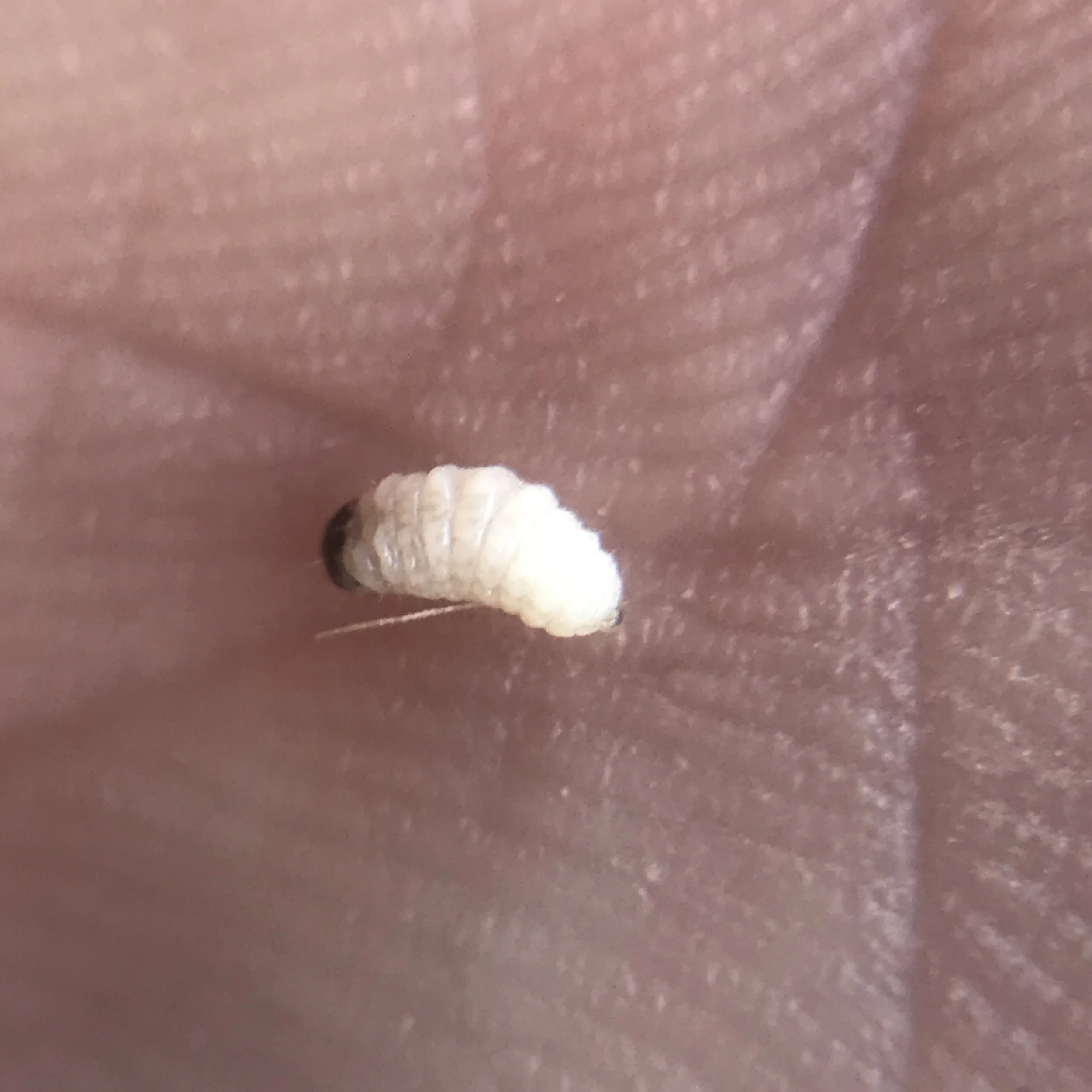
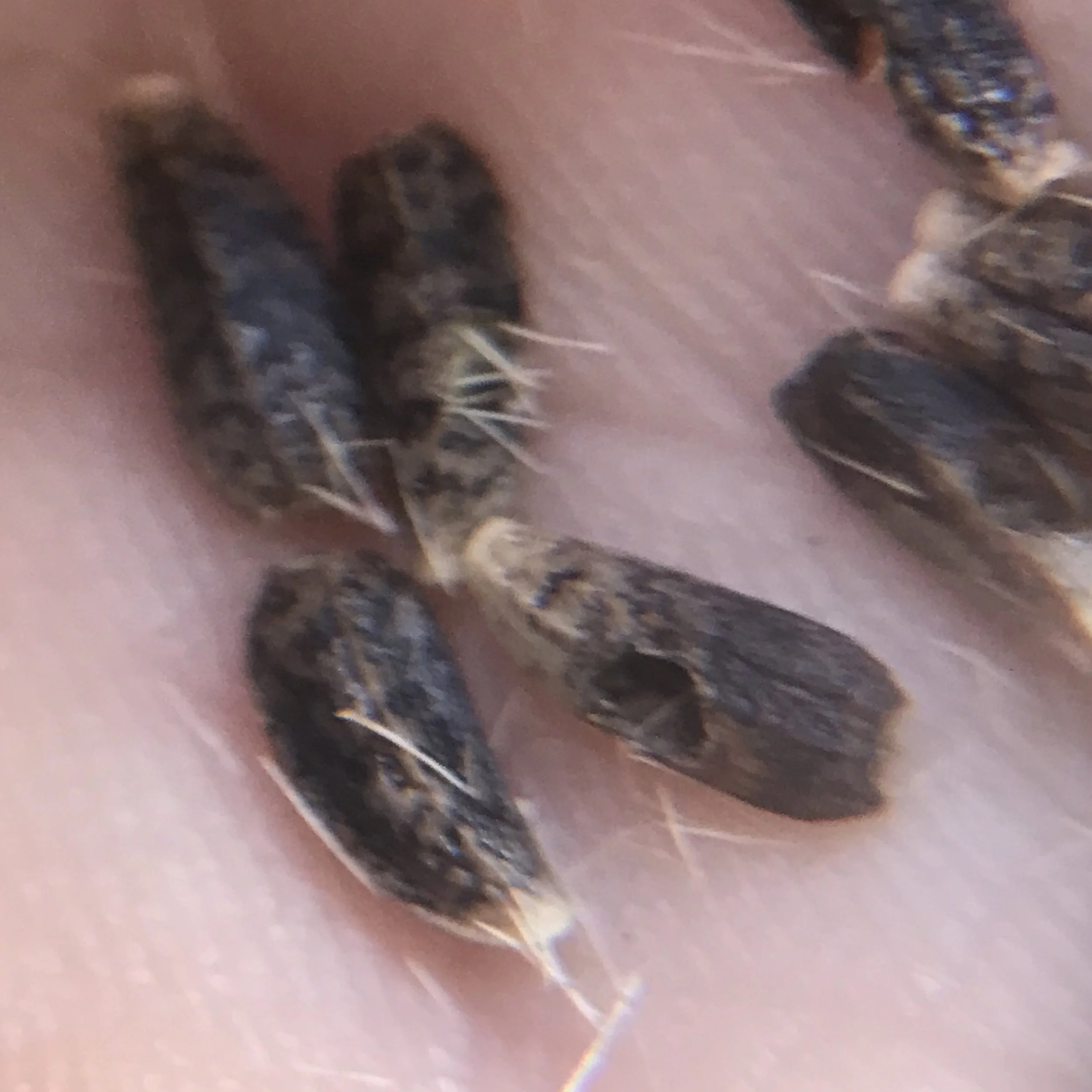
Burdock Seedhead Moth (Metzneria lappella)
Description of invert : Gelechiidae family. Pale, whitish larva. Ridged along the length of the body. Small “hairs” around the body near the head. Sort of mottled brown on the face.
Where and when to find them : I have found them in August and September in the seed heads of Common Burdock (Arctium minus) where they consume the inside of the seeds. Note chewed hole in the second image.
Preparation : Consumed Raw.
Flavour profile : Again, slightly buttery.
Nutritional info : none available.
Notes : Species introduced along with host.
Crustaceans
Rusty Crayfish (Faxonius rusticus)
Description of invert : Cambaridae family. Large crayfish with variable colours, sometimes greenish to brown to grey. Two distinct rust coloured spots on sides of carapace.
Where and when to find them : Found commonly in the Eramosa River and many rivers in Southern Ontario and Great Lakes bioregion.
Preparation : I remove the intestine and head before consuming. Intestine is extracted by splaying the five tail fins, rocking the middle one (telson) back and forth until a faint snap is felt. Gently pull the telson away from the body of the crayfish, pulling the intestine out while doing so. After removing the intestine, use a sharp knife to cut off the head. I do this by piercing the joint between the head and carapace and removing and discarding the head. Boil the body until bright lobster red. I have thrown away the occasional crayfish which did not turn red after boiling. Other animals consume this. After cooked, break open shell throughout the body to consume the soft white meat. Good with garlic butter, obviously.
Flavour profile : Similar to lobster, but it has been a while since I have eaten lobster so I can’t be sure.
Nutritional info : No sugar, fibre or carbs of any kind.
Per 100 grams, % is estimated Daily Value*
Calories 77
Total Fat 1g/1%
Saturated Fat 0.2g grams/1%
Polyunsaturated Fat 0.3g grams
Monounsaturated Fat 0.2g grams
Cholesterol 114mg milligrams 38%
Sodium 58mg milligrams 3%
Protein 16g grams
Calcium 27mg milligrams 2%
Iron 0.8mg milligrams 5%
Potassium 302mg milligrams 6%
Notes : Introduced species. Aggressive and displaces smaller local species. Illegal to put back in the water once removed, so… eating them might be the only ethical thing to do.
Ants
Common Citronella Ant (Lasius claviger)
Description of invert : Formicidae family. Small orangey yellow ants. Distinctive citronella/lemony smell when nest is disturbed.
Where and when to find them : I have found them throughout warm months of the year from April until October, usually under stones or logs, sometimes in mounds, often scurrying about relocating eggs after I have disturbed them.
Preparation : Consumed Raw.
Flavour profile : Beautiful bright and tart citrus burst, like the candy Pop Rocks but lemony.
Nutritional info : none available.
Notes : Commonly found. I smell them often when gardening.
Again, this is a growing list, which I am hoping to expand on overtime as I get more photos of that which I have already consumed, or get to try new inverts.
If you have familiarity with consuming insects and other inverts and you live in my bioregion, hit me up and let me know who you’ve been eating!
To learn more :
The overwintering biology of the acorn weevil, Curculio glandium in Southwestern Ontario by Hiroko Udaka and Brent J. Sinclair (pdf)
Video of Acorn Weevil (Curculio glandium) larvae found in Red Oak acorns (video)