Determining the Difference Between North American Porcupine and the North American Beaver Skulls
While out along the Boyne River with the Earth Tracks Wildlife Tracking Apprenticeship Program, I was walking through a mostly Sugar Maple (Acer saccharum) and Black Cherry (Prunus serotina) forest with a wide open canopy and beautiful partly cloudy, partly big blue sky when other apprentices started to emerge from the Eastern White Cedar (Thuja occidentalis) forest to the North of the deciduous forest where I was, sharing stories of a found skull. I love skulls so I stopped everyone as they came towards me to ask about who they thought the skull was from and why. I heard a variety of answers and I got pretty excited to check out the skull with everyone.
Everyone correctly identified the skulls as coming from a large rodent, which they could determine by the large incisors and relative largess of the skull itself, but it seemed like everyone had a different analysis on the identification of the species.
Skull identification is something I love and so I wanted to get into looking at two larger species of rodent in my area, and begin pointing out individuating characteristics of each species to help determine the species, even when a portion or most of the skull is absent. The two species I would like to cover are the North American Porcupine (Erethizon dorsatum), and the North American Beaver (Castor canadensis), both of whom are common throughout Southern Ontario.
As a note, whenever two skulls or bones are presented side by side, the photo on left will be the Porcupine and the photo on the right, Beaver.
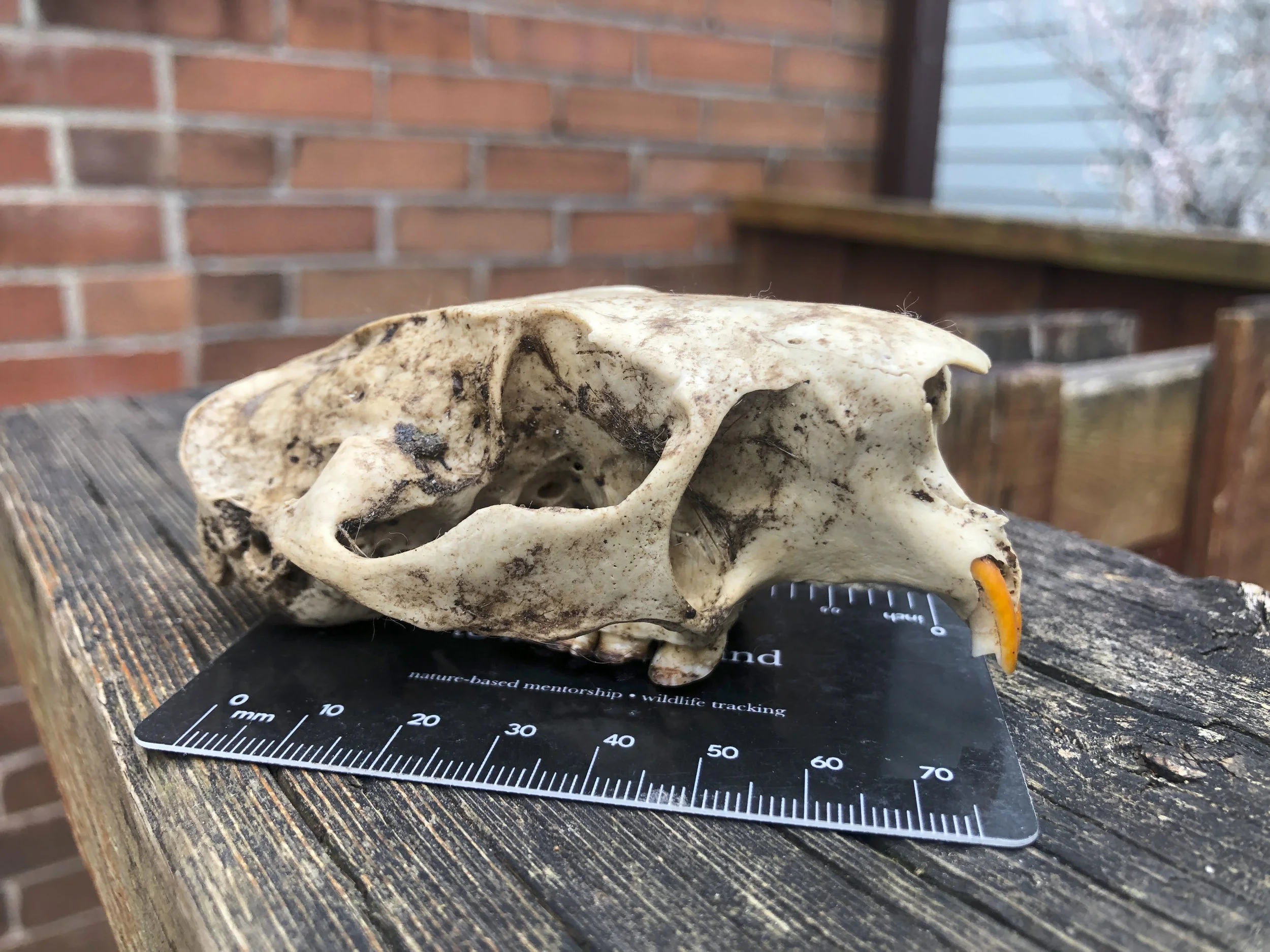
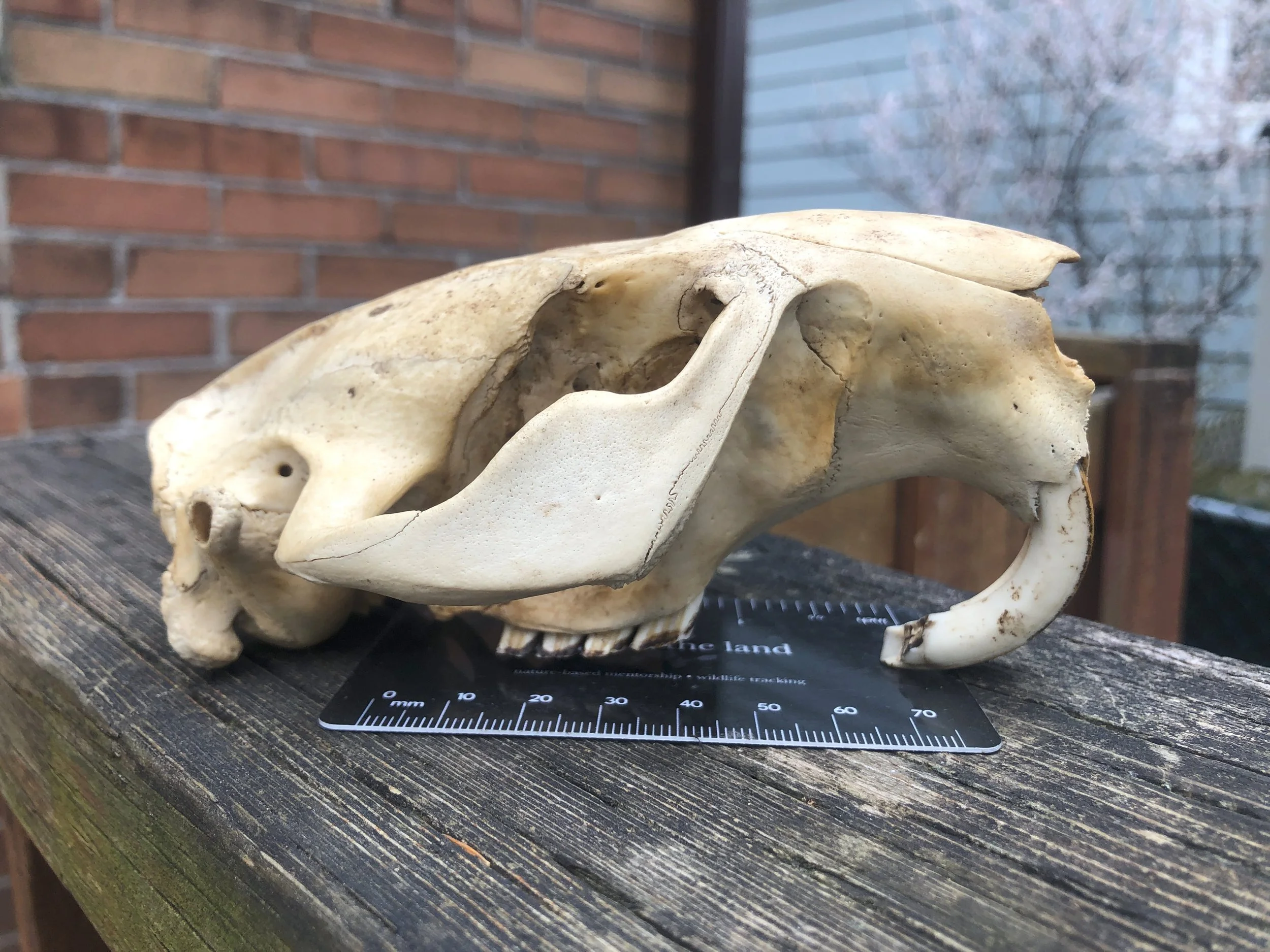
Some Commonalities Between Rodent Skulls
Rodent skull morphology can be very similar in some ways, but also very different in others. They all have large incisors (anterior or front most teeth) in relation to the size of the other teeth and the skull overall, which is often enameled on the anterior side. Rodents also tend to have a long diastema (the space between teeth) between the incisors and the premolars. This may be a space where we might find canines in other taxonomic orders but in the Rodentia, there are no canines. In Mark Elbroch’s book Animal Skulls (2006) he also notes that among all rodents, they never have more than twenty two teeth which is a cool thing to consider and wonder at why? Lastly, most Rodent skulls I find appear to me as long, narrow, and rounded along the top of the cranium.
Now, let’s look at some differentiating features between the Beaver and the Porcupine.
Some Differences Between Beaver and Porcupine
I want to eventually break down the differences based on sections or segments of the skulls, but overall the first big difference I notice between the skulls of the two species is the overall size. Beaver skulls are much larger than Porcupine skulls. “Chonky” might be a good descriptor for the Beaver skull. They are quite heavier and more robust throughout compared to the Porcupine, and while this is better understood in comparison with two skulls in the hand or in photos, I believe it is still quite obvious when you have found only a single skull in the field and are looking to make the i.d.
Greatest skull lengths according to Elbroch 2006
Beaver : 158.6 mm
Porcupine : 120.1 mm
Premaxillaries
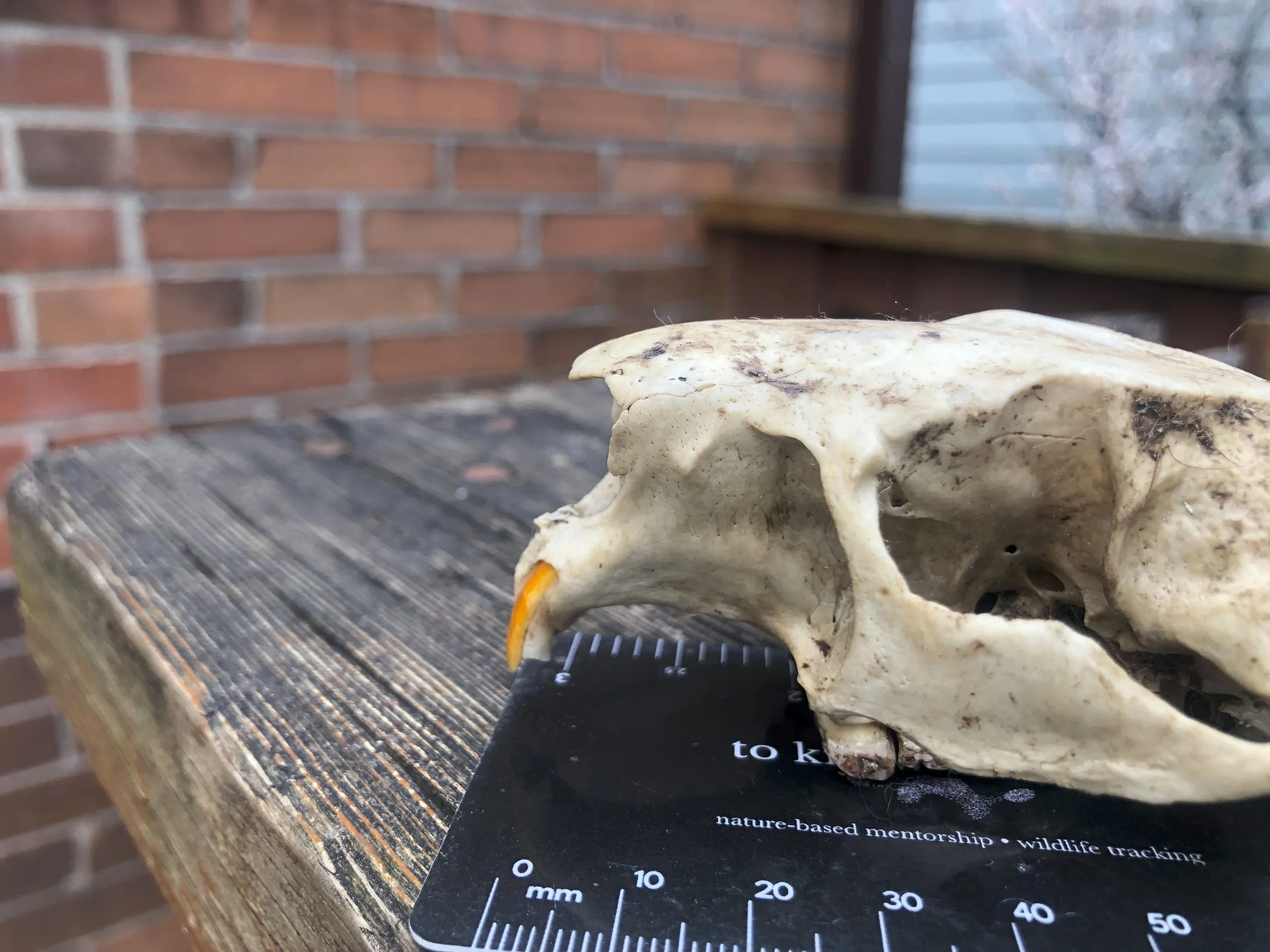
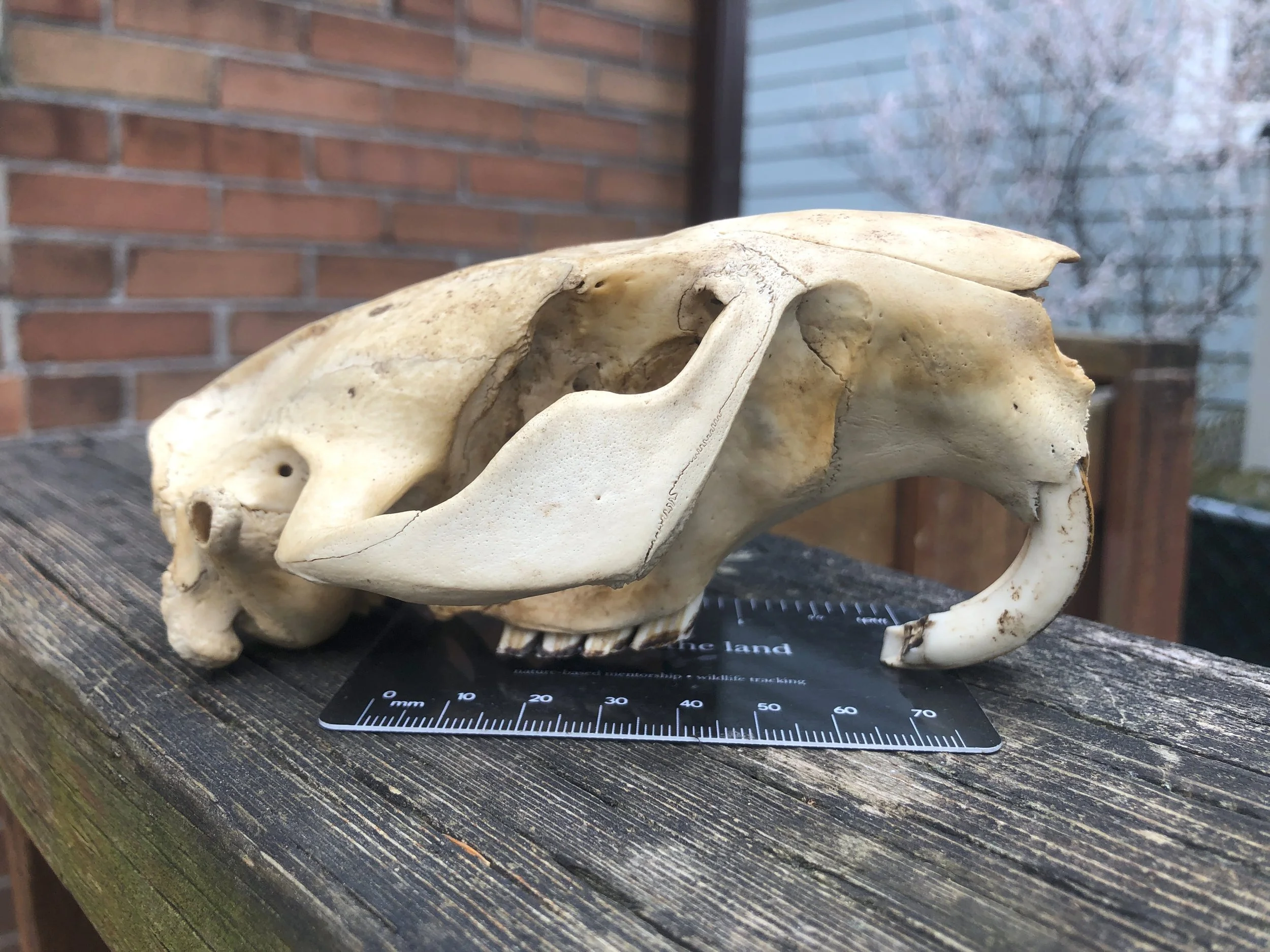
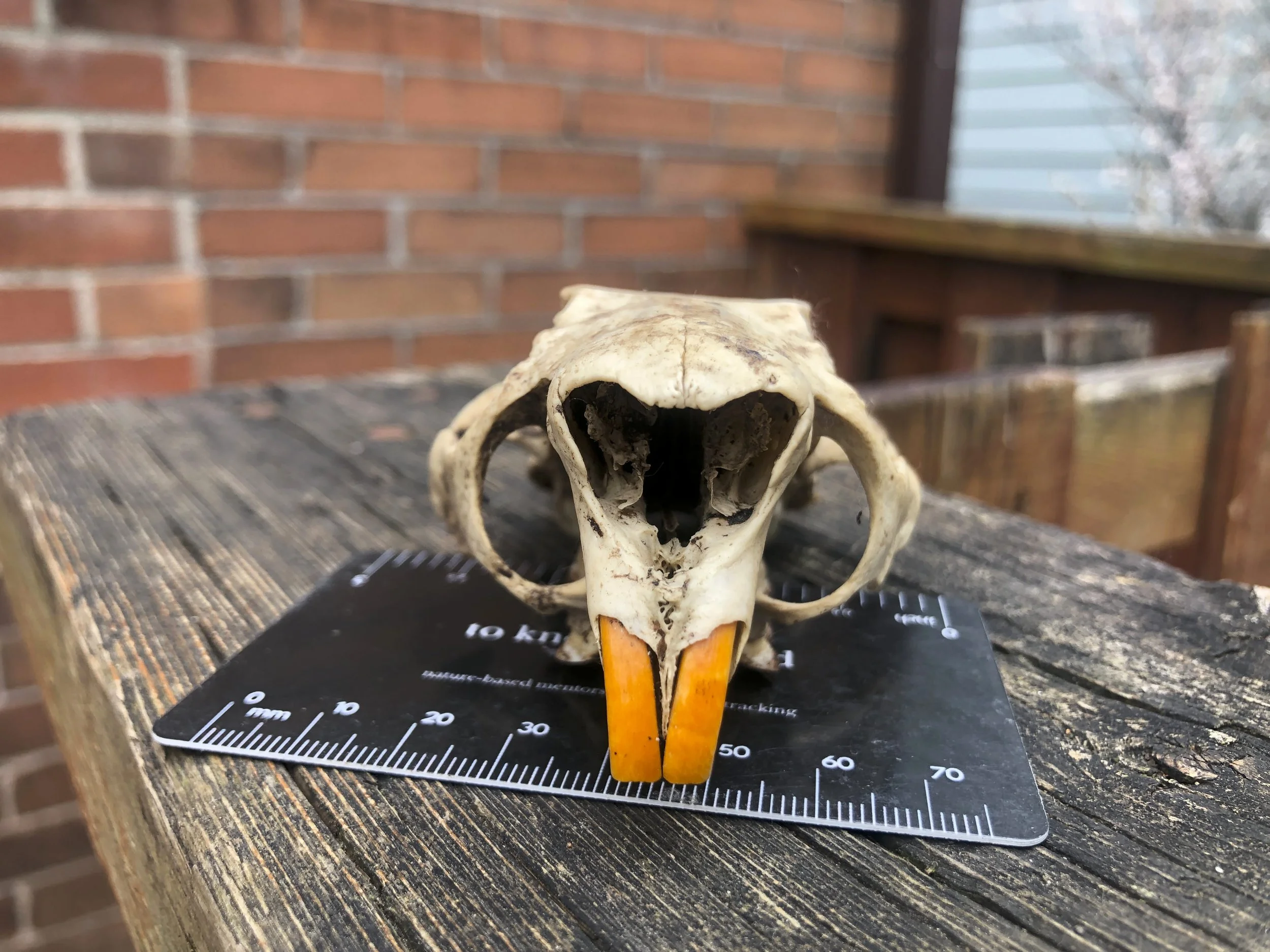
The premaxillaries are the bones below the nasals at the anterior of the skull. This is where we see the incisors emerge from. The premaxillaries in the Porcupine extend much further ahead than on the Beaver, or any other large rodent in the Great Lakes Region for that matter. I tend to look for this sign as a primary indicator of Porcupine or not. Once I see that the premaxillaries are not extended beyond the nasals, then I drop Porky as a possible i.d. and move on.
Zygomatic Arches
Zygomatic arches are just a fancy way of saying “cheek bones”. These bones frame the eyes, creating the broad, or narrow spaces for the eyes on the sides of the skull. The zygomatic arches of a Beaver are quite robust, broad and connect towards the front of the skull in one solid sort of triangular shaped arm. On the Porcupine, it’s different.
Infraorbital Foramen
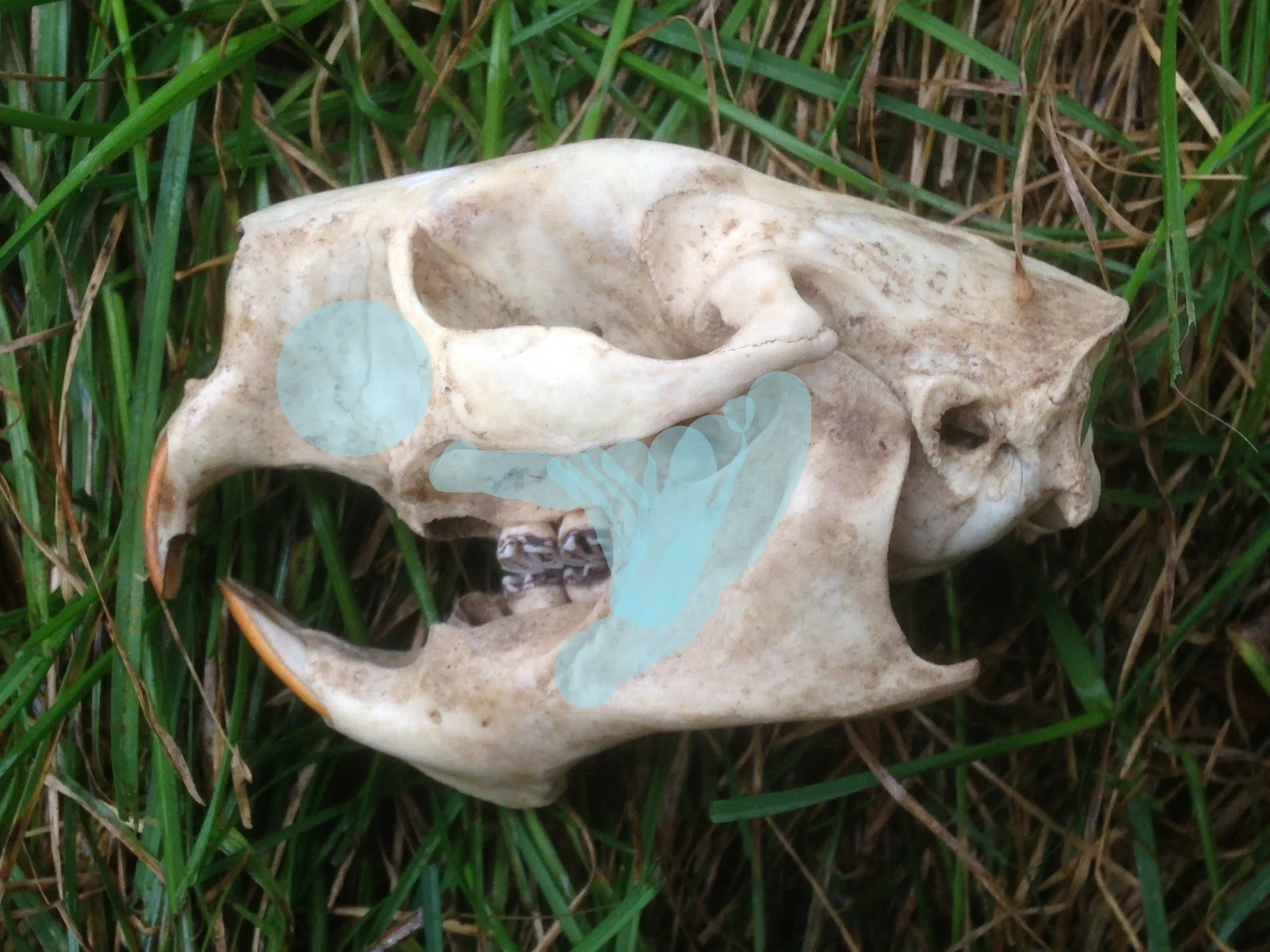
Masseter muscles (blue) of a Porcupine pass through the infraorbital foramen, and connect with the zygomatic arches.
The infraorbital foramen translates from the Latin to English as “holes between the eyes”. Rodents are divided into four groups depending on how the masseter muscles (some of the chewing muscles) interact with the zygomatic arches, and if they pass through the infraorbital foramen. These morphological differences reflect diet and chewing strategies. For Porcupines, a good bit of the masseter muscles pass through the infraorbital foramen, and because of this, a larger hole, or foramen, is required. For the Beaver, the infraorbital foramen are much narrower and smaller overall.
I have included a poorly made diagram on the left.
The characteristics of the infraorbital foramen are a pretty interesting quality of evolution and taxonomic differentiation between Rodent species. I am currently working on an expanded blog post all about looking at masseter muscle attachment in the mandibles, as well as tooth shape and occlusal surfaces to gain insight into diet and general ecology of the animal in question. This is taking some time, but I will definitely publish it when it’s ready.
Nasal Bone Sutures
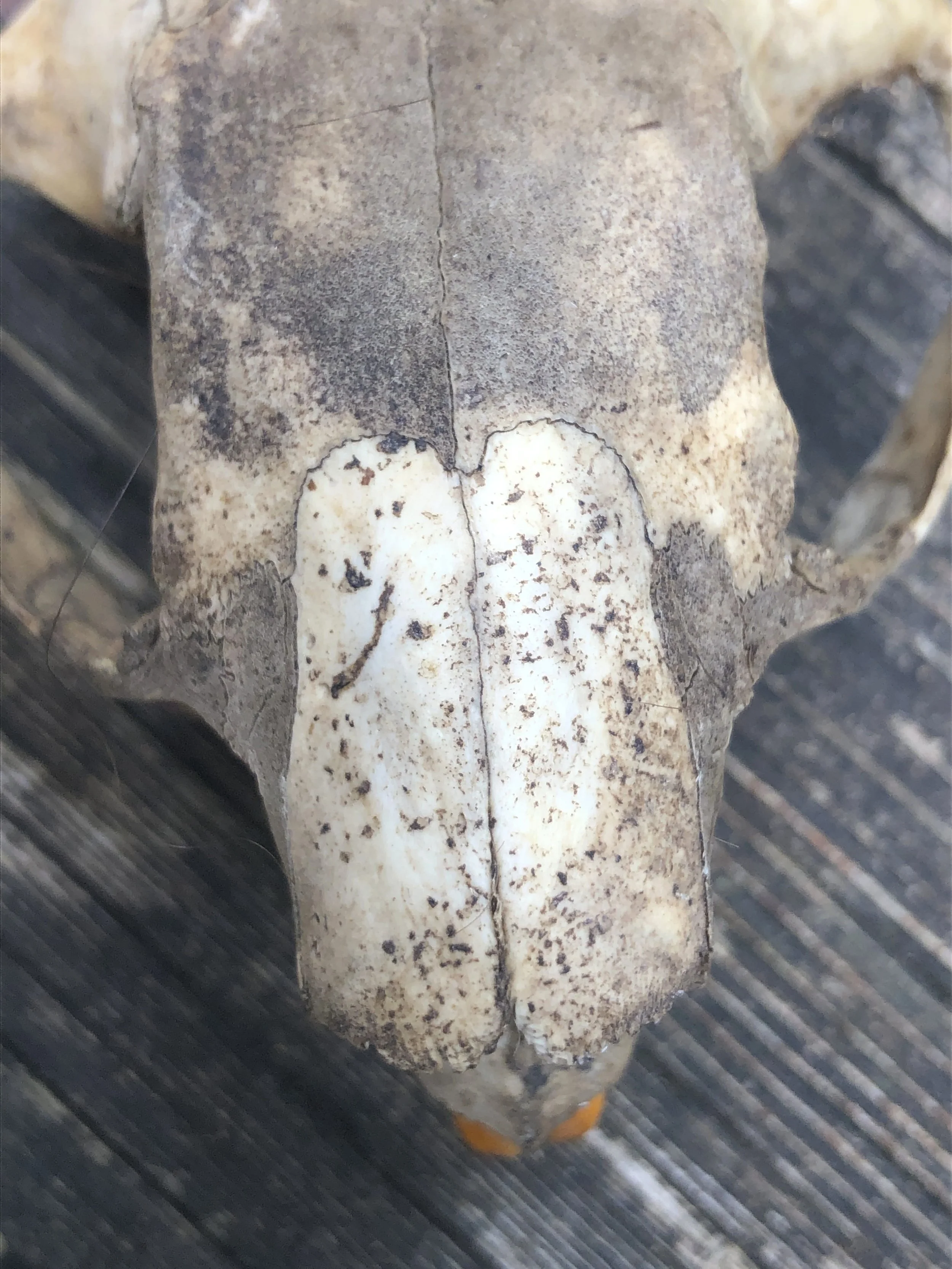
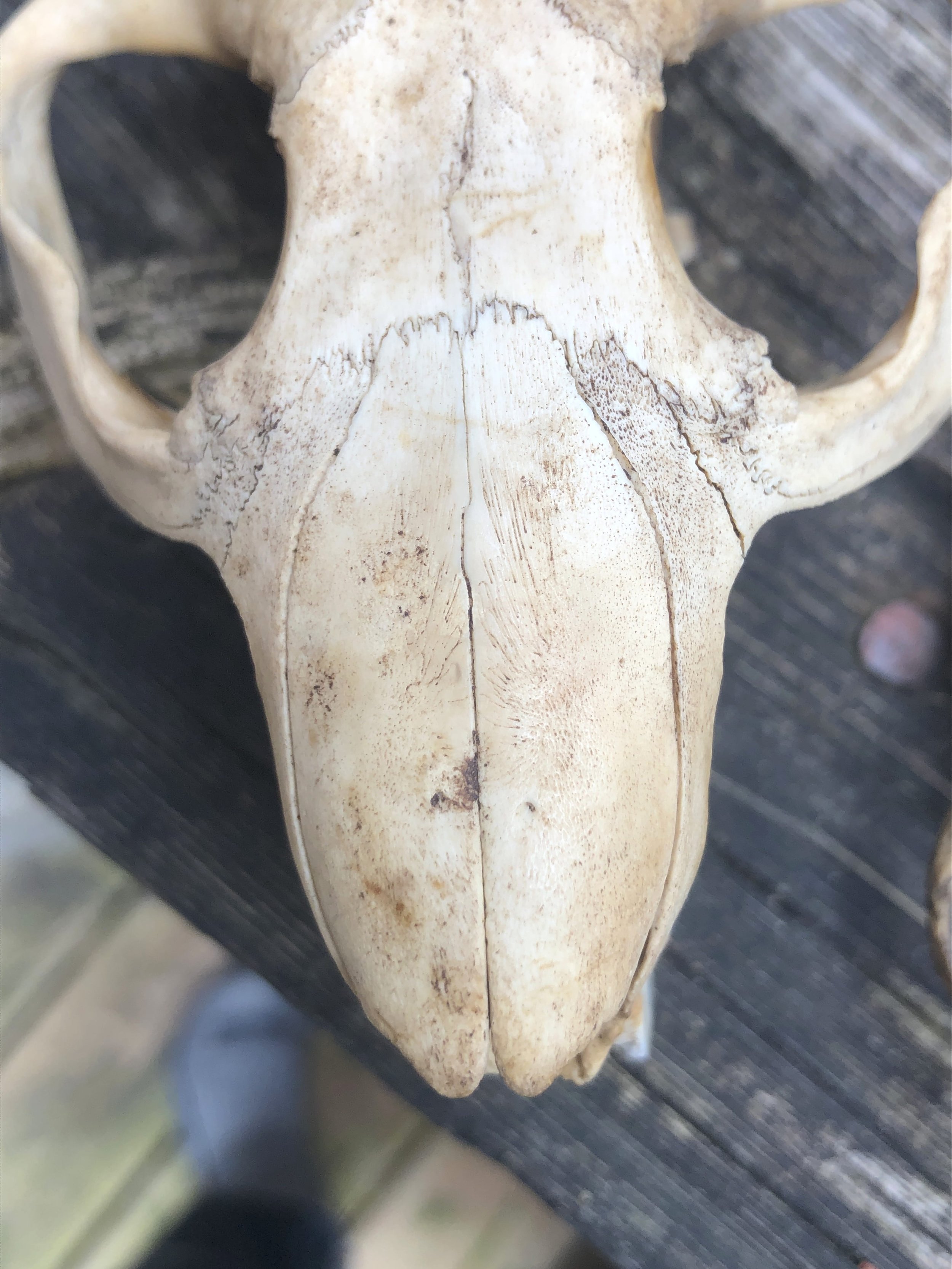
The wiggly lines indicating minute gaps between bones are called sutures. This is where two bones may, in time, grow and fuse together. The way these sutures show up may help in determining species when they are present. The sutures where the nasal bones connect with the premaxillaries are fairly straight and square on the Porcupine and wider, more oval or egg-shaped on the Beaver.
Palatine Projections
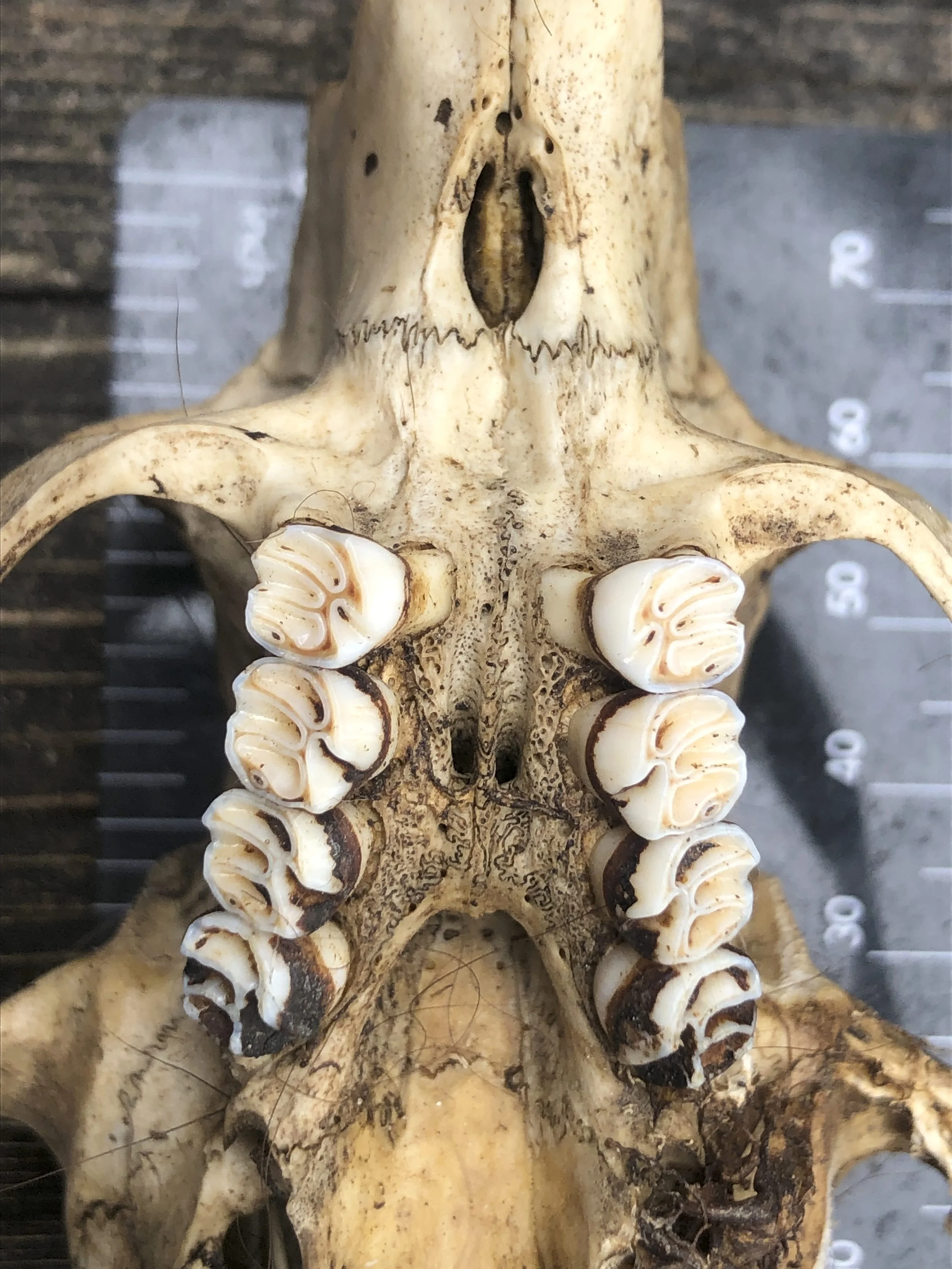
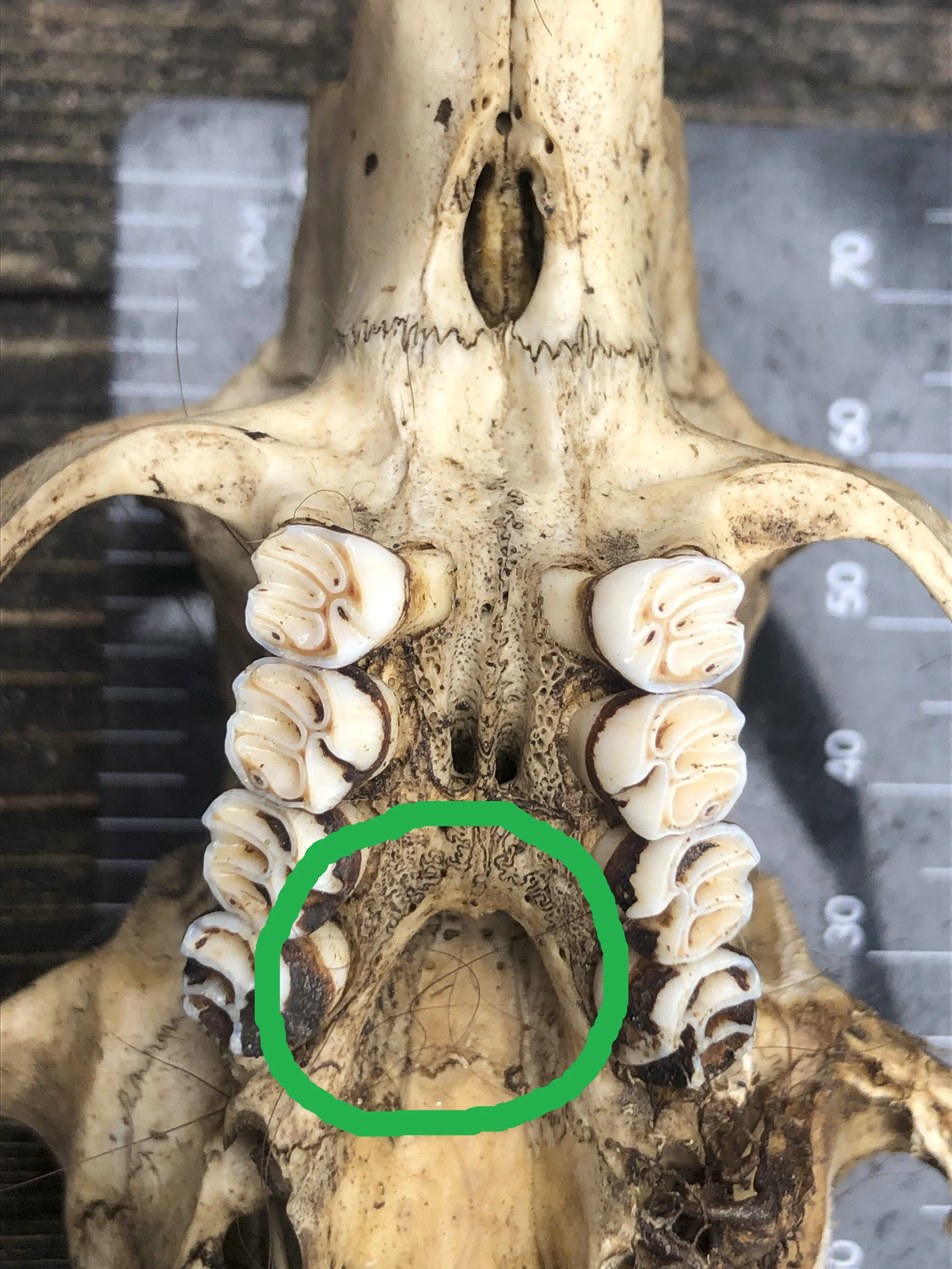
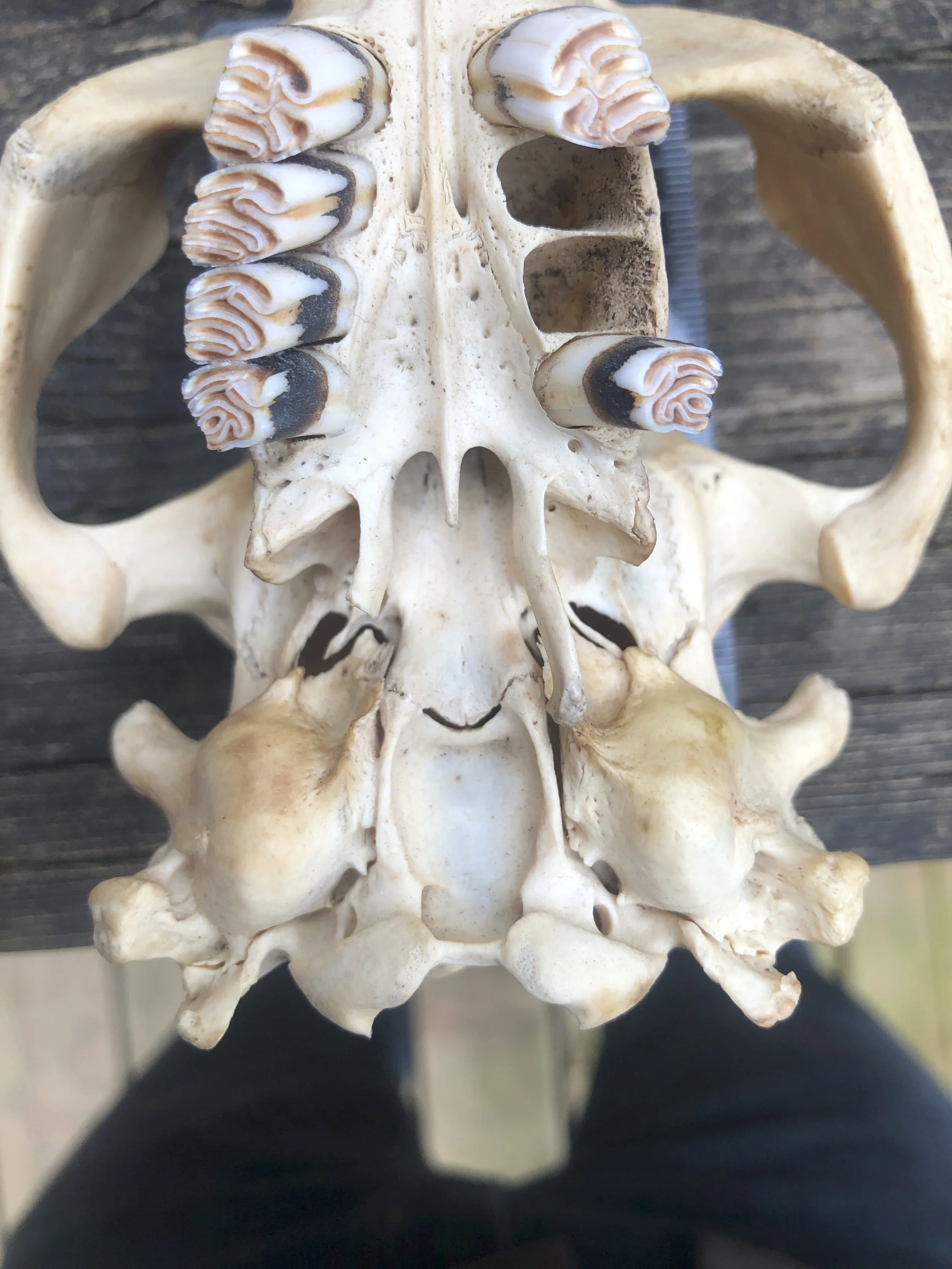
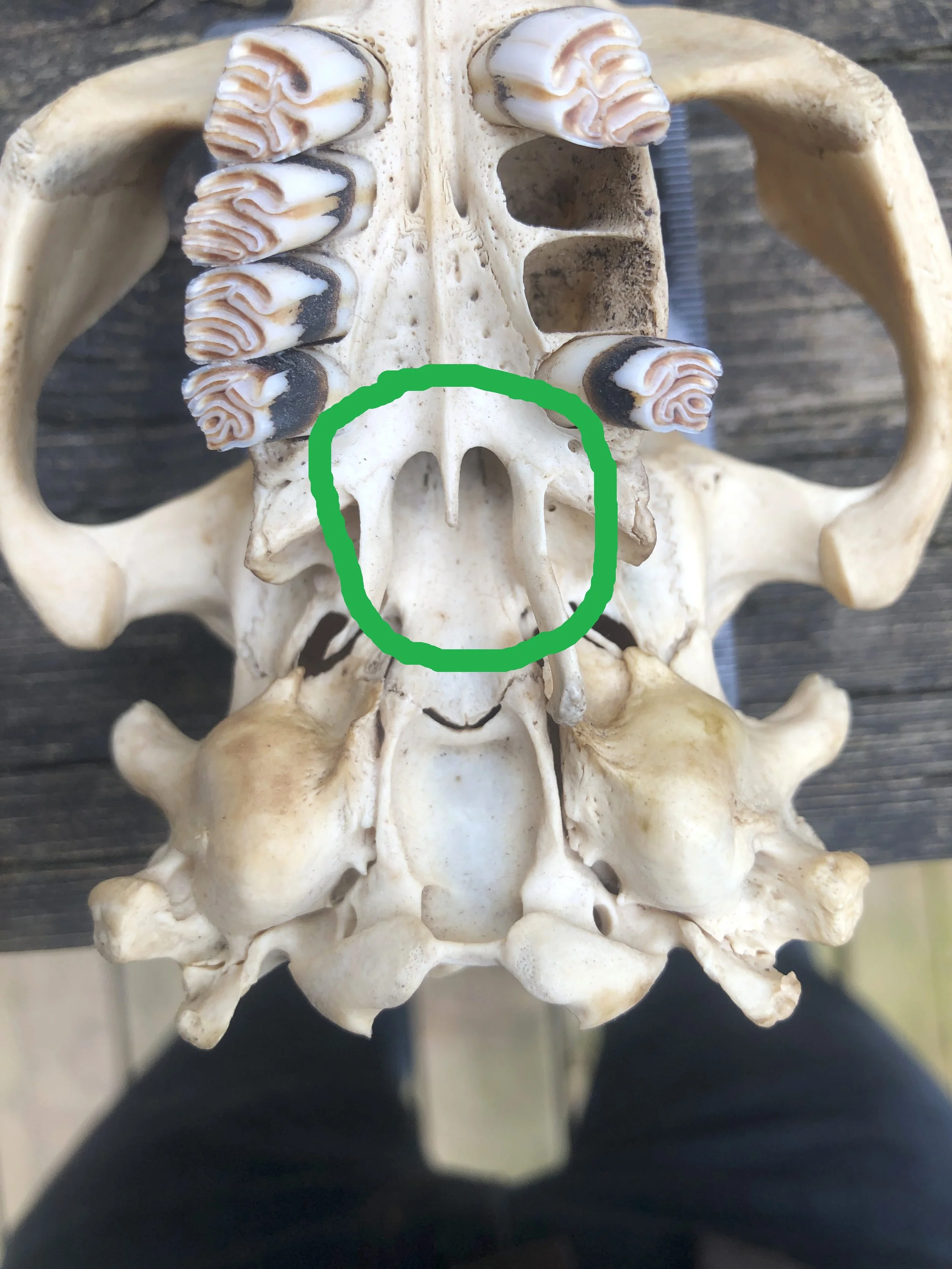
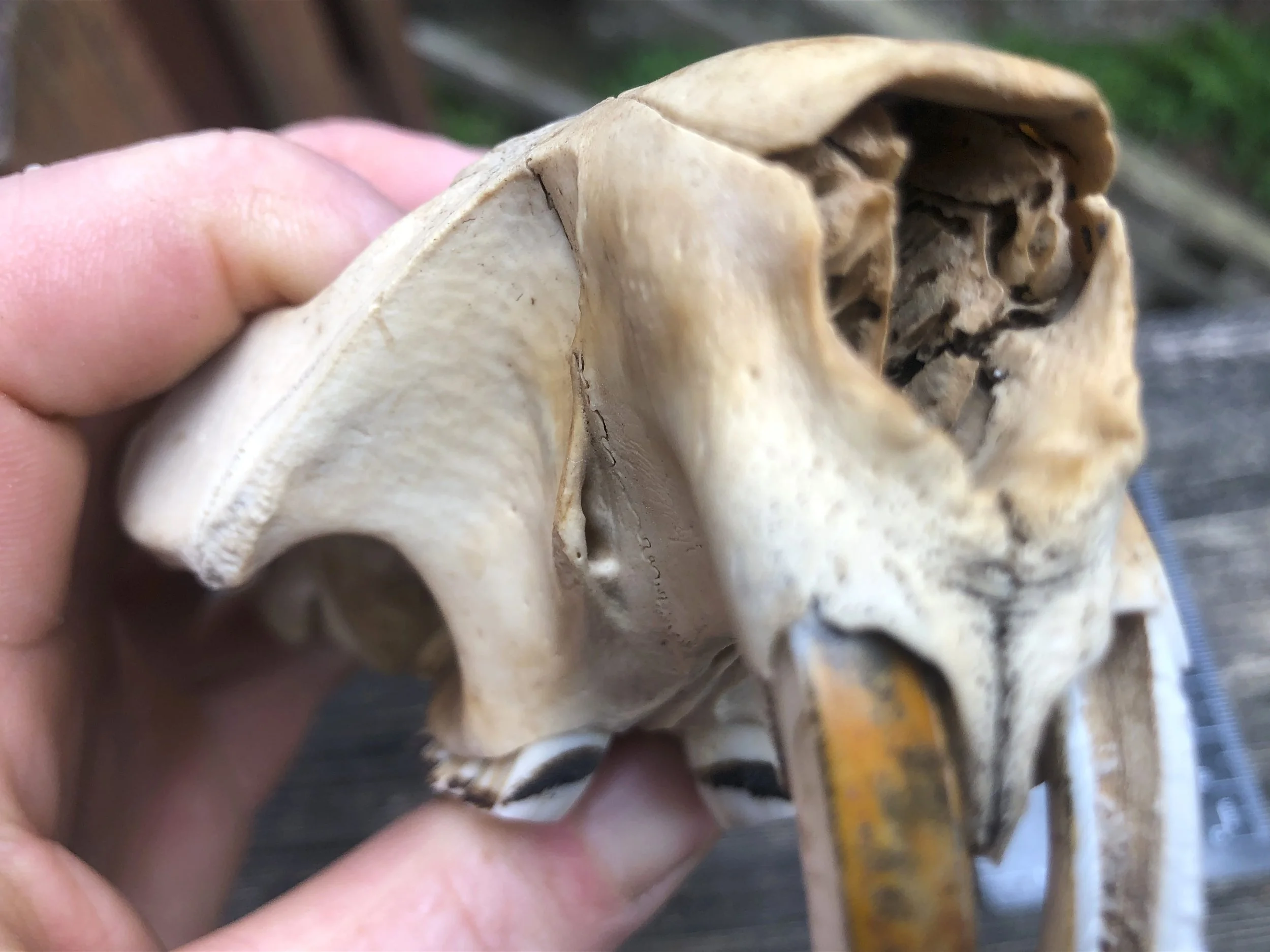
We tend to call the palate “the roof of the mouth”. There is a hole in the roof of the mouth when we strip away the flesh, blood, veins and all that stuff. This hole is called… well, I can’t figure out what the hole is called in any of my research. Is it the “pterygoid region”? The “volmer”? I am unsure, but if you look at the photos above, the rim of the Porcupine’s hole-in-the-roof-of-their-mouth appears fairly rounded with a slight ridge or minor projection. Comparing the Beaver, we can see a very prominent pointed projection. This could also be a good indicator if we only had a small segment of the skull to work with.
Mandible
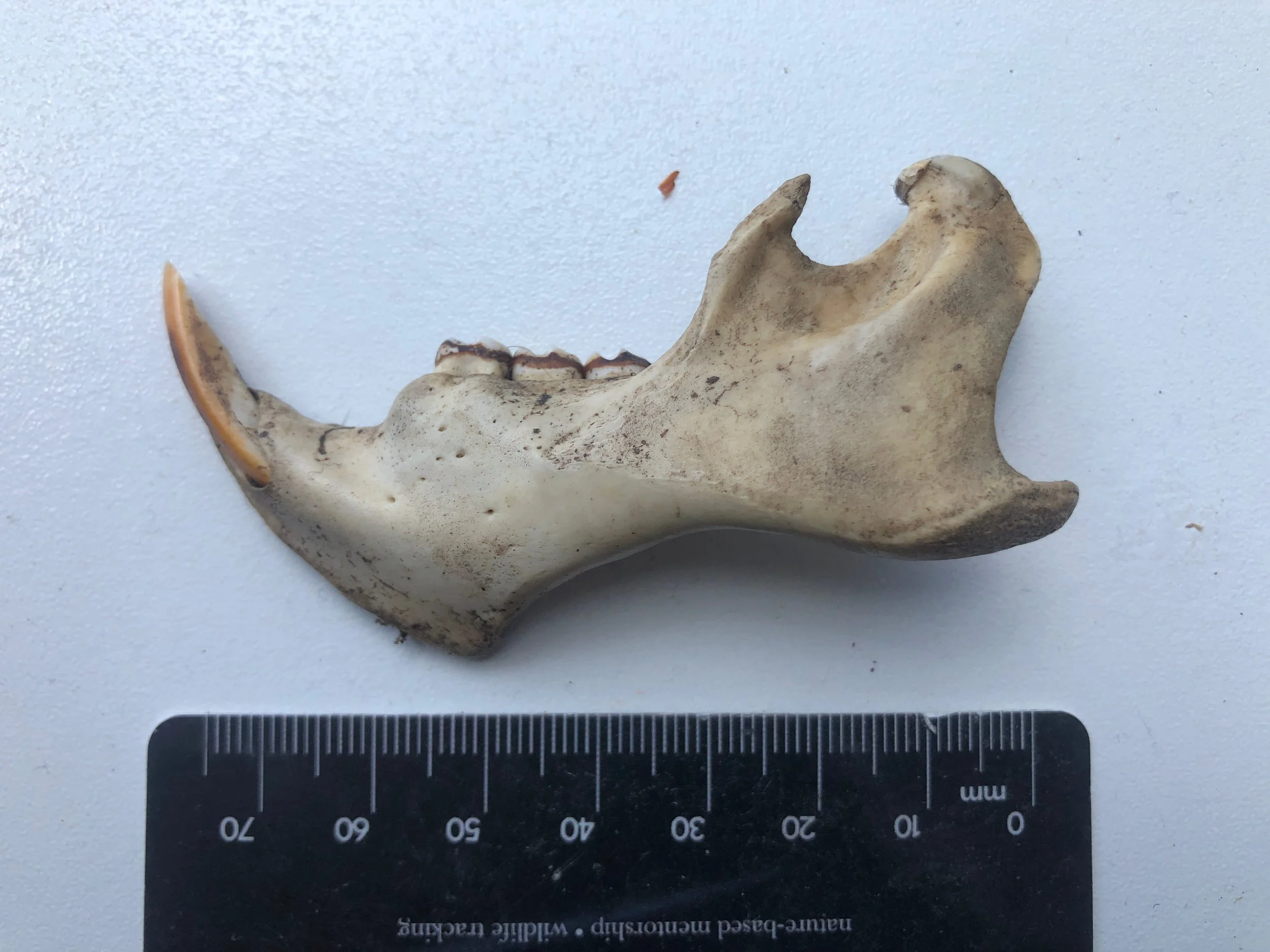
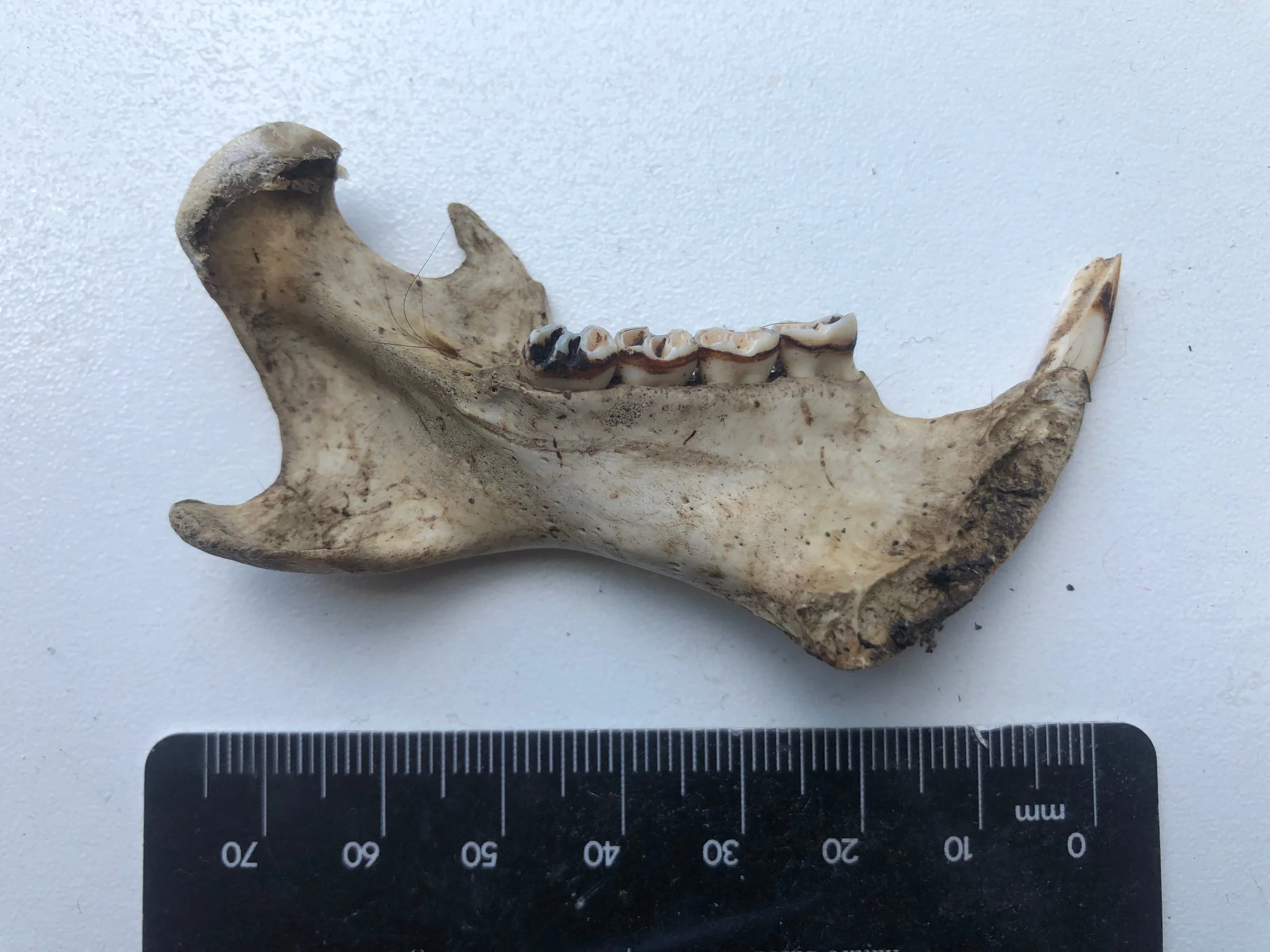
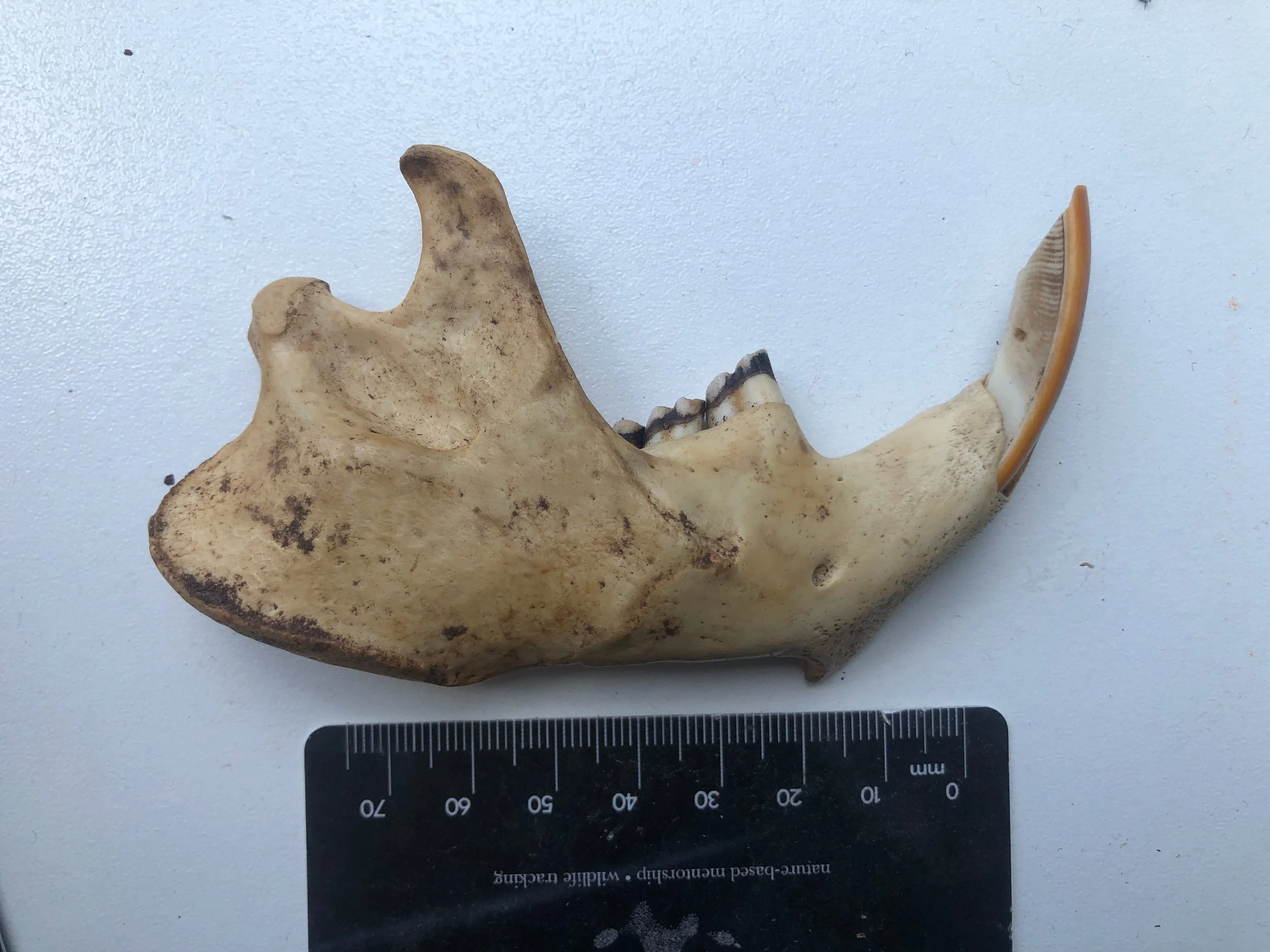
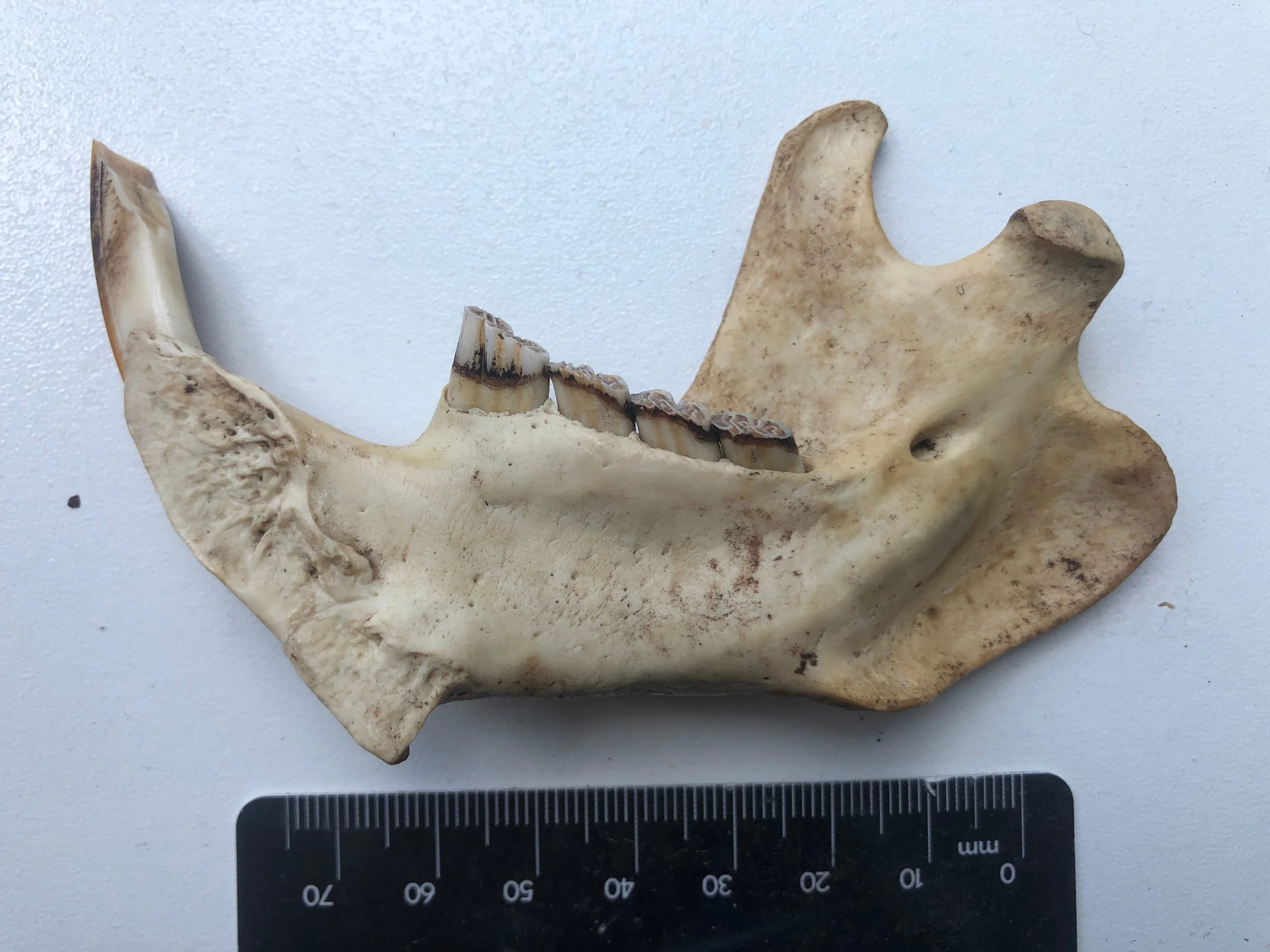
As a reminder, the photos on left are Porcupine and the photos on the right, Beaver.
I am going to quickly cover some distinguishing features of the mandibles as well. There may be instances where only a mandible is found in the field and the rest of the skull is missing, and an identification may be required. If that happens, here is what to look for.
The overall shape of the mandibles are fairly distinct. The Porcupine mandible is, again, smaller, less robust, than the Beaver.
The coronoid process, which is the first of the branched boney lobes at the back closest to the molars, sits low on the Porcupine, while it is high and narrow on the Beaver. The second of the boney lobes at the back, the condyle, is high and curved on the Porky, and on the Beaver it is reduced and a groove (fossa) sits below. The angular process, the third and lowest boney branch on the back of the mandible is longer and protrudes away from the body of the bone, while Beaver is rounder, more robust and carries a lot of the heft at the back end.
A couple of guides I have read note that the Beaver mandible has a jutting process at the anterior (front) and ventral (base) of the mandible, close to where you could imagine the incisor being recessed. While this is true, it is also kind of true for the Porcupine so I don’t find this to be a useful feature to note.
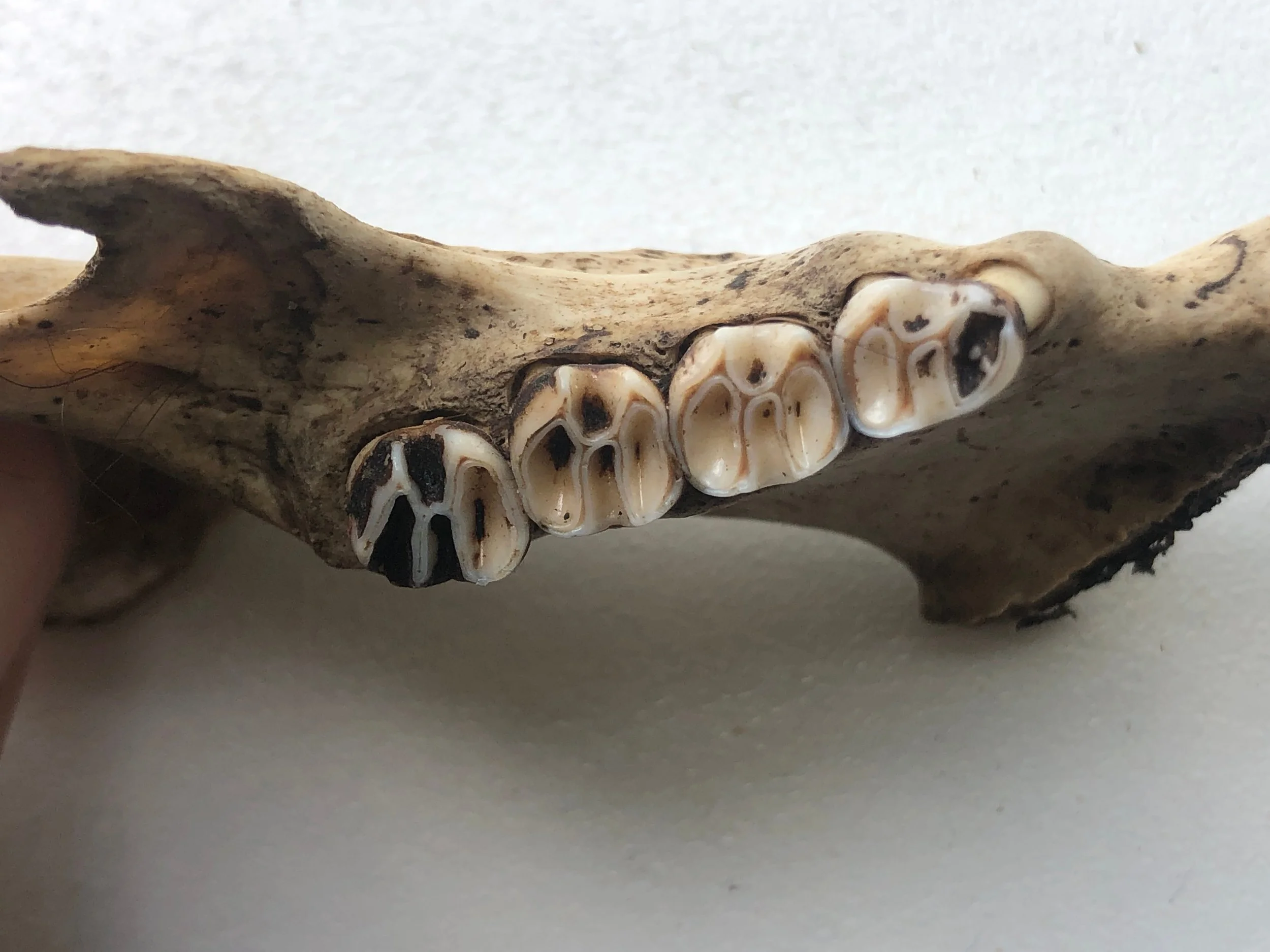
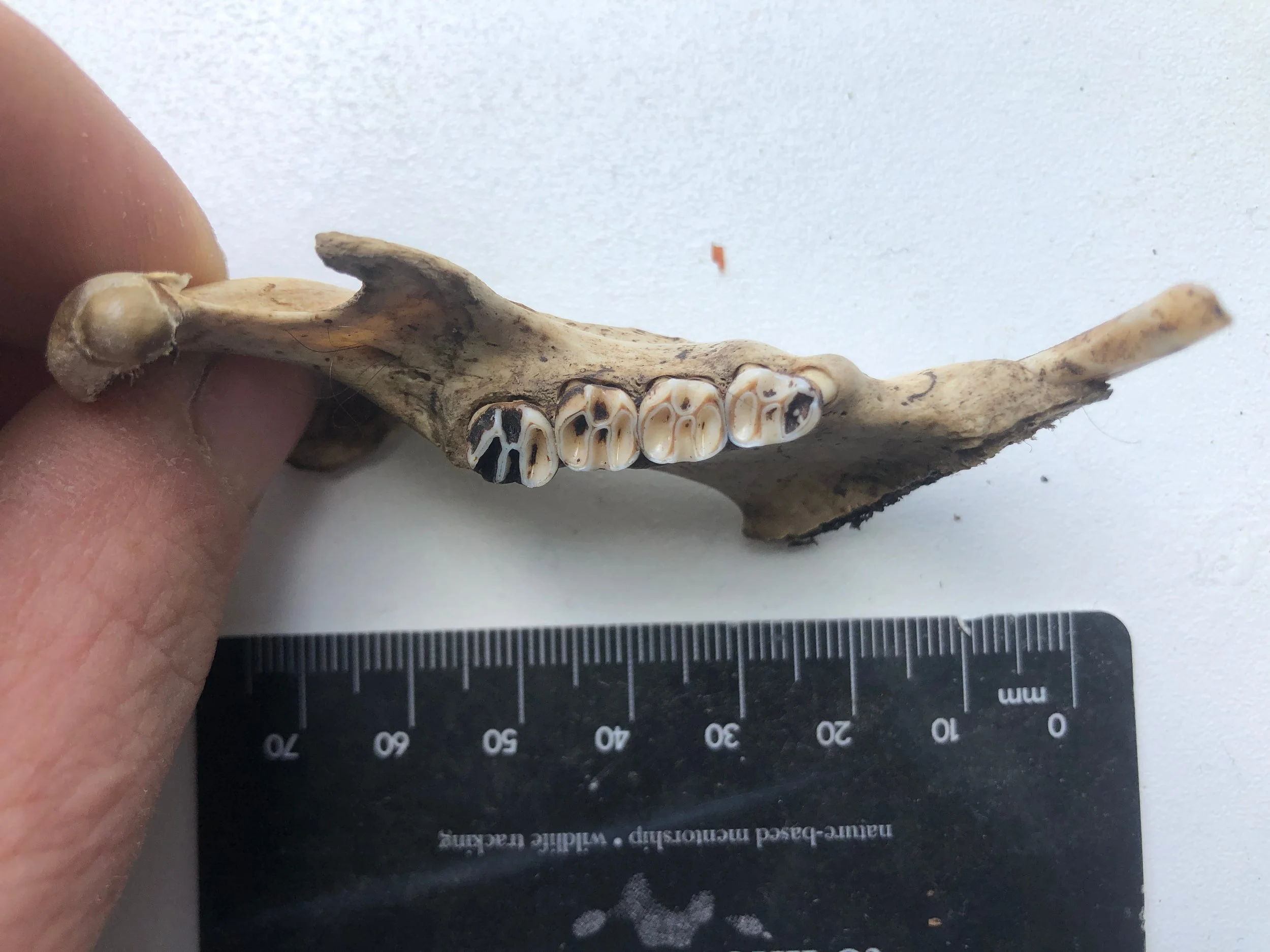
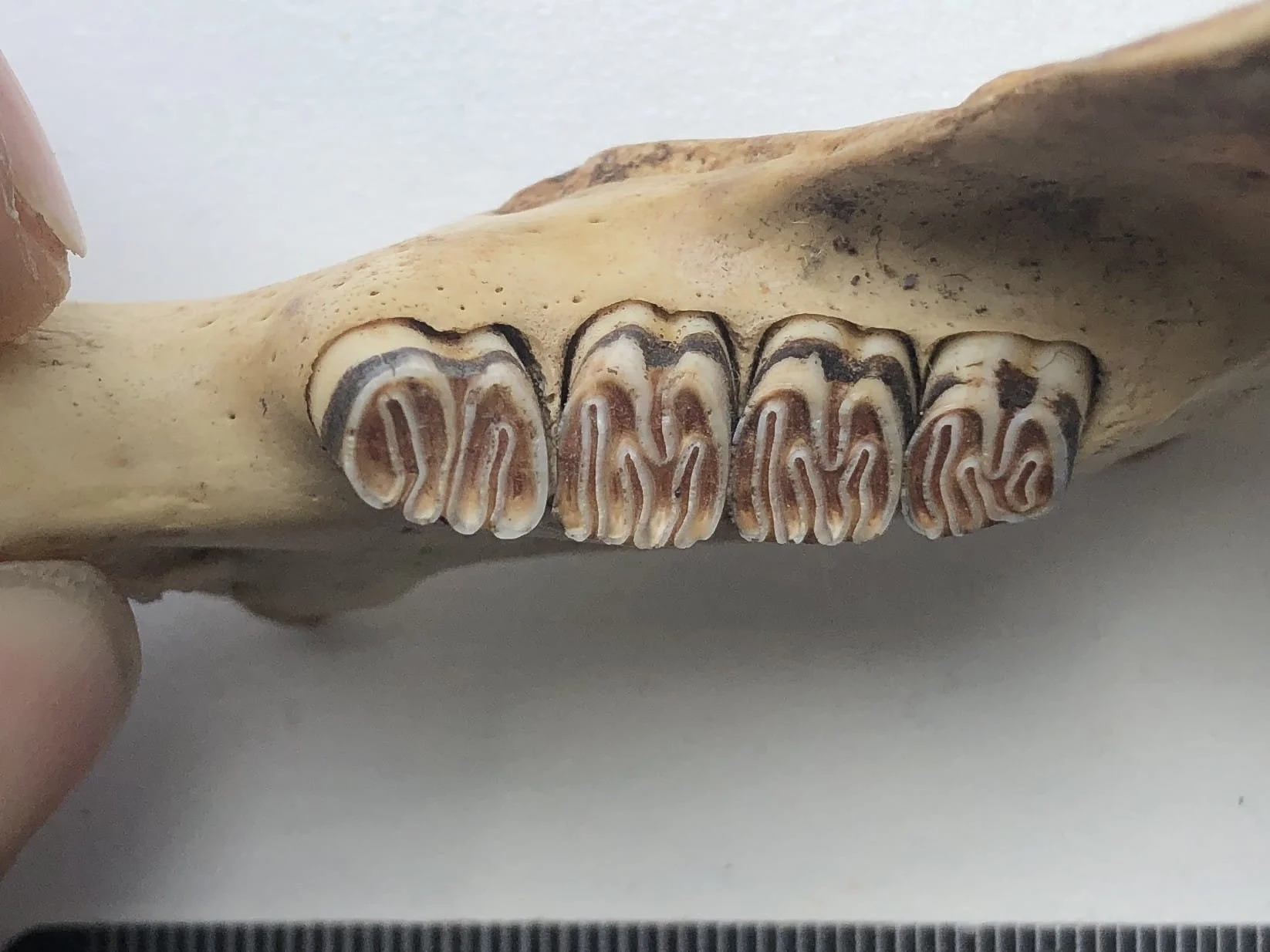
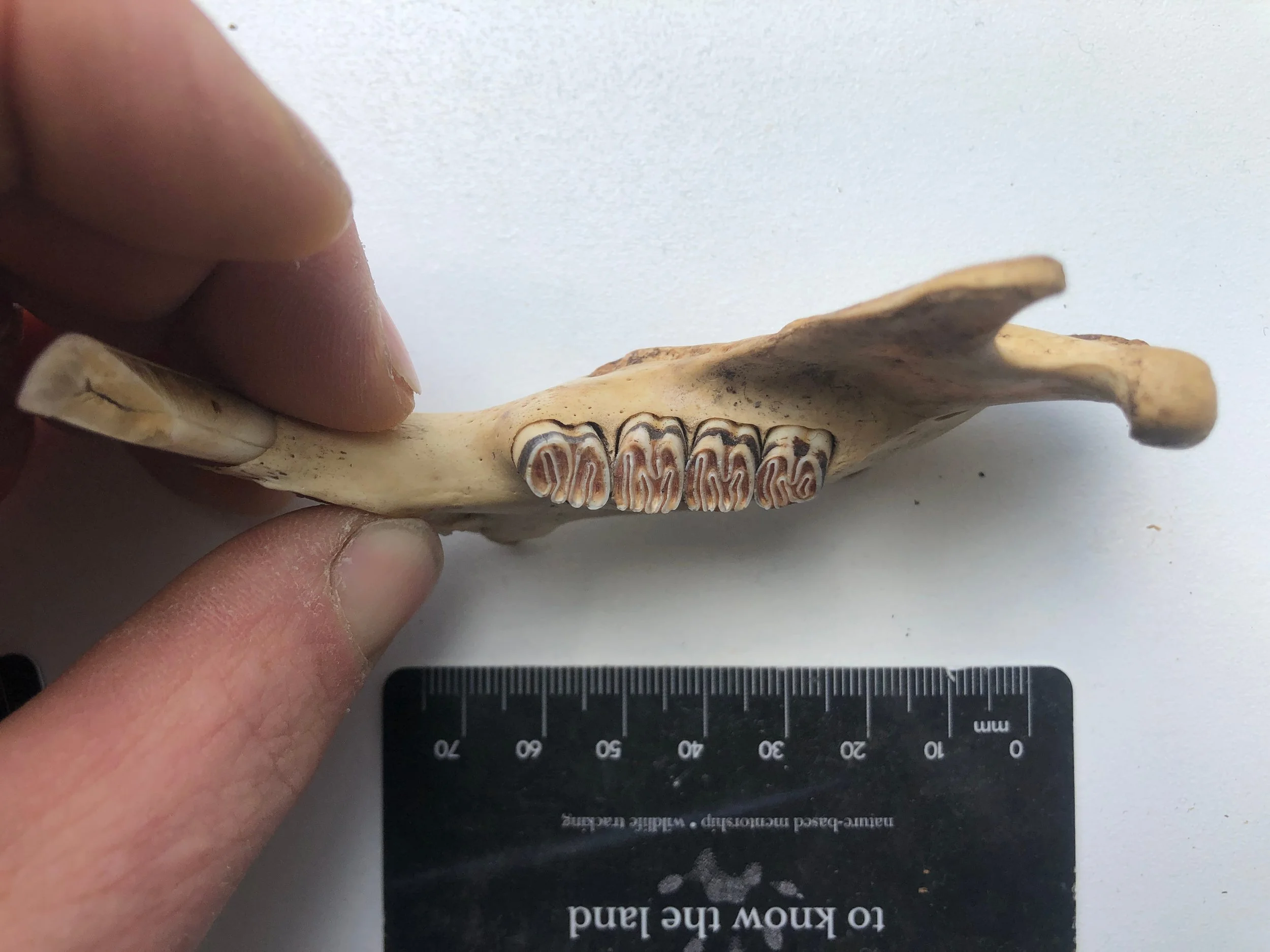
Both species have a large incisor tooth, with yellow enamel on the anterior side, but when we start to look at the occlusal surface on the premolars and molars, which is the flat part of the teeth that grind the animals food, we see there are some differences in the patterns on the teeth. Porcupine occlusal surfaces remind me binoculars or glasses, with two loops attached by a bridge. The Beaver however reminds me of folding toffee (thanks to Marcus for noting this!). I still need to think of a good mnemonic for this, but when I do, I am sure I will never forget it.
I hope this study of the differences between the North American Porcupine and the North American Beaver have been helpful for folks to learn more about the structure of skulls overall, or maybe you got here looking to i.d. a skull or mandible you found. Either way, for my own sake, this has been helpful to look at the bones of these two amazing species a little bit more closely. Stay tuned for more skull and bone comparisons!
To learn more :
Animal Skulls by Mark Elbroch. Stackpole Books, 2006.
Field Guide to Skulls and Bones of Mammals of the Northeastern United States vol. 1 by Richard Wolniewicz. Self published, 2001.