

What’s going on out on the land?

Deadly Galerina Study
One of the mushrooms I found today at work was the Deadly Galerina. I decided that I wanted to learn as much as I could about this species as they were a hazardous species which I may encounter on the daily with my students. I feel like if I know all of the poisonous species right off the bat, then if I make mistakes with benign/harmless species, then it won’t be as big a deal than if I made that same mistake with the poisonous ones. Make sense? Know the things that will kill you, and then you can take the time to learn more comfortably, and more forgivingly, with the harmless ones.
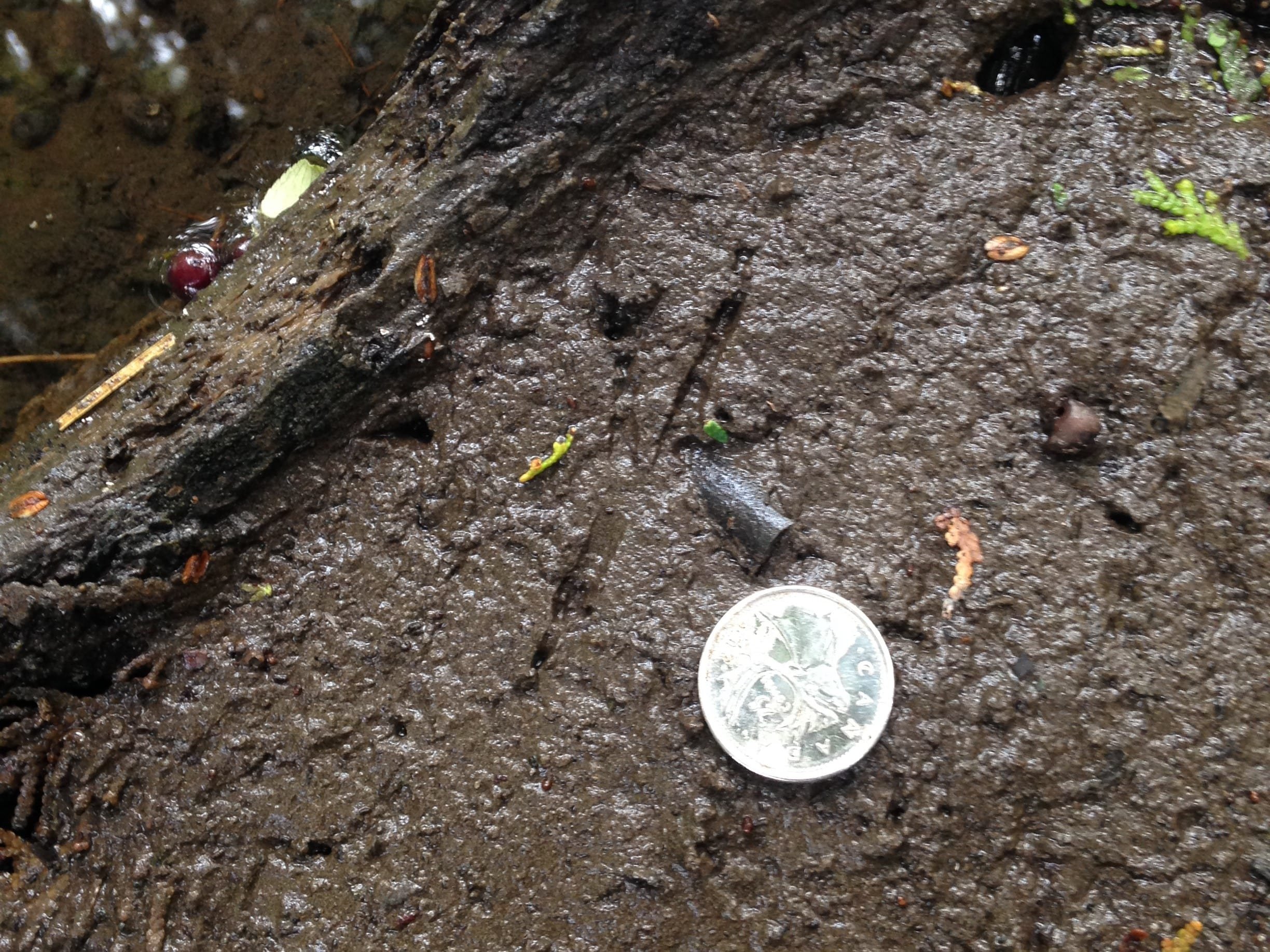
Tracking the Smith Loop, 2022.09.05
hello,
i'd like to go tracking today. I'm going to head out this afternoon, maybe to smith trail because i just need to wander. want to come? i know it's last minute, so no pressure, but it would be fun to track with you.
carolyn
I was just thinking that I wanted to get out for a little and see what I could find, but I couldn’t decide where to go and I was in the midst of researching. I needed a push and when Carolyn’s email arrived, I was stoked. I was most definitely down to go.

Oak Apple Galls at Lake of Bays
Someone in our tracking crew had found a small, pale brown, hollow papery orb with spots on the surface with a couple of holes in it. I recognized it as an Oak Apple Gall, which my partner and I had found last year at Backus Woods. It wasn’t a green one, but it must be the same thing, right?
Last year, I may have looked up a bit on the Oak Apple Gall, but I no longer remember much. It’s like meeting someone again, but not remembering much of the details of your previous conversation. I had to ask some questions again, and here is some of what I have learned.
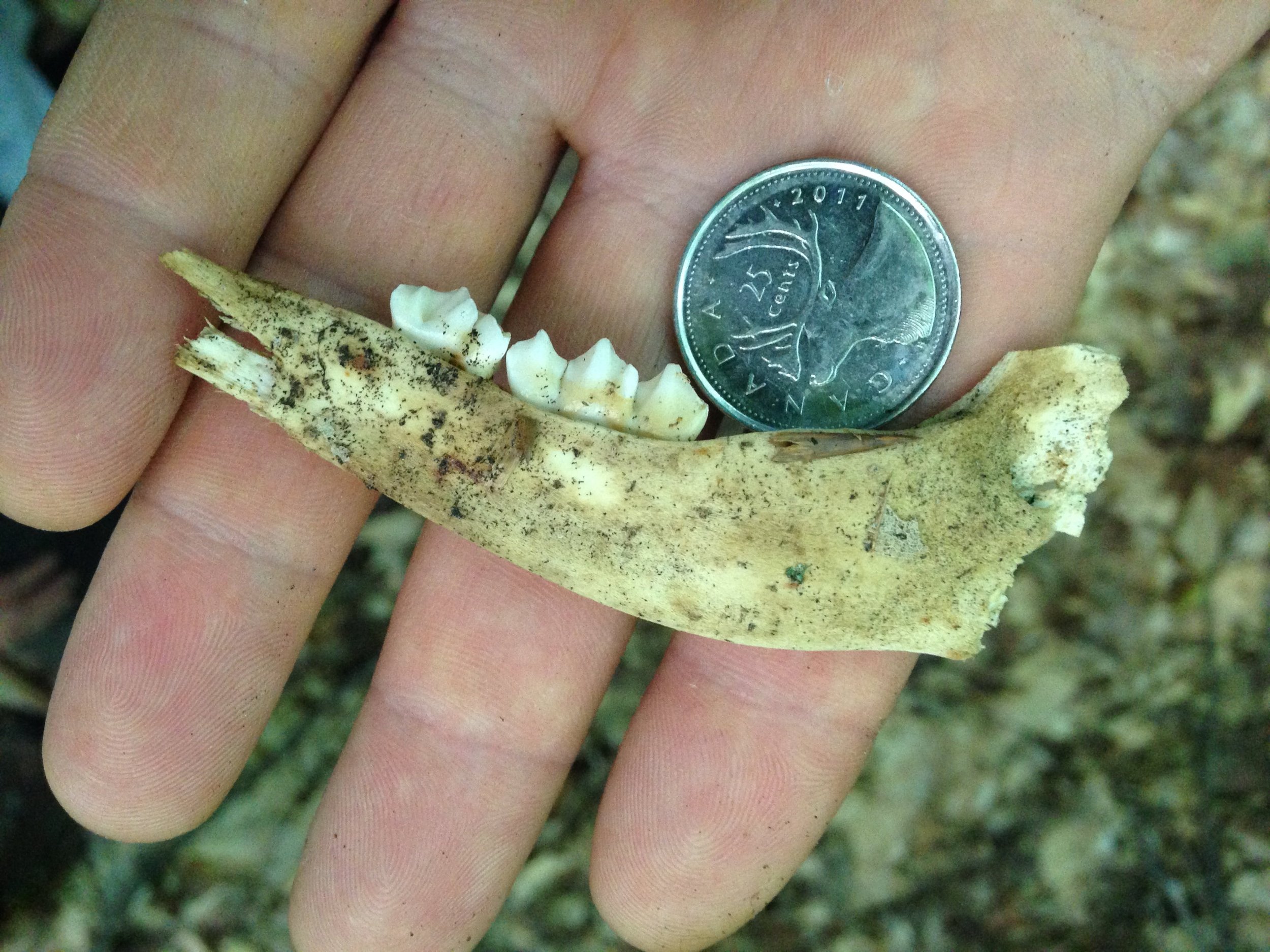
A mystery while tracking in Lake of Bays, 2022.08.13
The skill set of identifying a fresh trail with certainty in the jumbled quilt of the Summer forest floor is definitely an art and science with which I have little purchase… but a skill set that I do feel a growing confidence about is bone identification, and while making our way up the hill in the leaf little there was a small mandible laying fairly exposed with the lingual surface (the side which would be closest to the tongue in the living animal) facing the canopy.
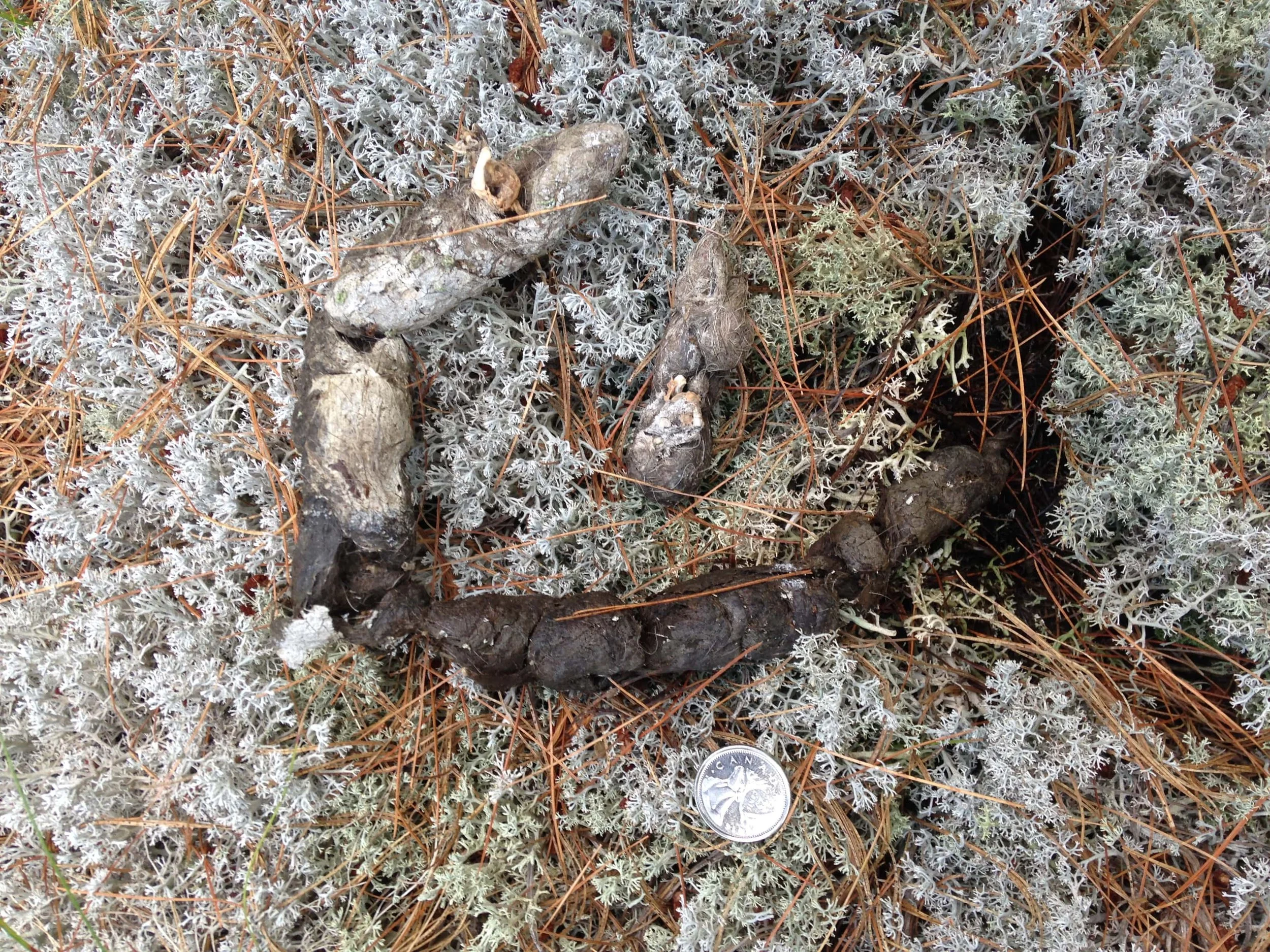
Some scat from Point Grondine
During one of our daily drifts down the Mahzenazing River where we would occasionally have to paddle a little to be sure we didn’t hit an island and wreck out friends canoe, we decided we should stop on one of the islands so we could have lunch and investigate some of the plants a little better. While out of the canoe getting a better look at some Harebell flowers I noticed some scat atop a bed of Star-tipped Reindeer Lichen and White Pine needles
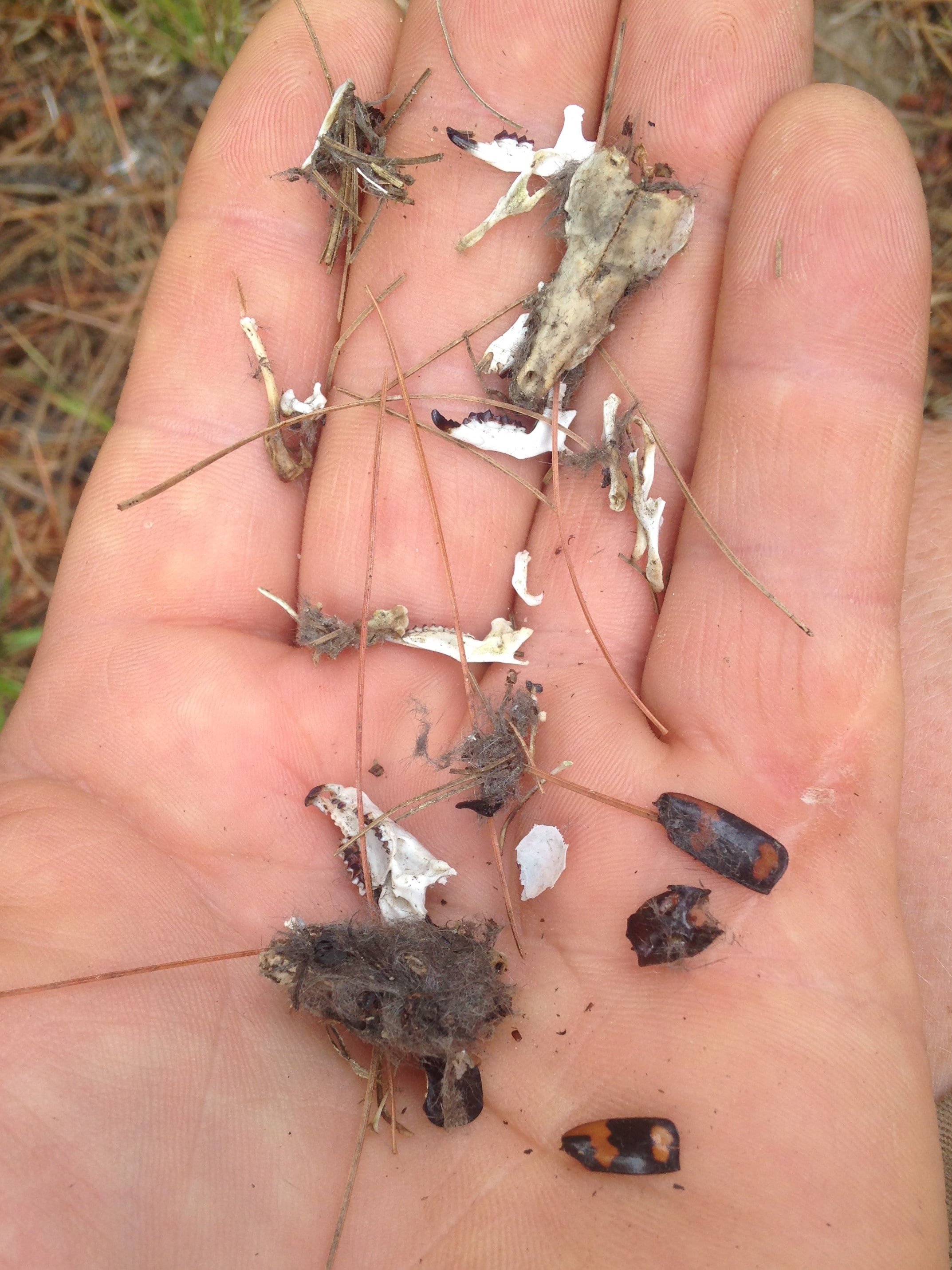
Carrion Beetles pt. 2 : Elytra in the Pellet
While out with the Wildlife Tracking Apprenticeship crew I came across some Owl pellets with some interesting finds. One of which caught my eye and pushed me to learn more about the Nicrophorinae subfamily of Carrion Beetles.

Carrion Beetles pt. 1 : Nicrophorus tomentosus
After taking a bunch of photos of the dead Robin I flipped the carcass over to see if I could see any visible signs of trauma. I noticed a wound on the back of the neck, but I got totally distracted when a small orangey-yellow thing crawled deep into the grass…

Fruit and Seeds pt. 5
Finally, part 5. This entry has been quite delayed, just under a year in fact. I took new photos for the Black Currant (Ribes nigrum) and got some photos and filled out the entry for the Serviceberry (Amelanchier spp.). The common scale still remains a canadian quarter, which is 23.88 mm.
What a fun project, all inspired by an encounter with an Eastern Chipmunk (Tamias striatus) with some then unknown seeds I noticed in their scat.
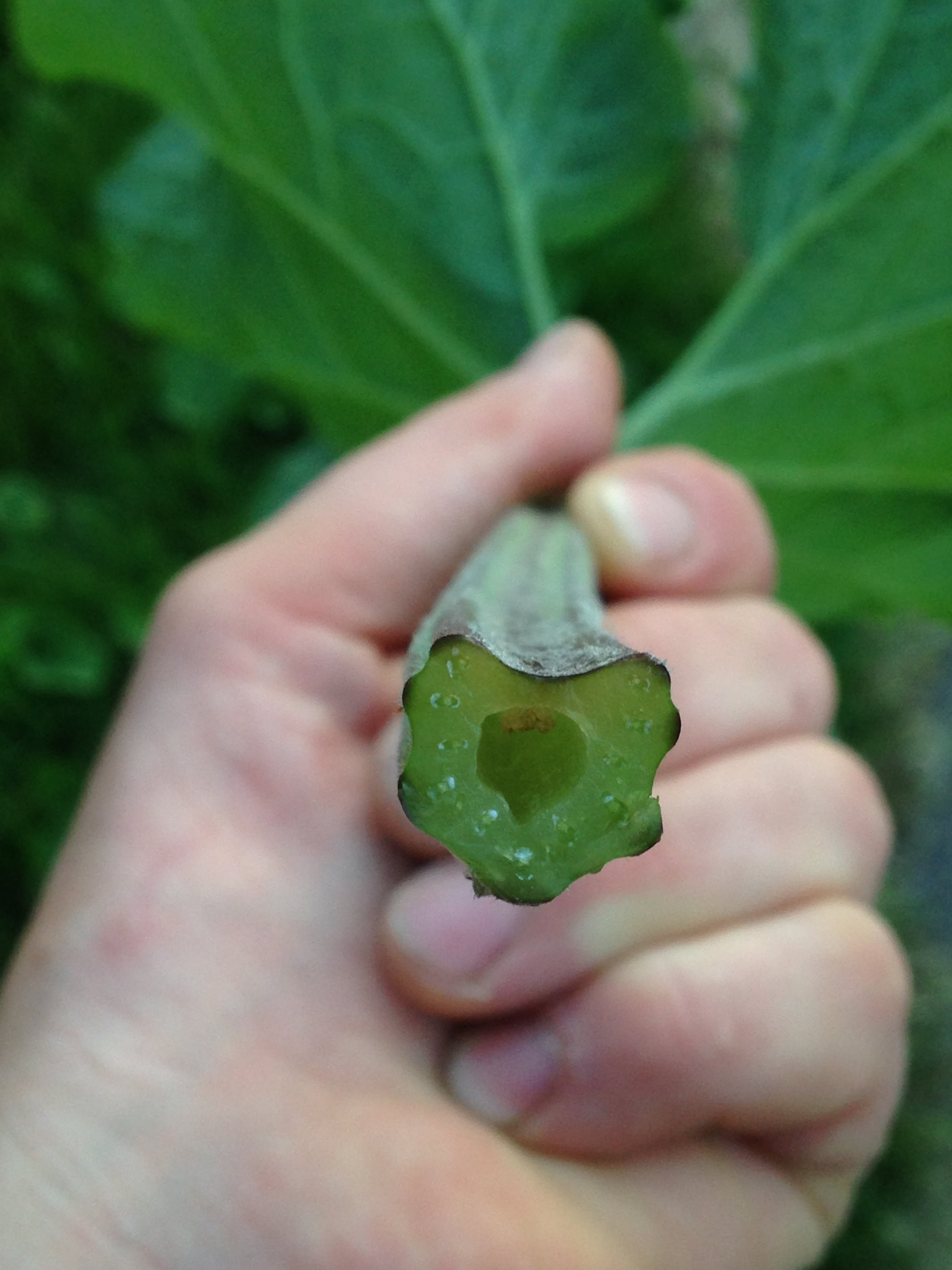
Common Burdock
A brief consideration of a common plant which often gets no consideration at all. Common Burdock (Arctium lappa or Arctium minus - often considered interchangeably) seems to grow everywhere, and while I have seen it a ton, I have not taken the time to really look and pay attention… until recently, that is.
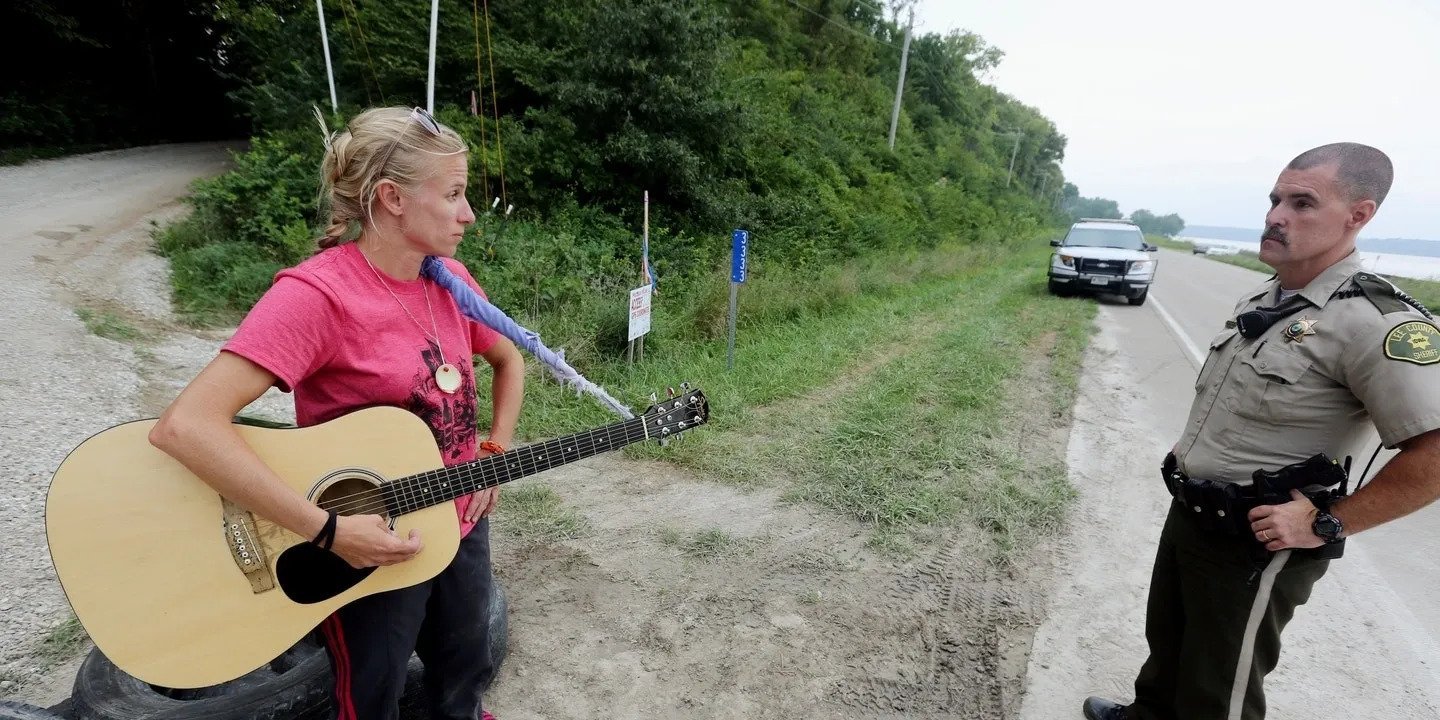
Update on Jessica Reznicek’s case
8th Circuit Court of Appeal upheld Jessica Reznicek’s 8 year prison sentence. In their decision the three Trump-appointed judges refused to address whether the use of a terrorism enhancement was appropriate saying, “Reznicek argues that the enhancement should not have applied because her actions were directed at a private company, rather than the government. Even if that is right, any error was harmless.” Reznicek’s supporters worry that If the decision stands, the judicial branch will continue applying terrorism enhancements to activists, while claiming that a drastically increased sentence from being labled a terrorists by the U.S. govenment is harmless.
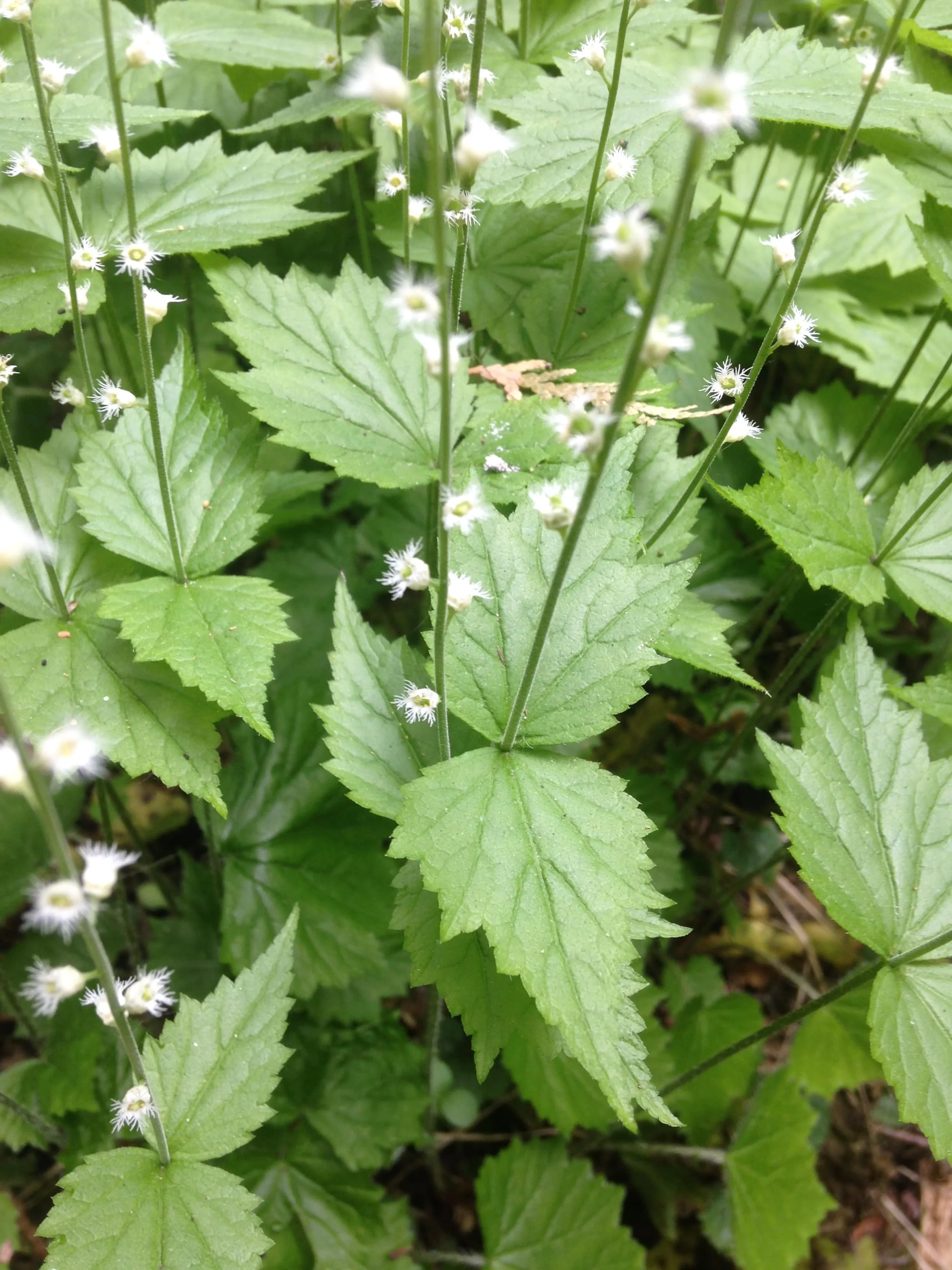
Too much to write about
Apologetics for not keeping up - too busy looking at the flowers to start writing about the flowers.
A Short Note On Sapsucker Ecologies
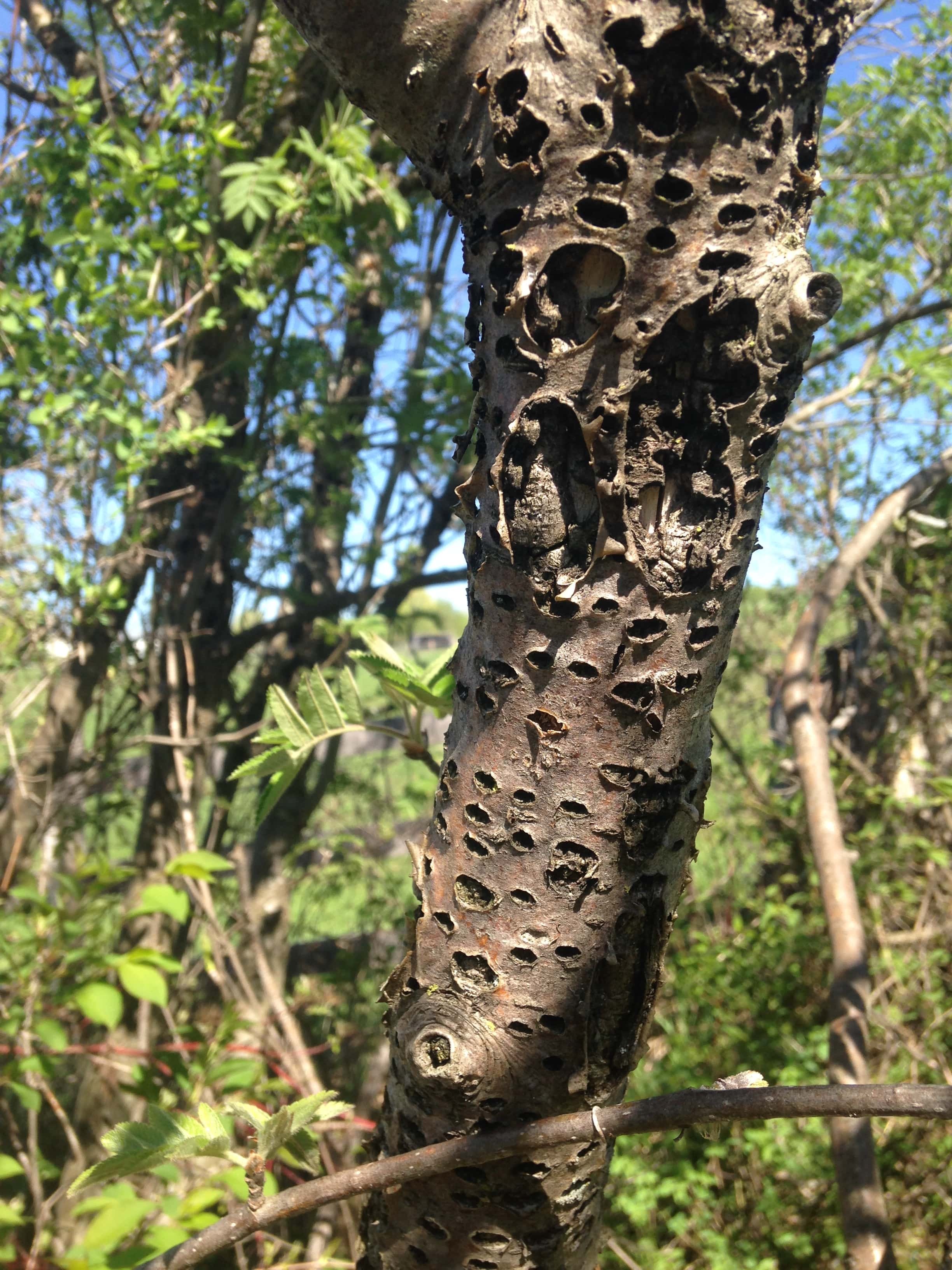
About 1o minutes North of Orangeville, along the fence line of Bruce Trail at Dunby rd, there are a couple of American Mountain Ash trees. These trees are related to the other Sorbus species from around the world, but this one is native to the area. Shorter trees, compound leaves, bright red fruit all help to identify these trees in the warmer months. But in the Winter and early Spring when the leaves and fruit have fallen, the bark becomes a great focal point for local ecologies.
The rows of small holes of various age and sizes freckle the bark like oversized lenticels. It kind of looks like a canker or fungal infection, but it’s not. It is actually the work of a meticulous and skilled member of the Picidae family; the Yellow-bellied Sapsucker, a bird which I have not seen that often, but I have come across their sign quite a bit.
Emergent Kithship
I have written before about how knowing the land creates understanding of relationships. I have written a lot about it. That’s pretty much what this whole project is all about. But I want to look a little more at how that sense of relationship happens, and what are the triggers which bring it up for us?
What bones did we find?
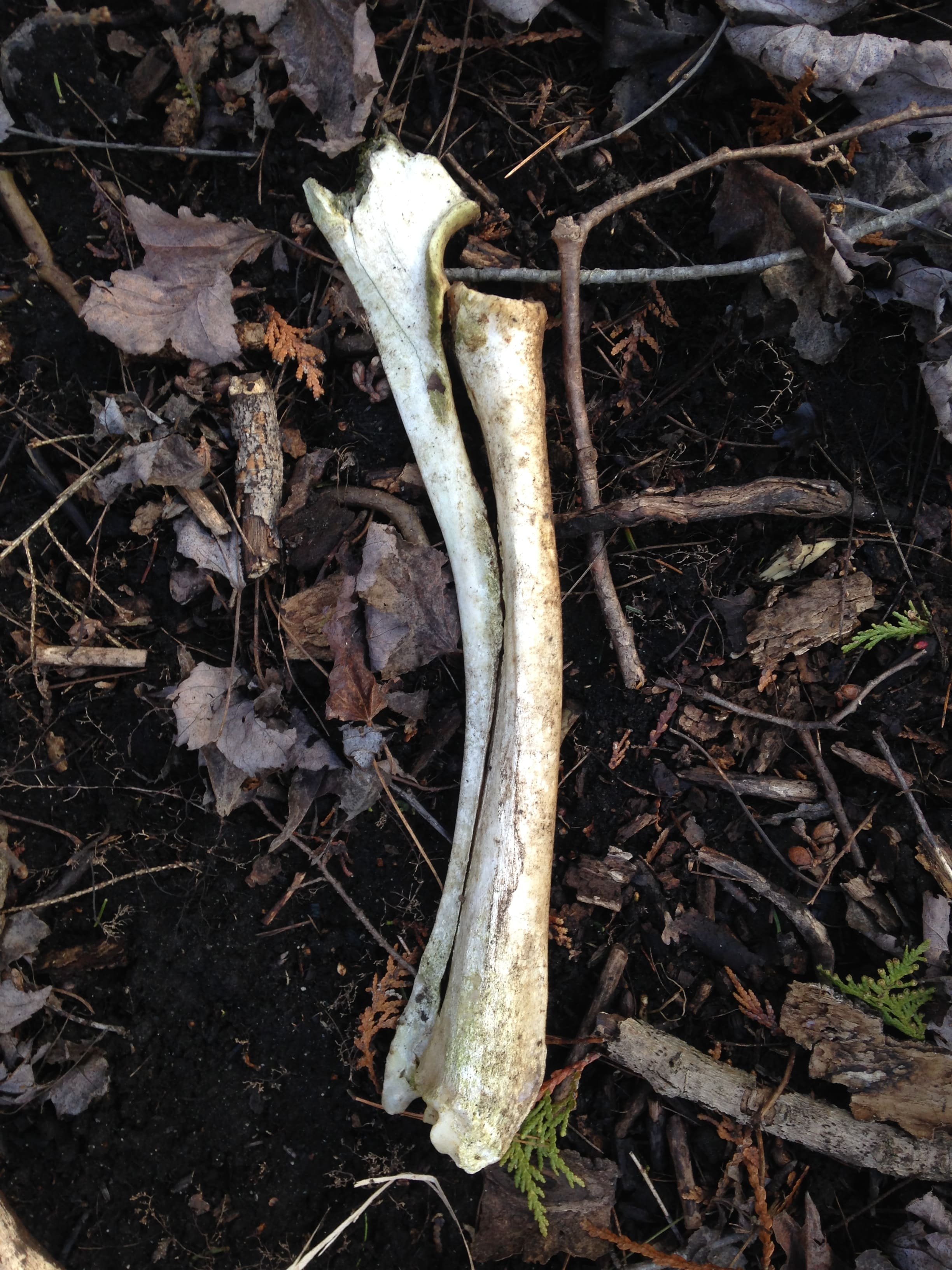
I went for a walk with my partner and we found a bunch of cool things while we were out, like Yellow Birch seeds, lots of White-tailed Deer scat, all sorts of neat lichens, and also a couple of bones, which based on their size were most likely from the White-tails.
The first bones I found were pretty interesting, quite a good length and size. It was also cool because it seemed like two bones fused together. I figured this would be a simple bone to figure out where it was from on this other animal, and I figured I should learn more about what purposes this bone supports.

First Wildflowers of 2022
I think Crocus’ and Snowdrops may be beautiful, but they are certainly overrated. They may herald the warmer months and the coming of Spring, but they’ve been planted as early evidences and don’t have the same force that some of the native plants have. This spring has been cooler than last year, but seems to be on pace with 2020 for early season blossoms. I am noticing the leaves of Trout Lily along the trails and Wild Leeks in the open woods and even the small dark shoots of Blue Cohosh just coming up in the deeper forests. None of the species mentioned above though have been flowering. Who did I see in flower?
Study in Cyanobacteria
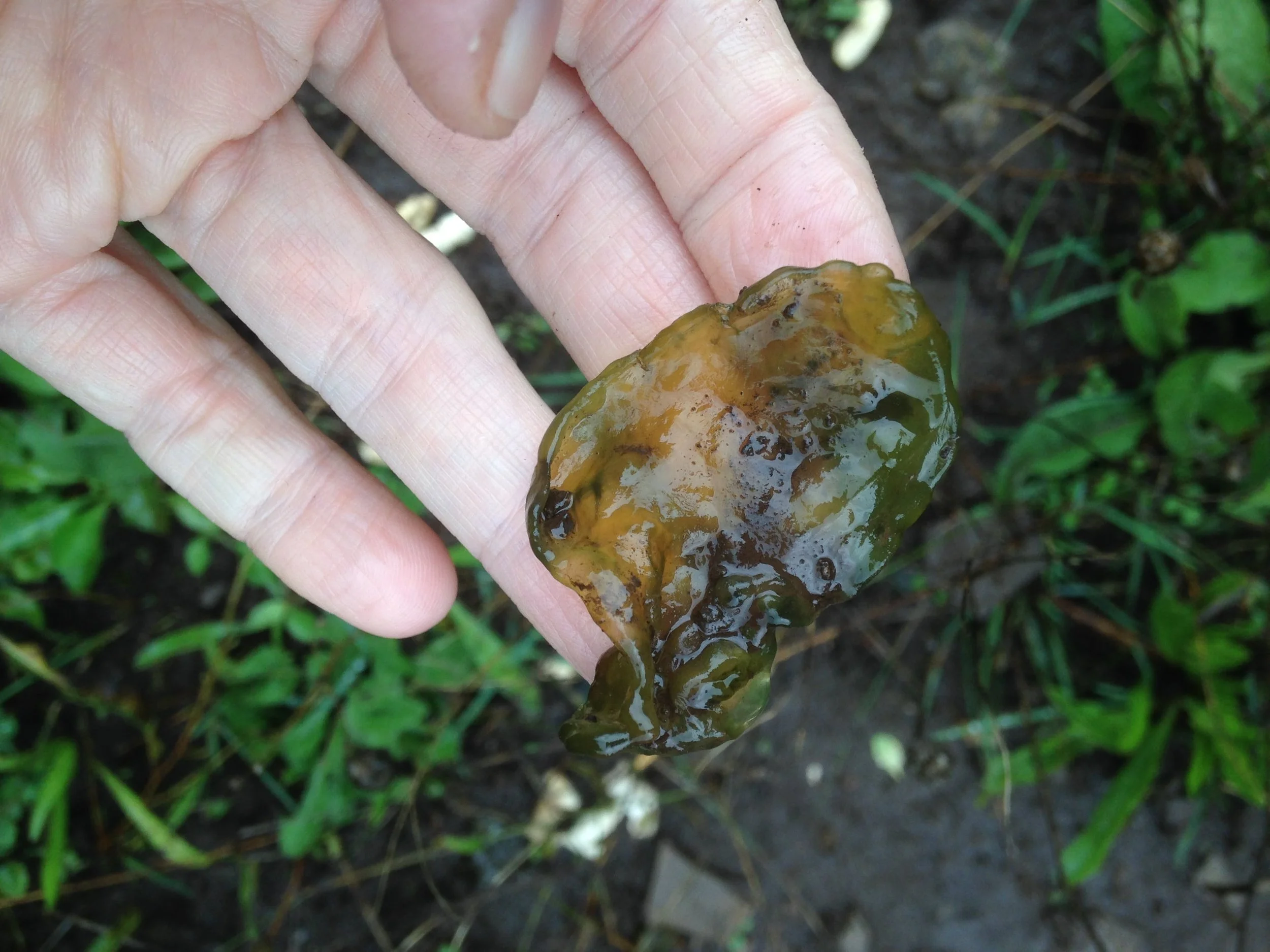
It was green and ..snotty, but a little more solid. Like someone coughed up some strange phlegmy goo and it got rained on for a while. I didn’t see it, but I think others had mentioned that there was more hidden amidst the grasses, limestone shale and small forbs.
This goo has had many names, including Star Jelly, Star Shot, and Star Slime, Troll’s Butter, Witch’s Butter (not the fungi), and Witch’s Jelly. It is more formally known as Nostoc, which is the genus name of this really interesting cyanobacteria.
An old s****y mystery
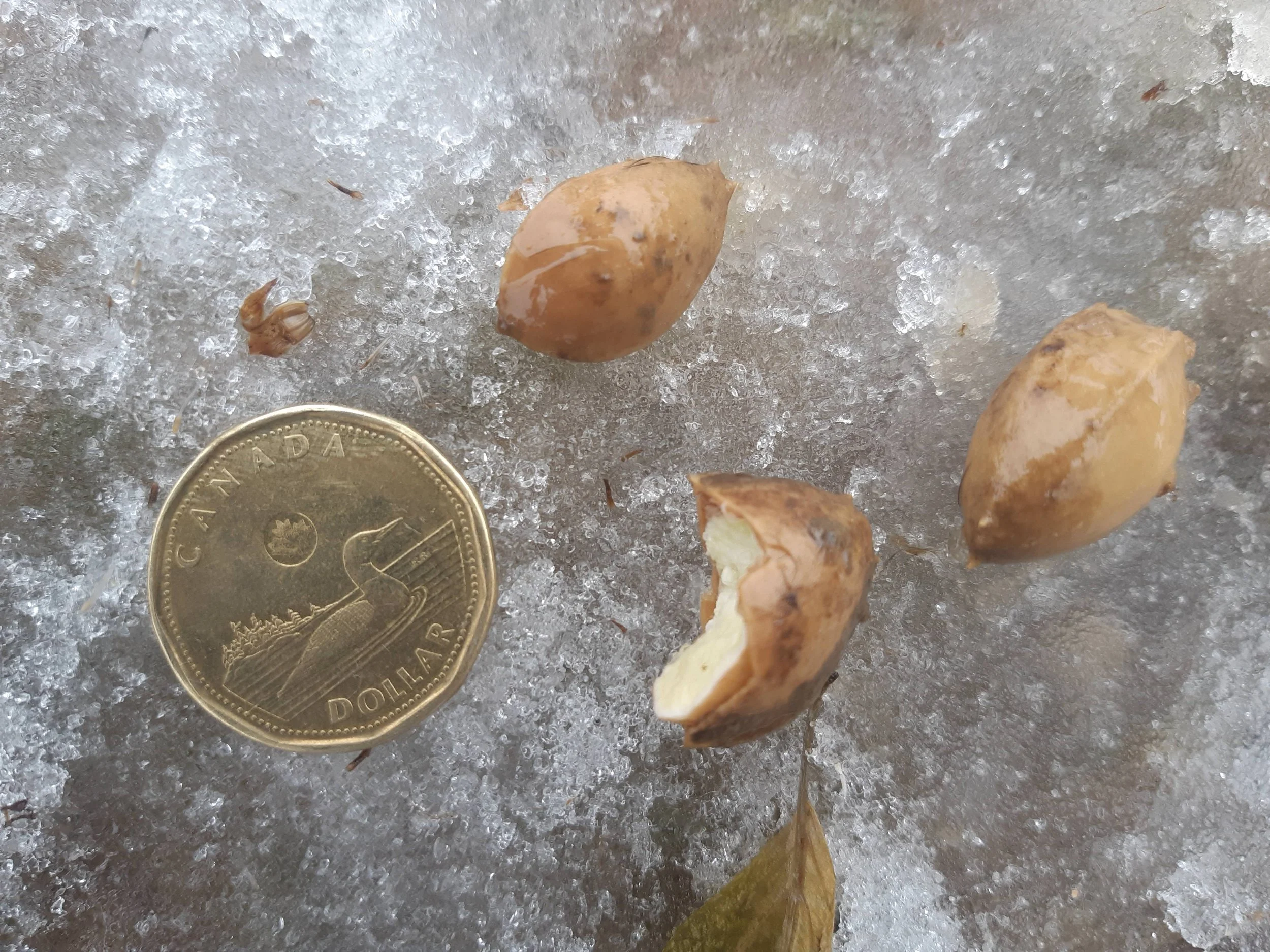
A few years ago I was walking with a friend of mine along the trail towards the forest where I work. Along the way I happened to spot some scat in the middle of the trail. It was tapered and long, fairly fat, and had some seeds in it. The scat appeared to have come from a Coyote but I was at a loss as for what kind of plant the seeds had come from. I looked up a couple of books I have which have a few photographs of seeds but never found an image of a seed which looked right. The mystery haunted me.
Tracking Bugs and Trees, 2022.03.05
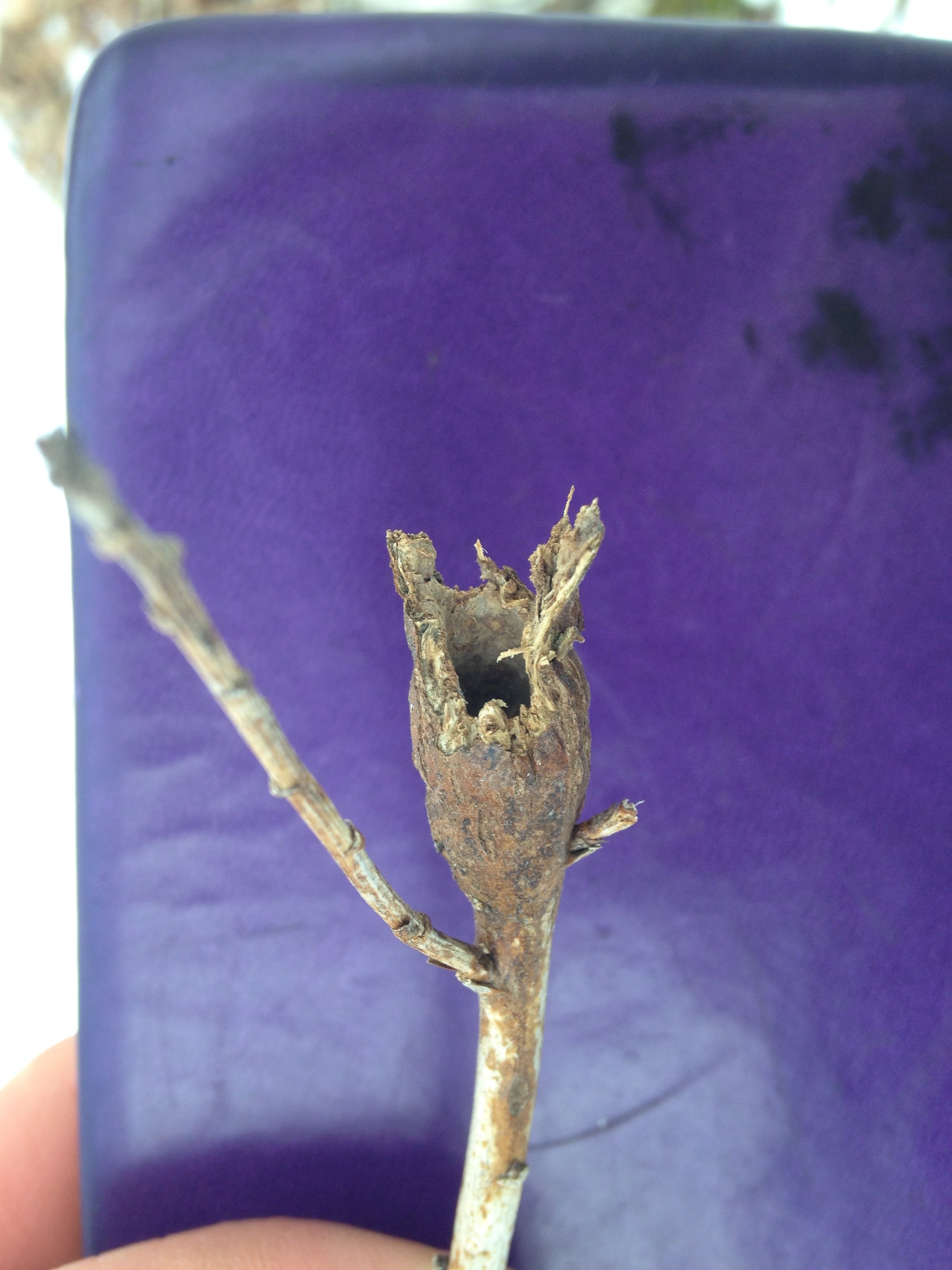
On the drive up to Mono Cliffs, Maddie and I were talking in the car about some things we really wanted to pay attention to today. I was talking about trees and wanting to pay attention to what is going on around the trees, who is interacting with the trees, and who may be living on the trees. She had mentioned a desire to focus on bird tracks and sign, especially after focusing on Wild Turkeys for the past year. Little did we know…
A Couple Late Winter Wonders
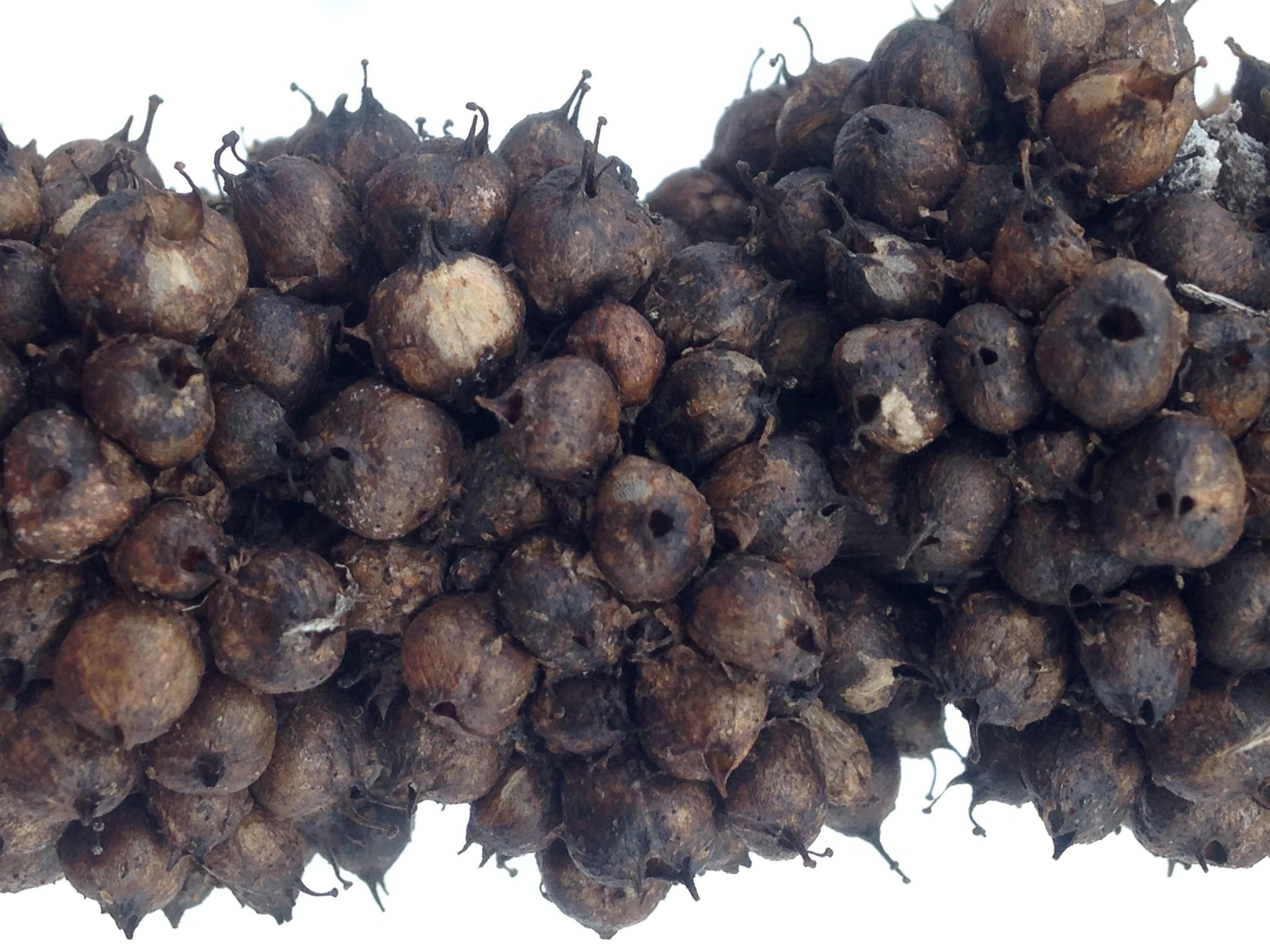
While out trailing some domestic Dogs, Short-tailed Weasel, and Red Fox, I encountered a couple of things that I did not know about and decided to examine. This post is just detailing those things a little more and sharing whatever information I can find so far.
Frost Cracking
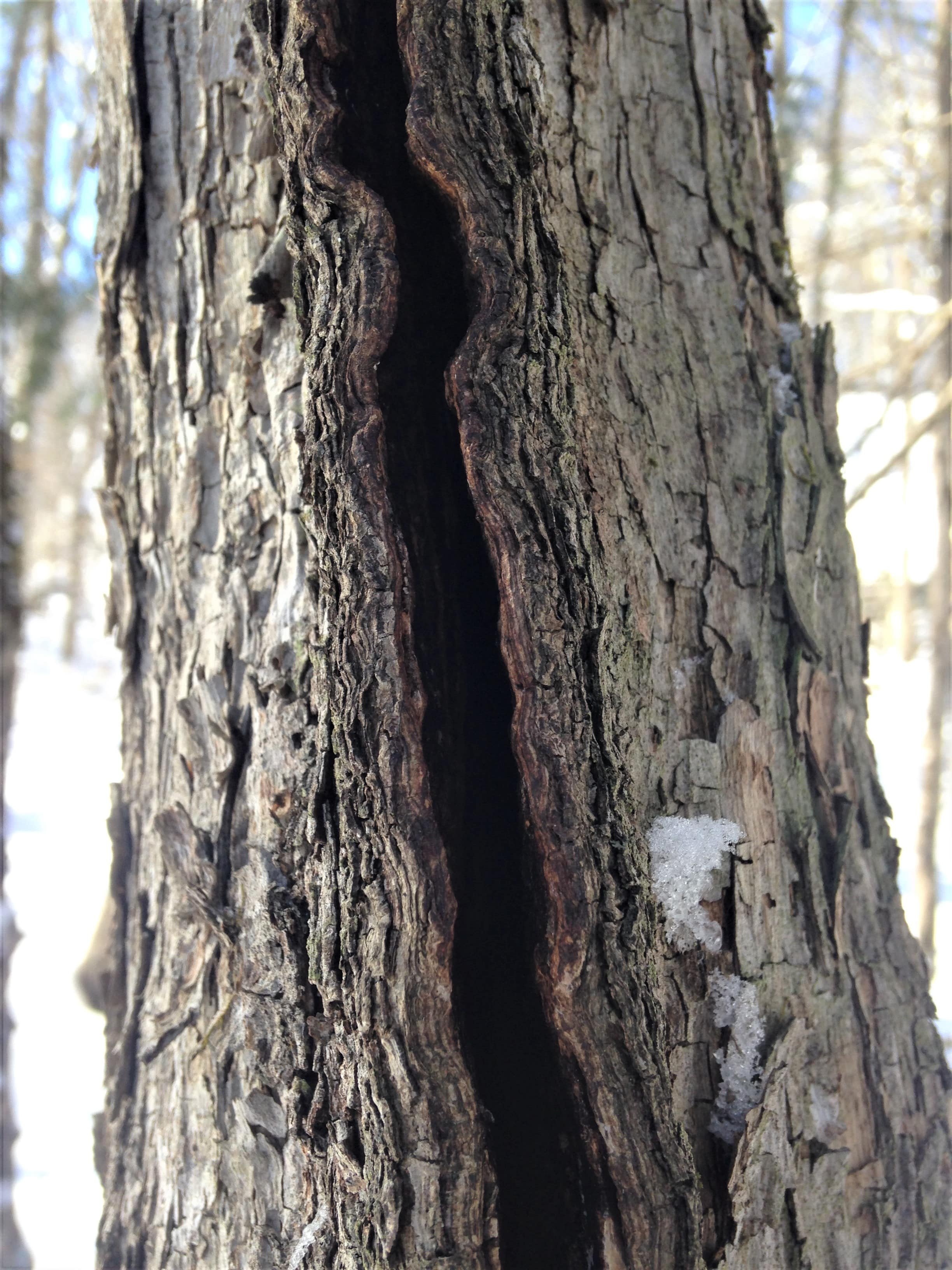
A couple of years ago on a trail which circled Sasajewun Lake at the Algonquin Wildlife Research Station, we came across a few trees that I thought had been struck by lightning. I saw fissures in the tree, some shallow, some deeper. These fissures wrapped in a long loose spiral around the trunk of the tree from fairly high up most of the way down. Many different tree species had these fissures and many were near the path. This is when I started to think again about lightning strikes. How did so many trees along a single path get struck by lightning? Turns out they didn’t.