Considering Bebb’s Willow
Bebb’s Willow is a species I encounter commonly, but I do not know much about. I can’t even accurately identify them. They have become the subtle whisper of species ID I feel inside me whenever I cannot identify a small wetland shrub that sorta looks like a Willow. I have decided that I will take a closer look here.
Kingdom : Plantae
Clade : Tracheophytes
Clade : Angiosperms
Clade : Eudicots
Clade : Rosids
Order : Malpighiales
Family : Salicaceae
Genus : Salix
Species : S. bebbiana
Common names : Bebb’s Willow, Beaked Willow, Long-beaked Willow, Grey Willow, Diamond Willow. The use of Bebb’s Willow seems to be more common in Ontario, where as publications I have from the states often begin their list of common names with Beaked Willow. Salix may originate from Celtic sal-lis meaning “near water”.
Habitat : Open to lightly shaded moist to wet habitats, including wet meadows, swamps and bogs, lake shores, ditches, river and wetland edges, limestone flats, and sandy Jack-Pine woods. One books says this is one of the few forest species of Willow shrub as they grow in deciduous and coniferous forests. Like most willows, S. bebbiana is fairly shade intolerant.
This is a tricky one to ID as they take many forms.
Leaves : Wider leaves than most other Salix species. Generally egg-shaped though narrowing to a point at the terminus, though can be more lance-shaped as well. Sometimes coarsely toothed, sometimes nearly no teeth at all. Teeth can be rounded or dull saw-toothed. Dull green above, while grey and wooly on the underside with no trace of coppery or red hairs. Young leaves can appear a bit downy. Veins impressed above, and prominent below. Leaves turn yellow in the Autumn.
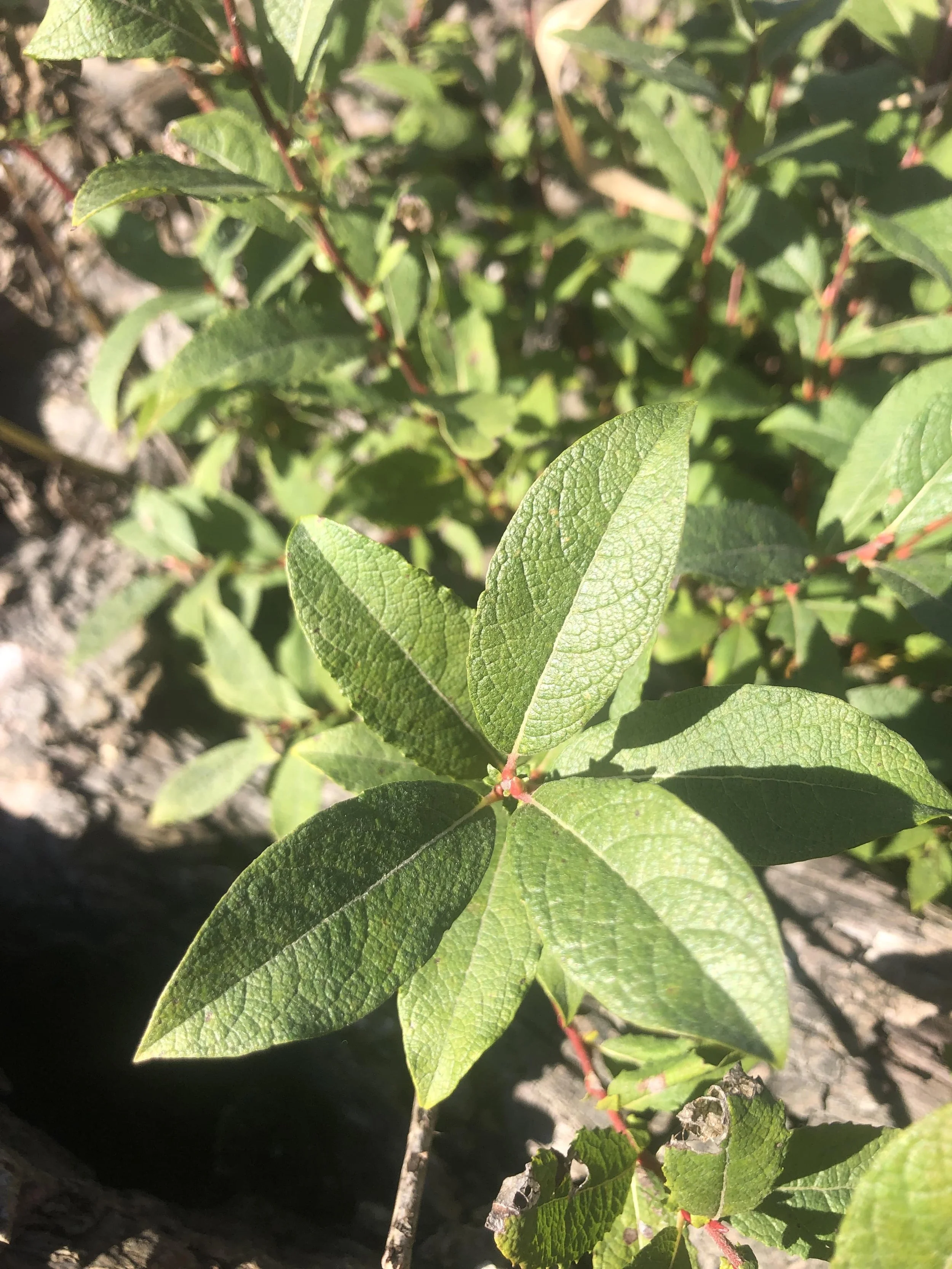
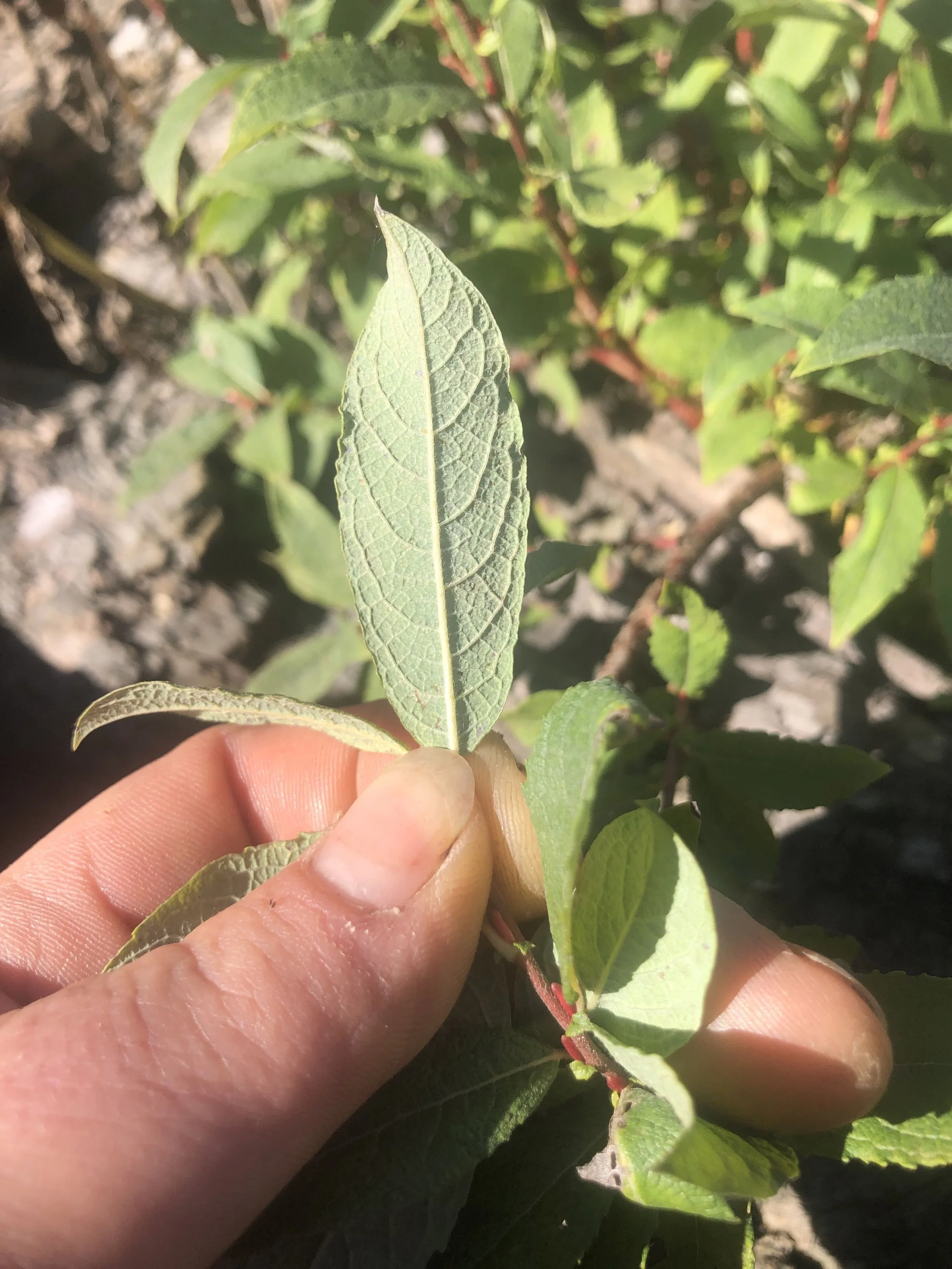
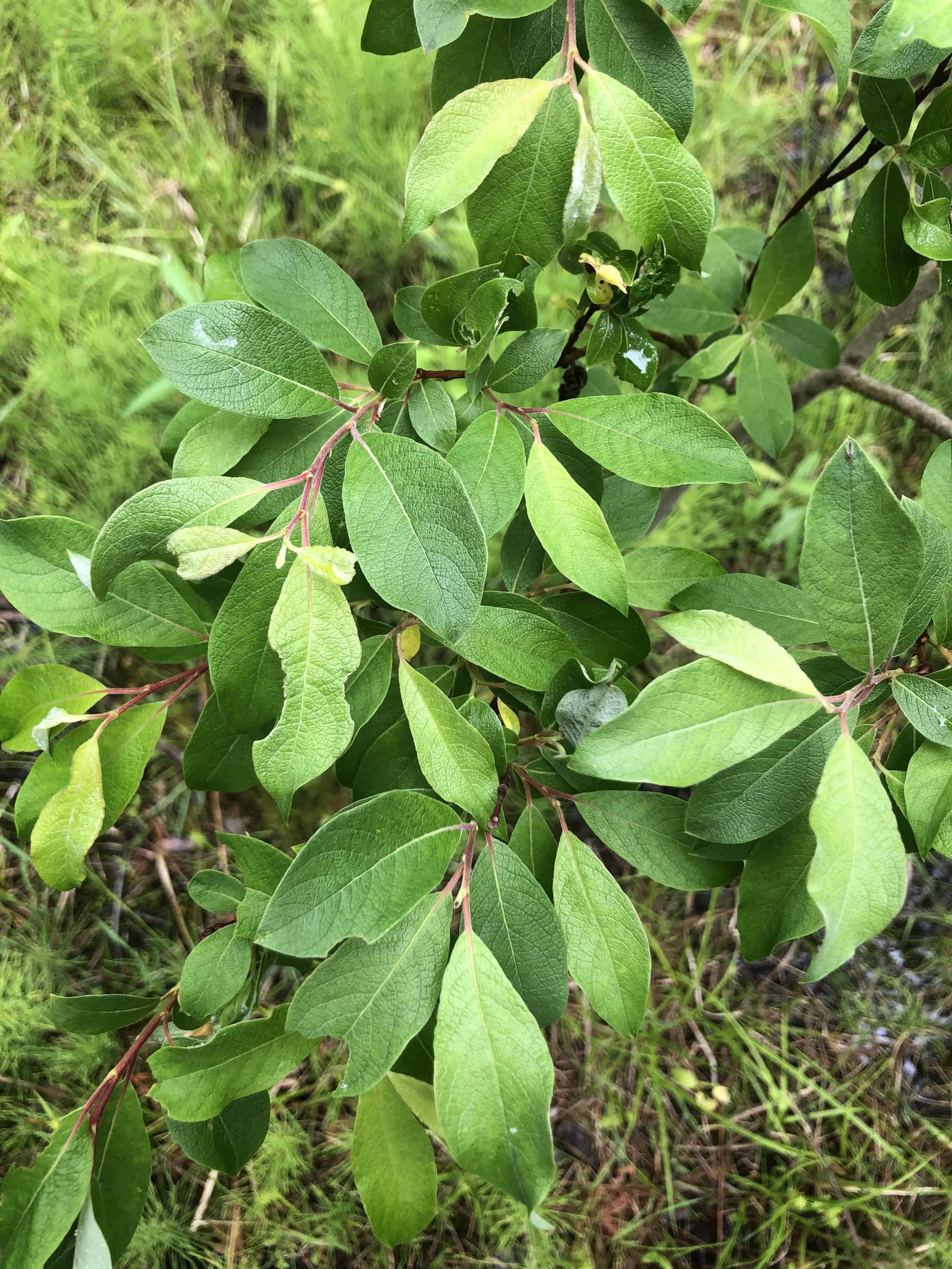
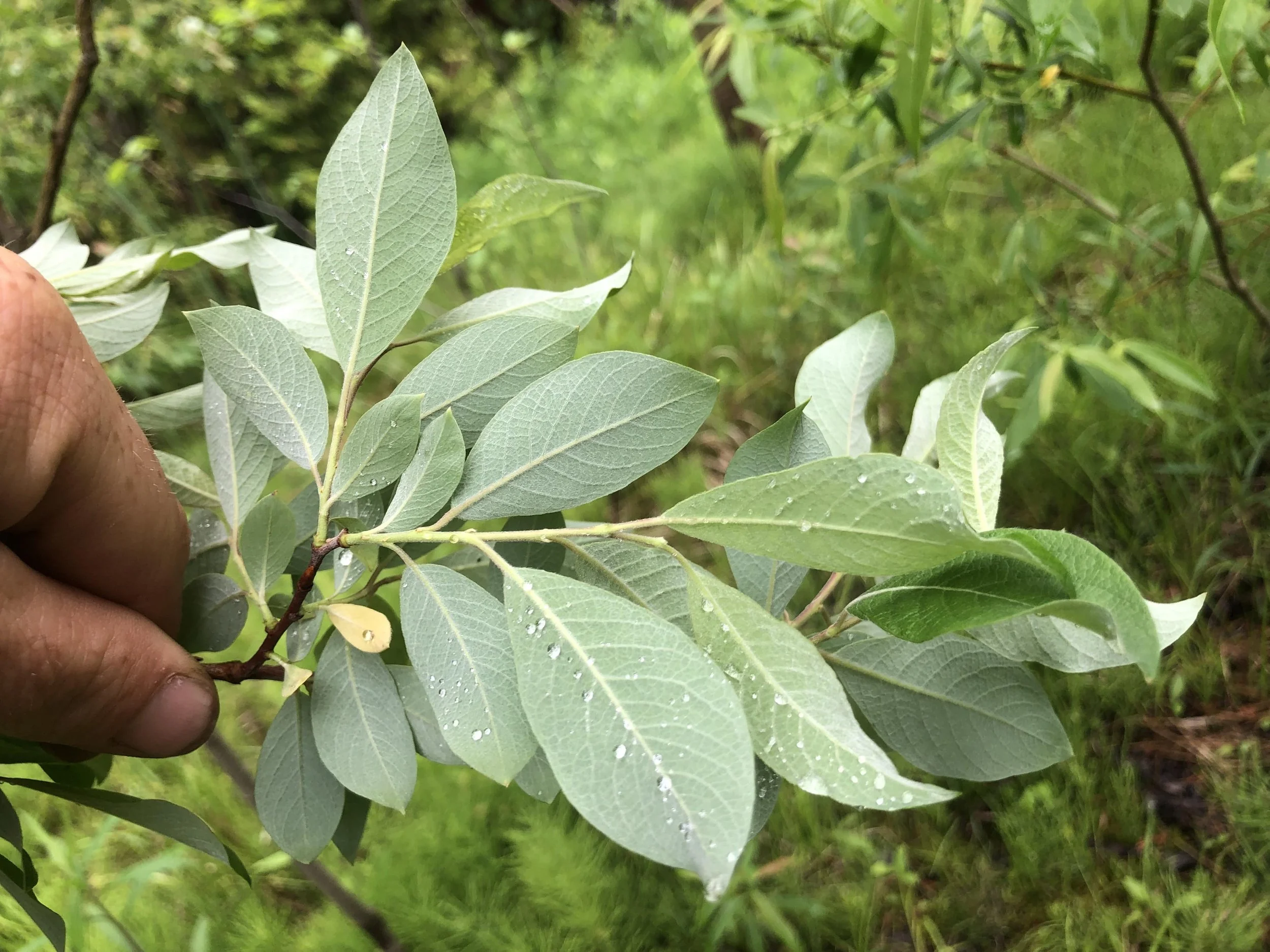
Trunk and branches : Multiple stems, with older trunks sometimes appearing reddish in the cracks of the bark. Year old branches can be a little fuzzy or smooth. Trunks can reach larger diameters than many other shrubby willow species. Stipules (little leaf structures at the base of the leaf stem) usually present where leaf stalk (petiole) attaches to twig.
Flower : Like almost all other willows, dioecious, with male and female flowers appearing as catkins on separate plants. Flowers in Spring when leafing out. Pollinated by insects (largely bees) and wind.
Fruit : Female catkins develop late Spring and release tiny seeds on fine filaments threads which catch the wind. Willow seeds must germinate quickly as they are not viable for long periods and there is no dormancy period.
Regeneration : Sprouts readily from stumps.
Growth and form : Up to 3-6 m (10-20 ft) tall.
Notes on species ID : Readily hybridizes with multiple other species so good luck out there!
Ecofunction : Browse for Moose (Alces alces), Elk (Cervus canadensis) and Deer (Odocoileus spp) species. Erosion control and riverbank stabilization. Nutrient absorption in wetlands.
Cultural and craft use : S. bebbiana is host to a fungal pathogen Valsa sordida which can lead to cankers in the wood, which creates extensive patterning in the colouration and form of the heartwood called “diamonding”. When the wood is carved, the diamond-shaped pattern of hollows, show up in sharp contrast between the white sapwood and the reddish-brown heartwood. Diamoned wood is highly prized by wood carvers for the unique aesthetic value.
As always, these species profiles are under construction in perpetuity. I am always learning more about different species and will update these posts as I go. That’s the fun of them!
To learn more :
Shrubs of Ontario by James H Soper and Margaret L. Heimburger. ROM Life Sciences Publications, 1982.
Michigan Shrubs and Vines by Burton V. Barnes, Christopher W. Dick, and Melanie E. Gunn. University of Michigan Press, 2016.
Field Manual of Michigan Flora by Edward G. Voss and Anton A. Reznicek. University of Michigan Press, 2012.
Peterson Guide to Trees and Shrubs by George A. Petrides. Houghton Mifflin Company, 1958.
Illustrated Guide to Trees and Shrubs by Arthur Harmount Graves. Dover, 1956.
Wild Urban Plants of the NorthEast (2nd ed.) by Peter Del Tredici. Cornell University Press, 2020.
The Book of … Swamp and Bog by John Eastman and Amelia Hansen. Stackpole Books, 1995
What is Diamond Willow? from Woodcarver Ezine
USDA Forest Service website on fire ecologies of Salix bebbiana