Tracking the Birds at Saugeen First Nations
Just a note; I often use the scientific binomial after English common names, but as we were tracking on Saugeen First Nations lands, I will also try to include the Anishinaabemowin (or Ojibwe) names if I can find them.
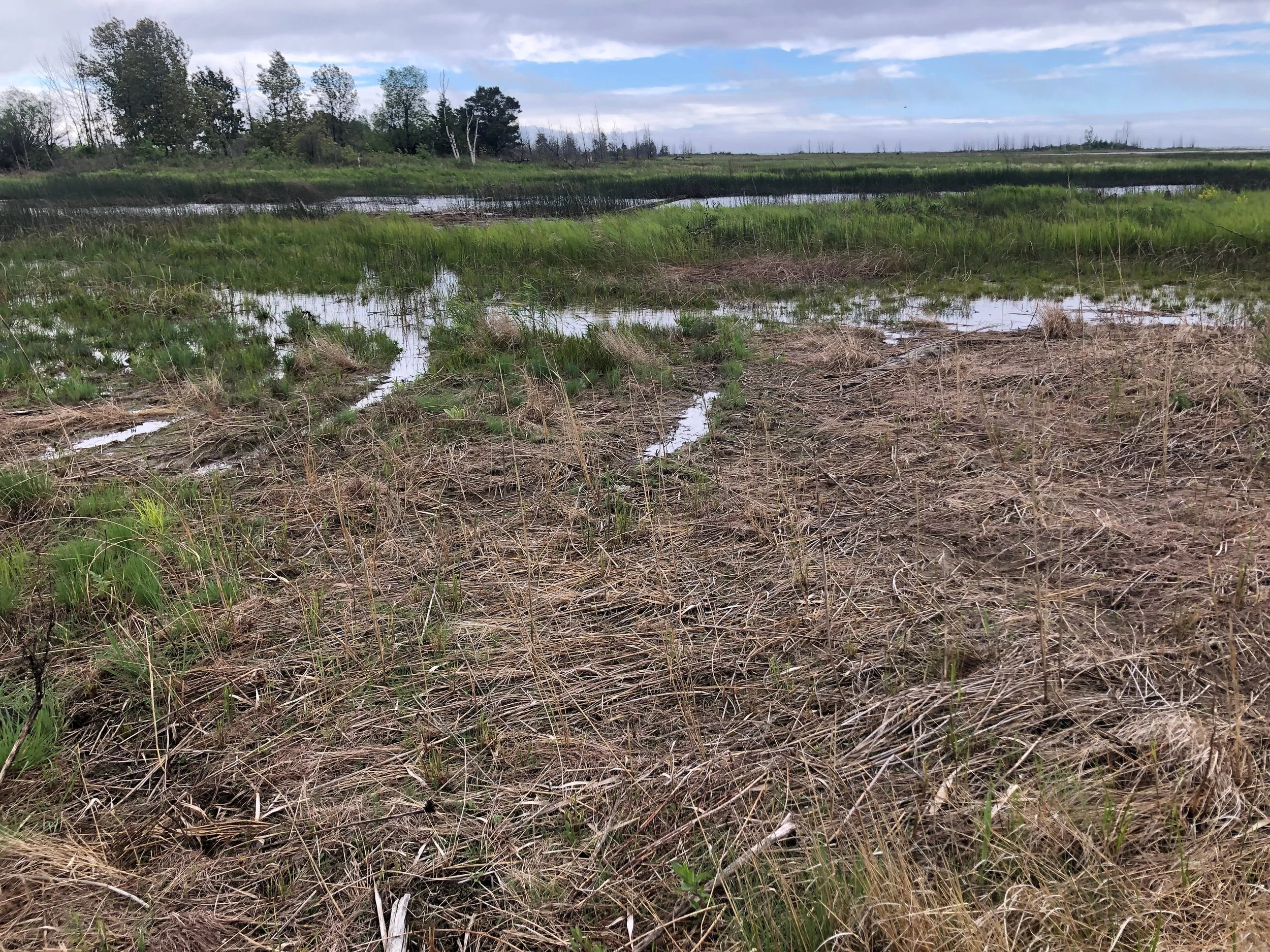
I believe this was the seventh or eighth year that I had the chance to track at Saugeen Shores with the Earth Tracks Wildlife Tracking Apprenticeship program. This is a great tracking spot as every year we encounter a varied array of tracks in the sandy beach and trails and a diverse assortment of sign out on the rocky spit which juts out into Lake Huron (or Naadowewi-gichigami in Ojibwe).
The temperature had dropped and it had rained pretty hard before we arrived around 10am and by the time we hit the beach there was a mostly Westerly wind pushing a cool mist inland from out on the lake. I was exploring looking for tracks in the sand, I realized I was too chilly and had to run back for a wool sweater to go on under my coat. Because of the rain earlier in the day we assumed that if there were many tracks from the days before, most had been washed away.
There were a couple of shrill Killdeers (Charadrius vociferous) hanging out near where were first came in and I decided to look for their tracks by following them around. I didn’t catch too many clear ones but for all the talk of Killdeers feigning a broken wing to lead potential predators astray, they instead led me directly to their nest.
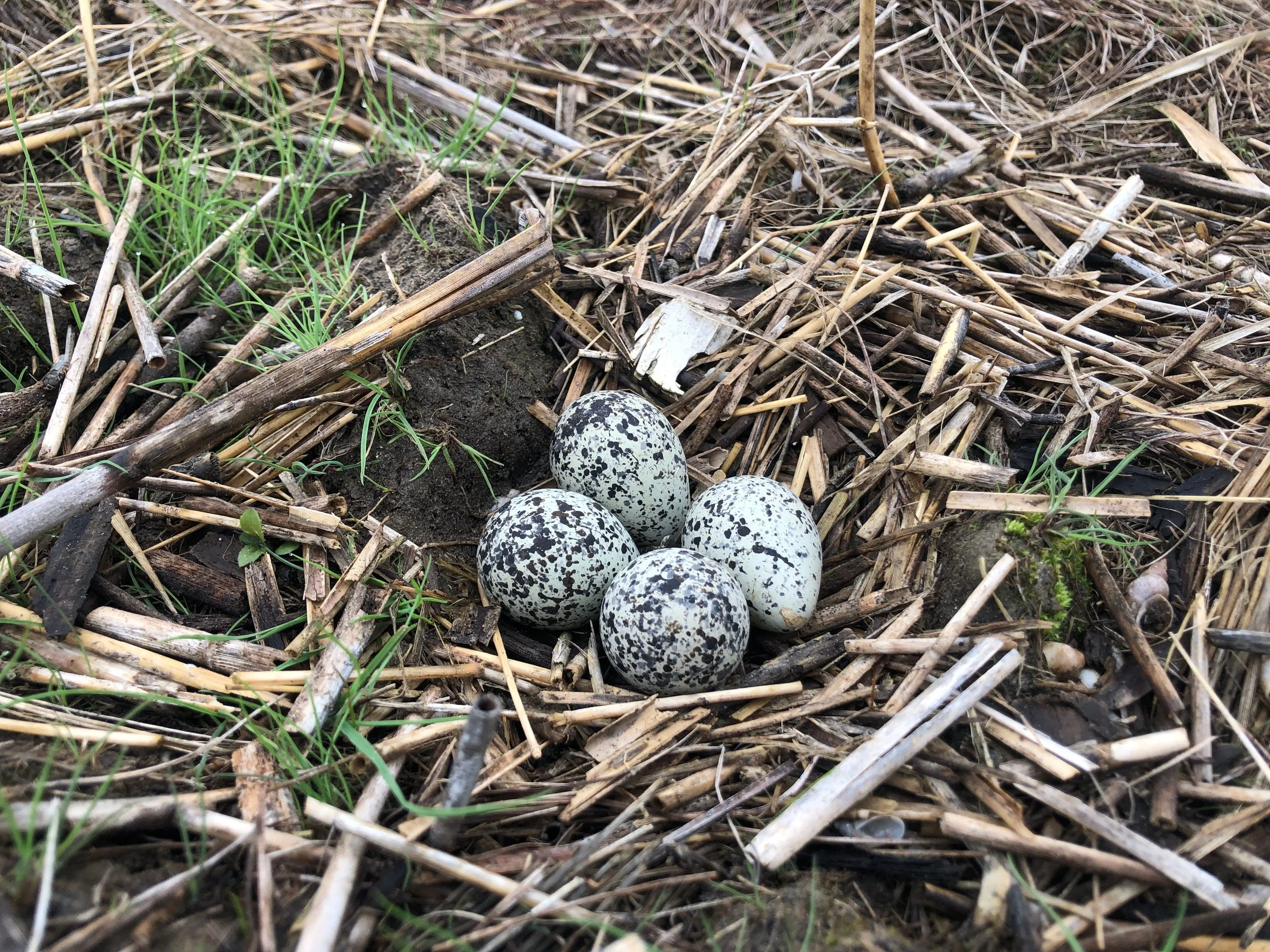
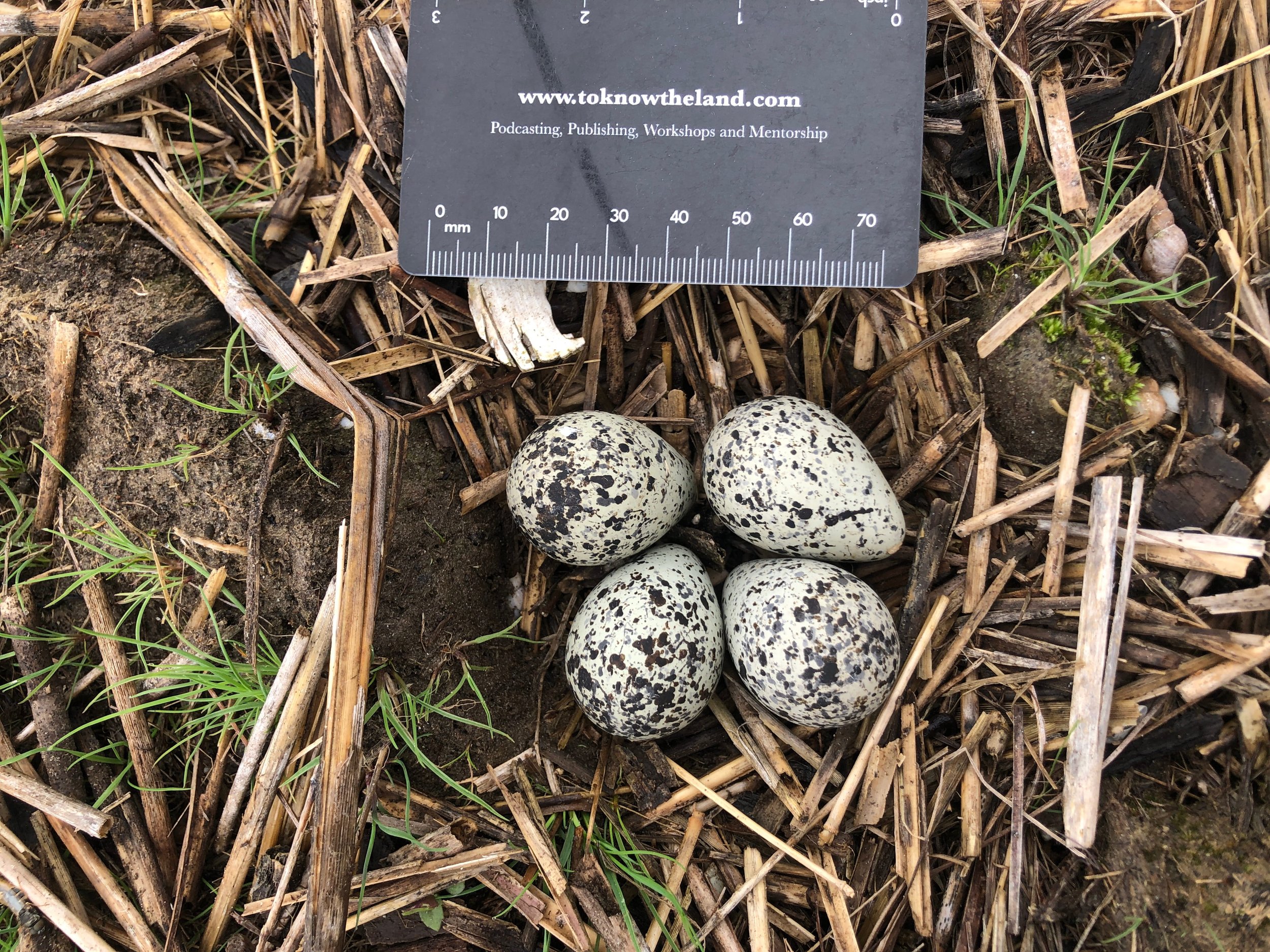
It wasn’t much more than a small divot in some wet sandy soil, surrounded by pale stalks of last years forbs. The eggs however were beautiful, speckled with purples, browns, and greys in varying layers. Each unique in their pattern yet rhythmically similar… Jackson Pollock would’ve been impressed. I quickly pulled out my camera and took a couple of fast photos, and one with scale, and then backed away quickly, not wanting to disturb any of the calling Killdeers. I didn’t notice any particular rise alarm calls or any particular defensive actions, so I hope my intrusion wasn’t too intrusive.
We noticed some more cool signs around like Raccoon (Procyon lotor or Esiban) tracks in the sand and mud, as well as some dug up turtle eggs, possibly Northern Map Turtle (Graptemys geographica) or Midland Painted Turtle (Chrysemys picta marginata or Miskwaadesi), a coracoid and humerus from an unknown midsized bird along with some mammal bones. But keeping to the theme of birds, we also found some corvid tracks.
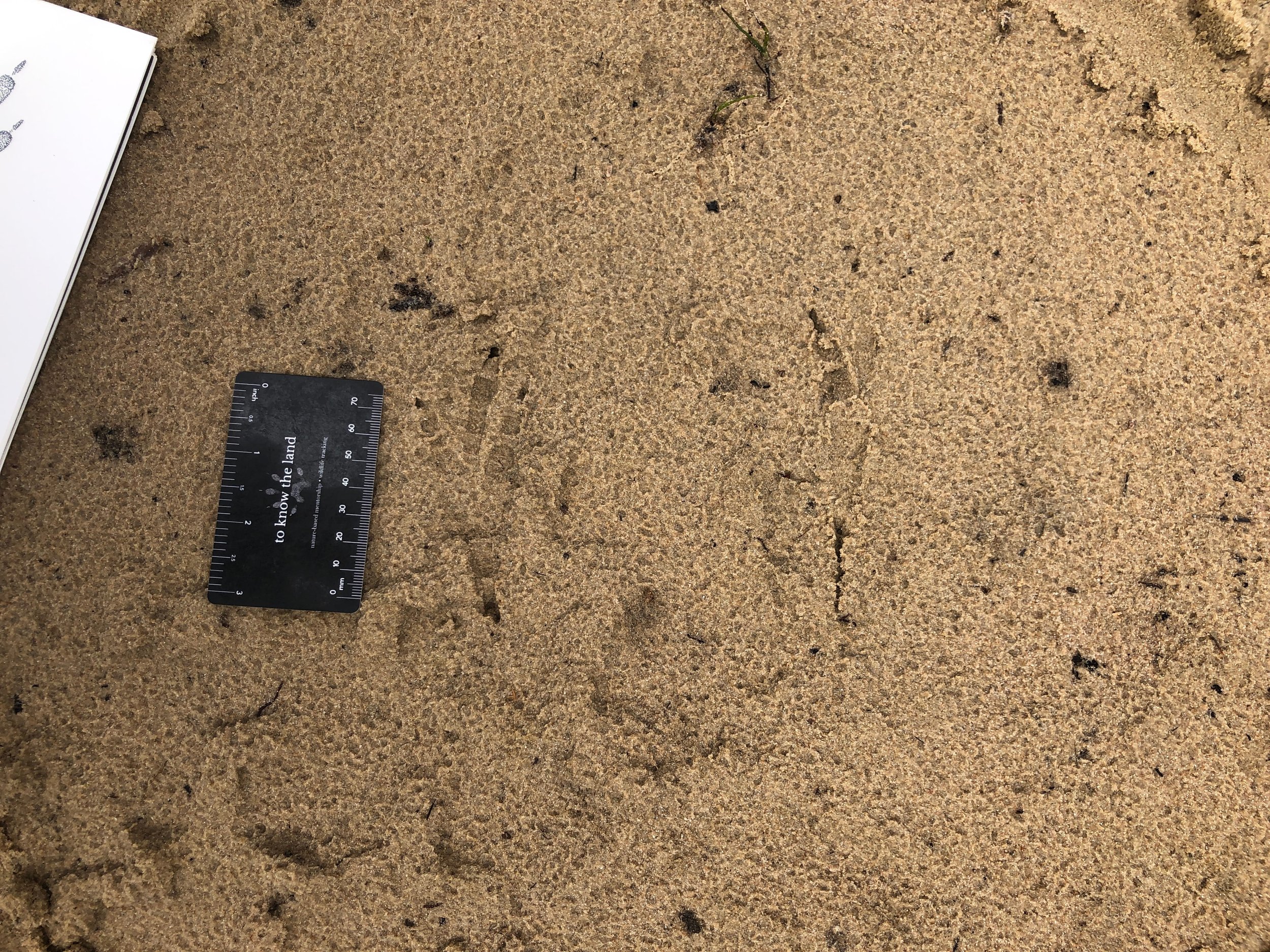
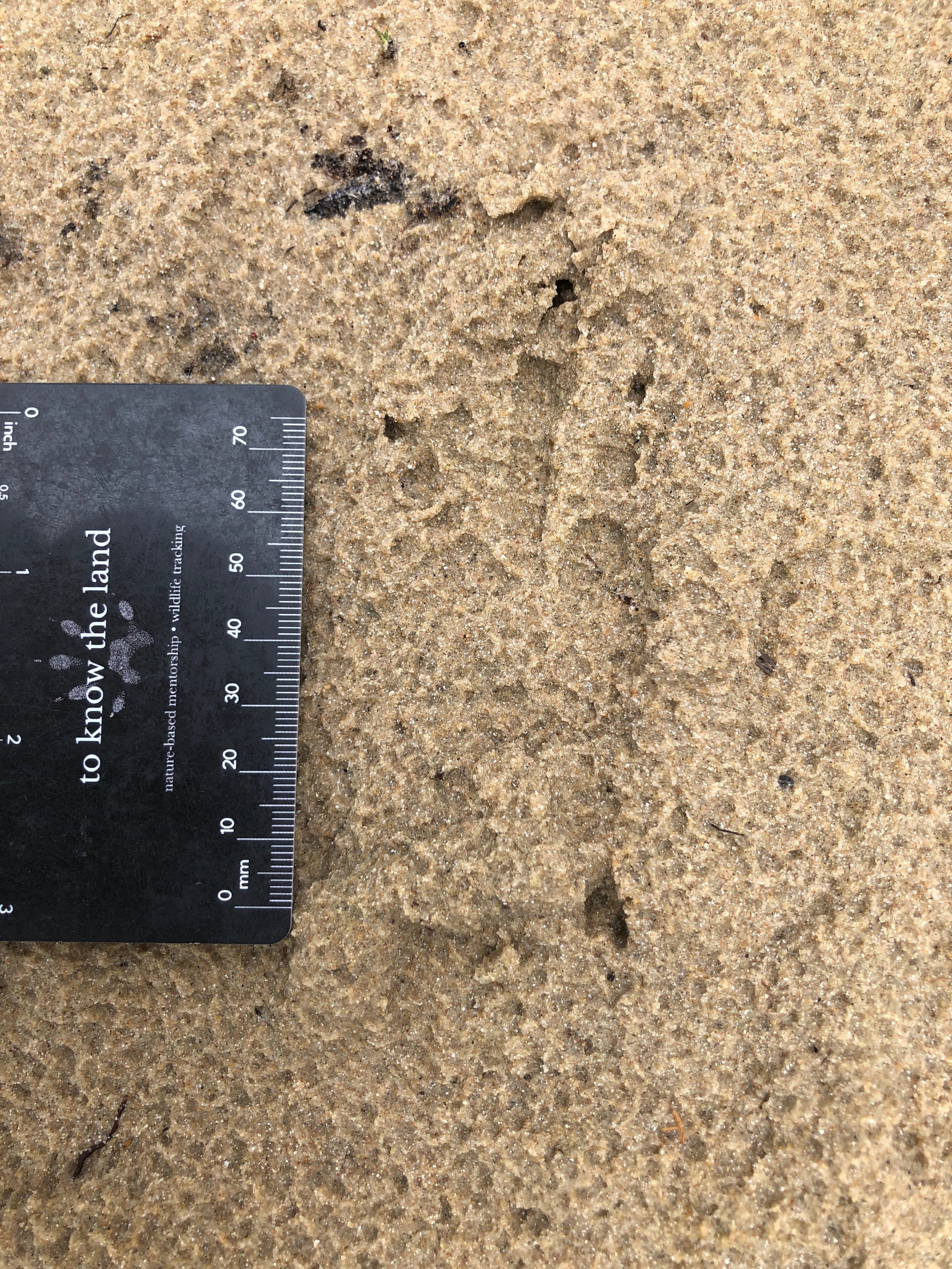
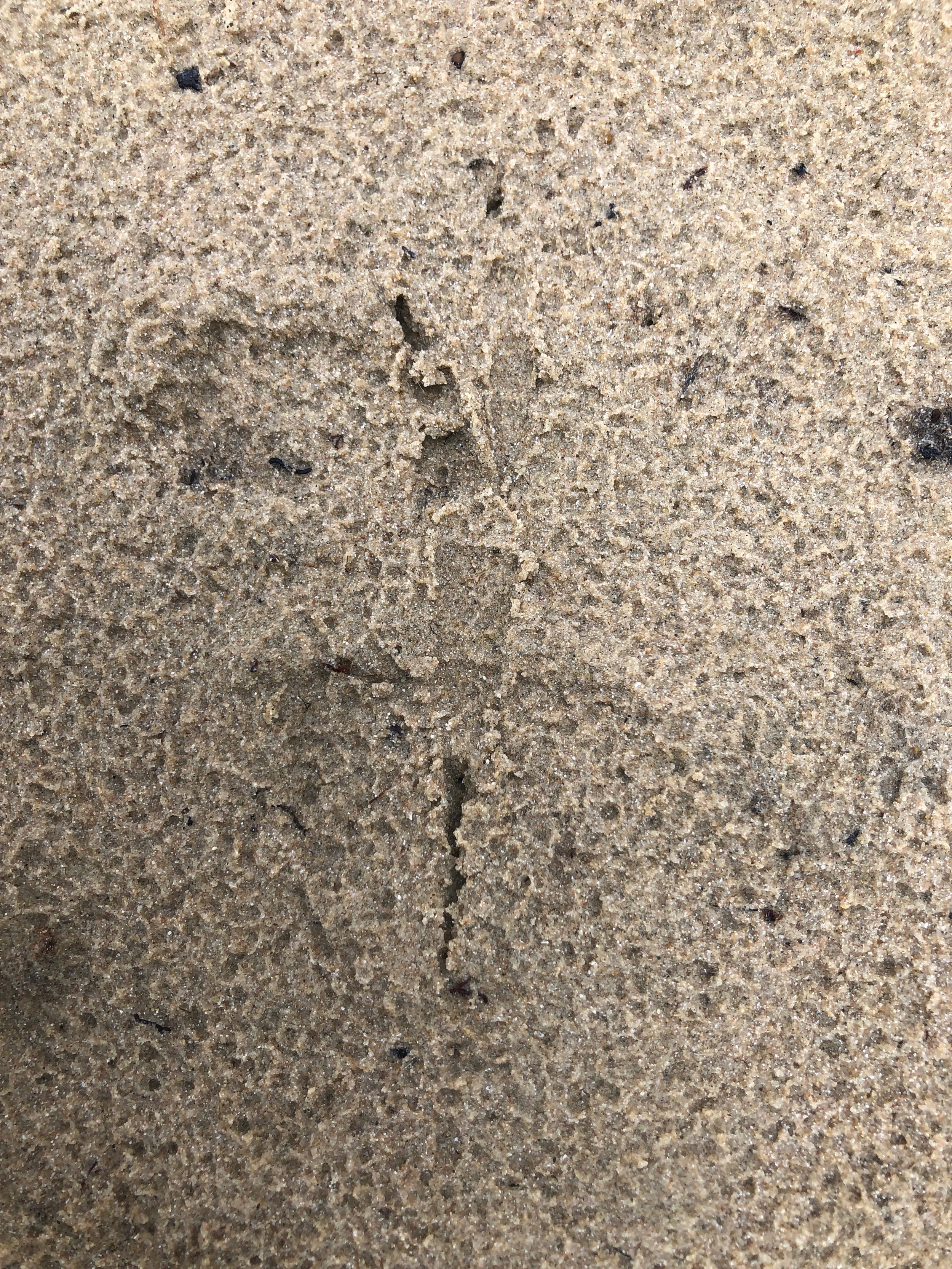
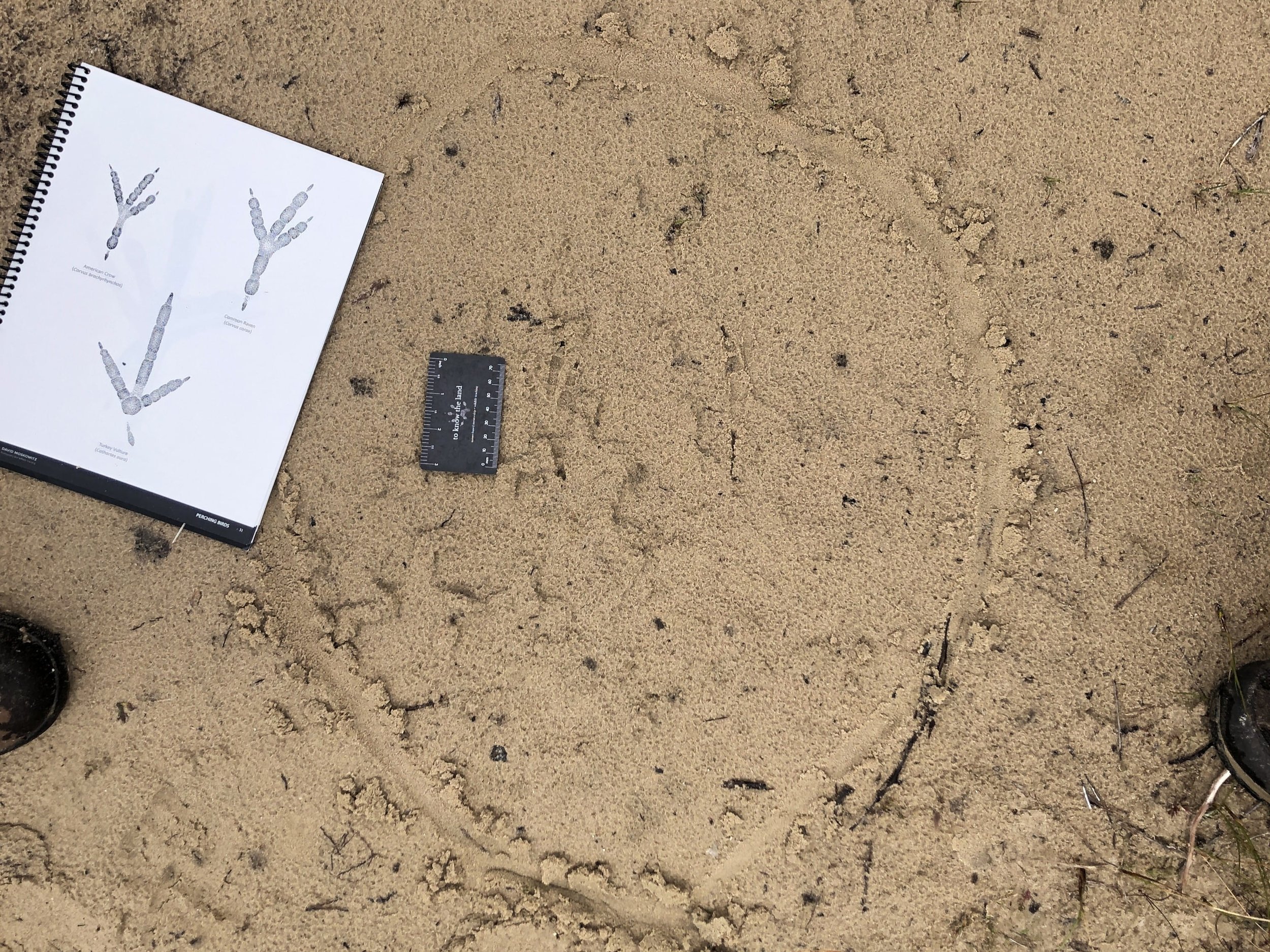
If I remember correctly, the track measured around 11 cm (4⅜ in), which is too large for two of the smaller corvids in my part of the province, Blue Jay (Cyanocitta cristata or Diindiisi) and American Crow (Corvus brachyrhynchos or Aandeg). That only leaves the Common Raven (Corvus corax or Gaagaagi). Now, if we didn’t have a ruler, or the track was close in size to both the Crow and the Raven, is there a way to tell the two species tracks apart morphologically? Well, yeah, sort of… if the tracks are clear enough. The first thing you can look for is the distance between a track from the left side of the body and from the right side. In the first photo you can see a distance between the two tracks of about 12 cm (4¾ in). This would be a bit wide for an American Crow, and pretty normal in my experience, for a Raven. Next, a Common Raven has a wider metatarsal than an American Crow, which shows up pretty clear in the third photo of this set. Some people say that Raven tracks also taper a bit more along toe 1, from the metatarsal down to the tip of the track, but I also seem to see a bit of a taper in Crow tracks sometimes, so I don’t find this to be reliable. I think the best i.d. features are size, that wide metatarsal when it shows up in the track, and associated information like habitat, season, and perhaps even listening for which corvids you can hear while you are out looking at the tracks. You can learn more about Crow tracks vs. Raven tracks here.
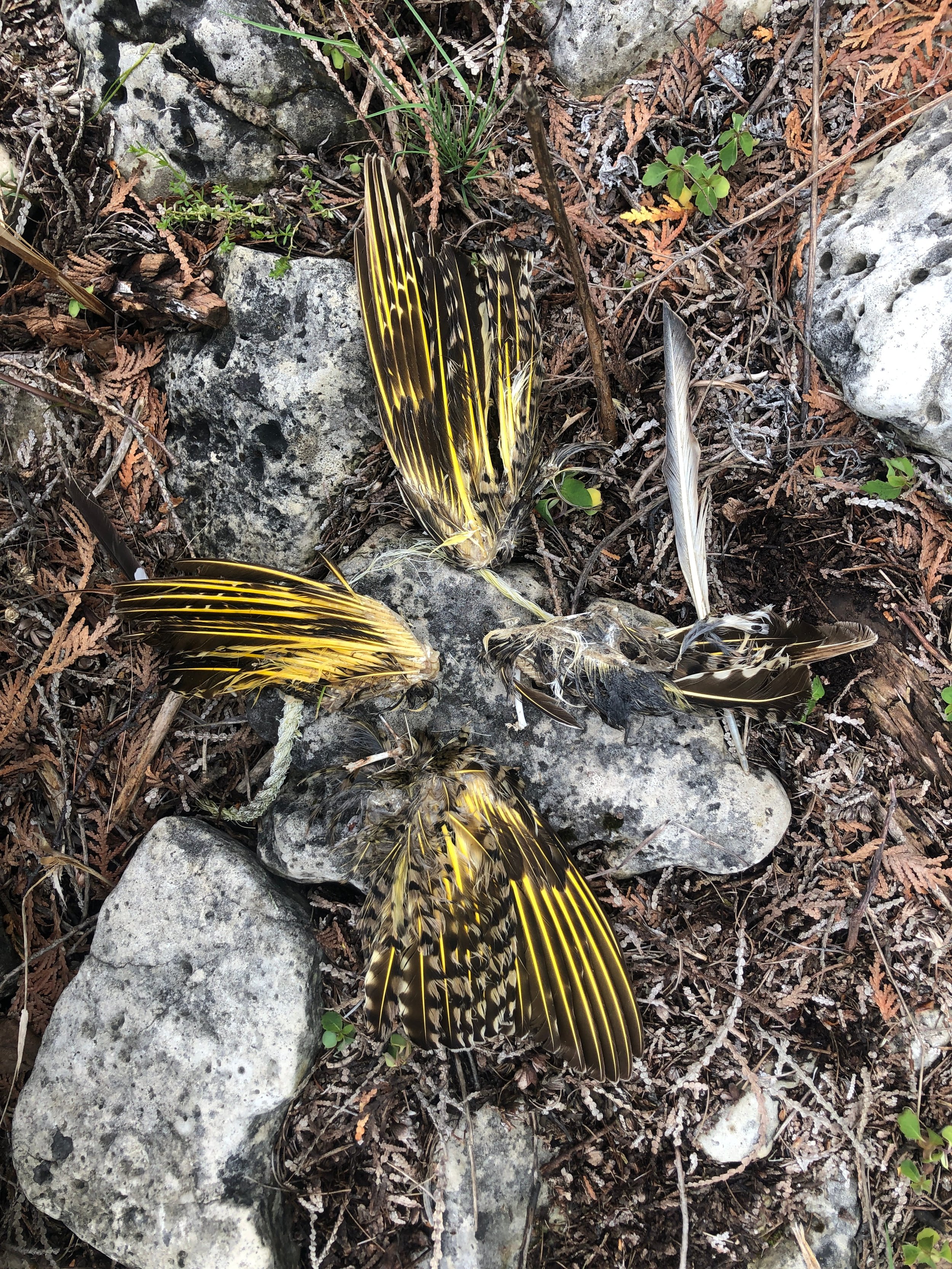
We kept on for a bit and decided to head out onto a rocky spit out into Lake Huron. It would be a bit more sheltered among the Eastern White Cedars (Thuja occidentalis or Giizhikaatig) and other trees for us to have our lunches. Close to where we sat for lunch we came across an unusual but very intriguing site. A bird had been apparently predated, and all that was left were some bones and the wings spread like those painted on the alley wall downtown were suburban moms take selfies.
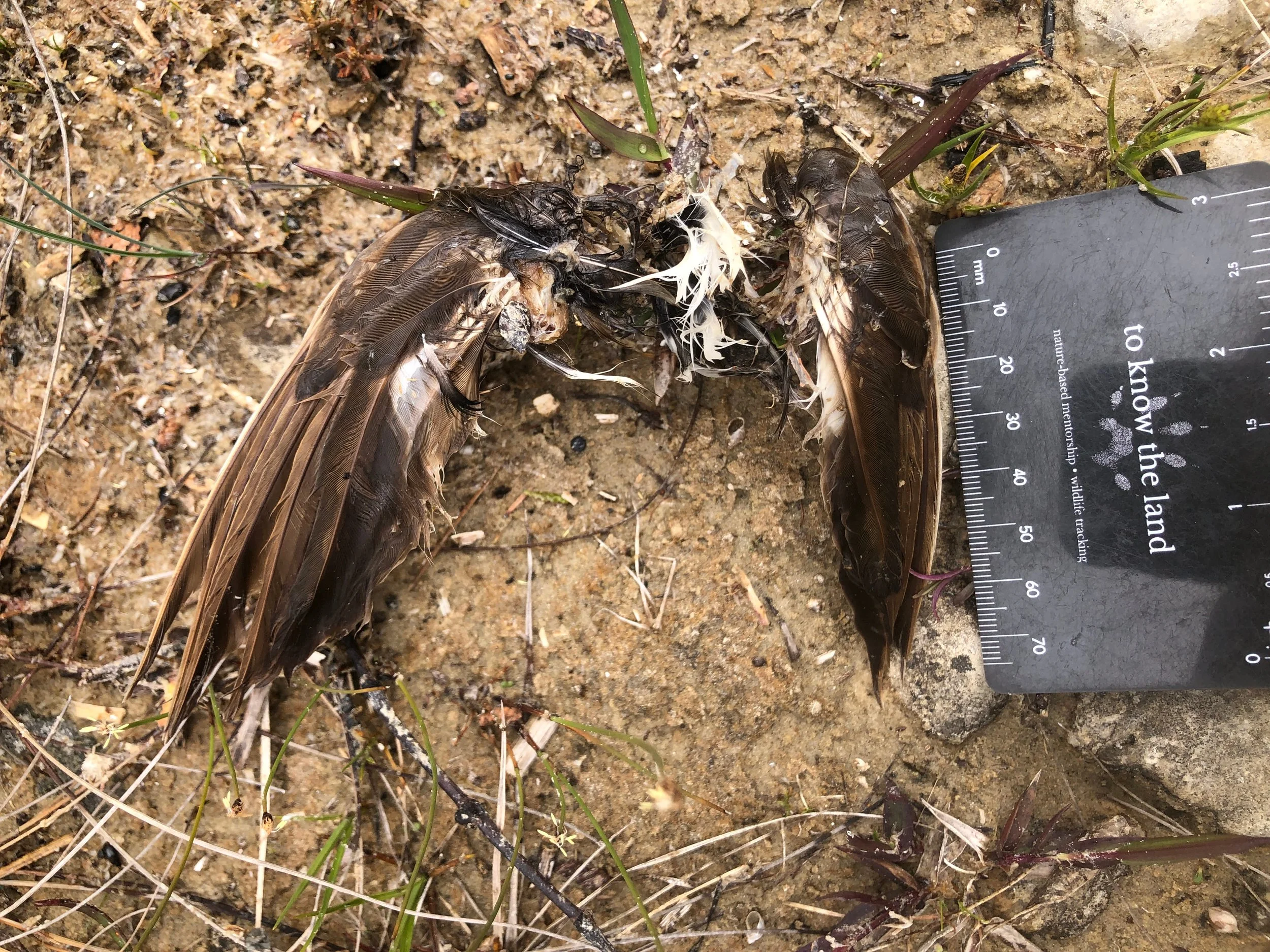
I have yet to be able to identify the bird which got got (though likely a passerine of some kind), but I believe there was a lead on who the possible predator may have been.
This type of remnant spoor is identical to what falcons leave behind when they consume their prey. Both Peregrine Falcons (Falco peregrinus) and Merlins (Falco columbarius) are types of falcons which could be found in the area, and both leave prey remains like this. In Bird Tracks and Sign by Mark Elbroch, Eleanor Marks, and Diane Boretos (Stackpole Books, 2001), they write
Peregrines and [M]erlins eat prey in similar ways, and their kill sites are difficult to distinguish. I've watched both species tear off and drop the wings of warblers and swallows, as well as pick clean the skeleton so well that the remains split in half-two wings, and a few bones. With larger prey, they tend to leave the wings attached to the carcass, and often all that remains are wings, the spinal column, and the pelvic bone.
This was interesting because as we examined this set of wings, attached through some shreds of skin and bone, Alexis shared that a Merlin and Merlin nest have been sighted on this shingle spit in the past, so that could be a clue to whom the predator was.
I can’t remember if it was when we had sat down for lunch or afterwards, but at one point we were sitting when a few people saw a bird flying quick and low being chased by another bird. Alexis said that he believed that one of the birds, the one being chased, was perhaps a Merlin. This would be another indicator that Merlin was responsible for the predation of the bird we had found earlier.
At some point in our day we started to find very similar sign, of predated bird wings held together by bits of flesh and bone. In all we found three Blue Jays, that first one, and six Northern Flicker (Colaptes aurates or Mooningwane) sets of wings, and one single, meaning that there were seven (7!) predated Northern Flickers on that tiny little shingle spit out into Lake Huron.
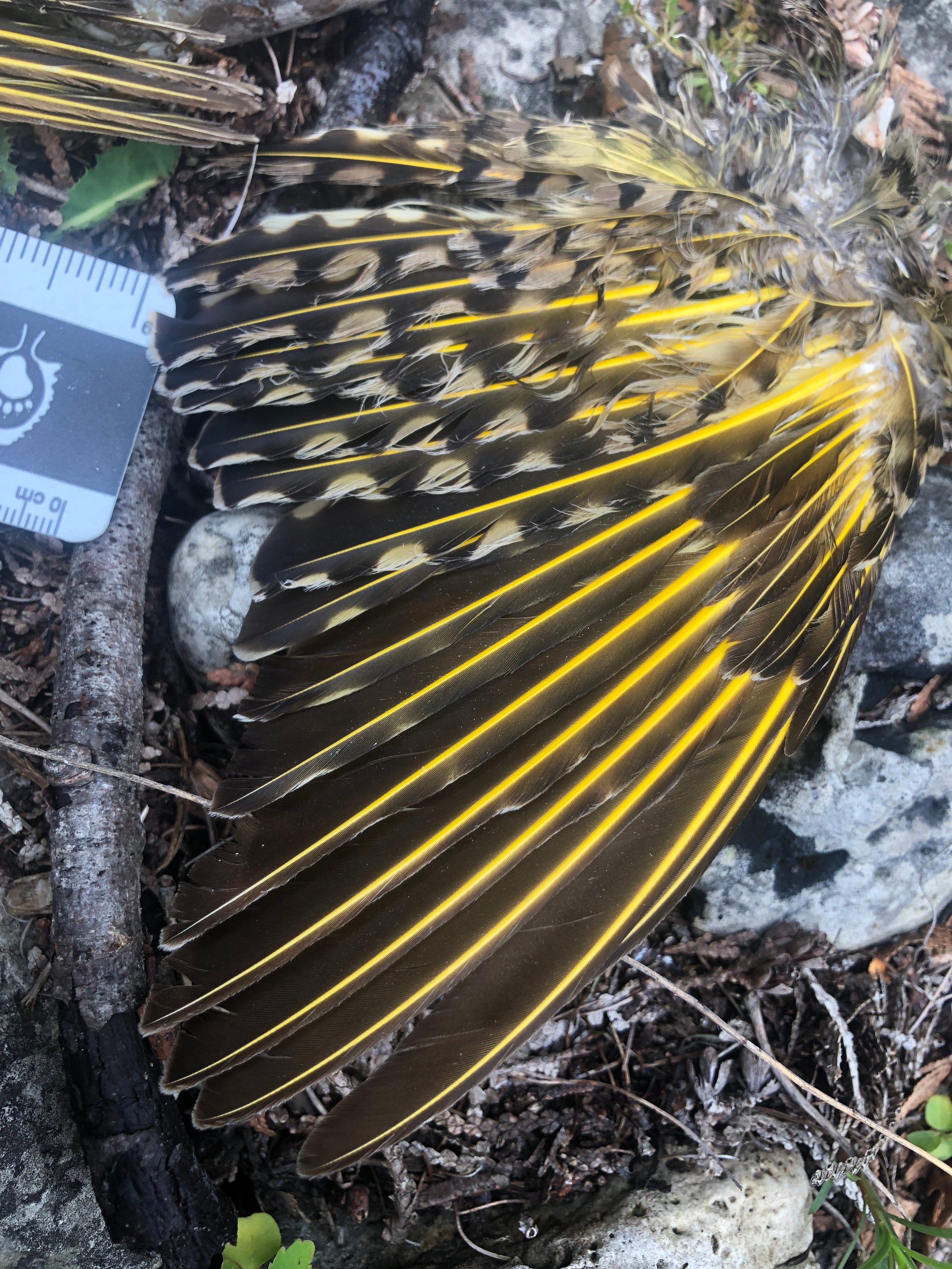
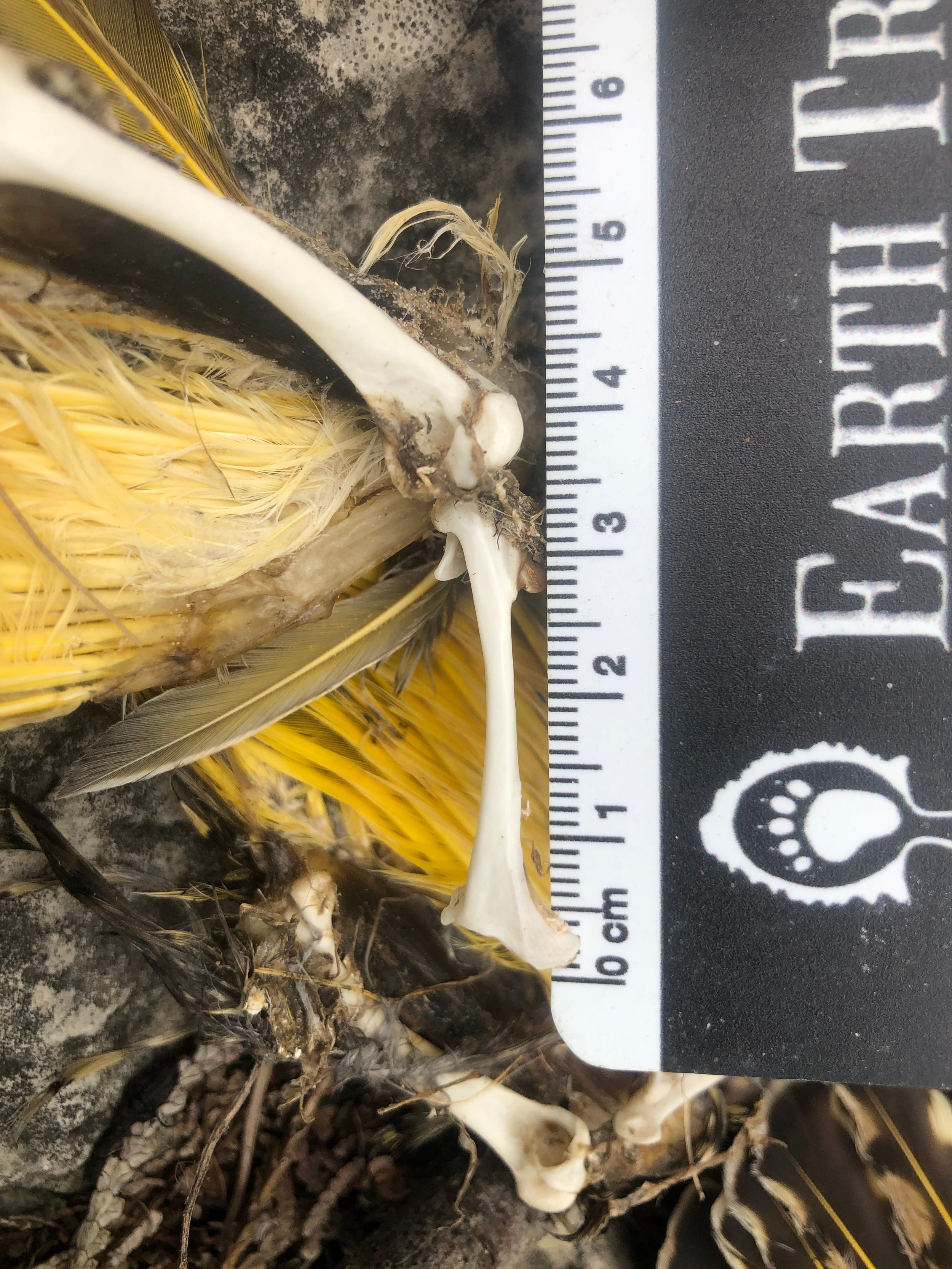
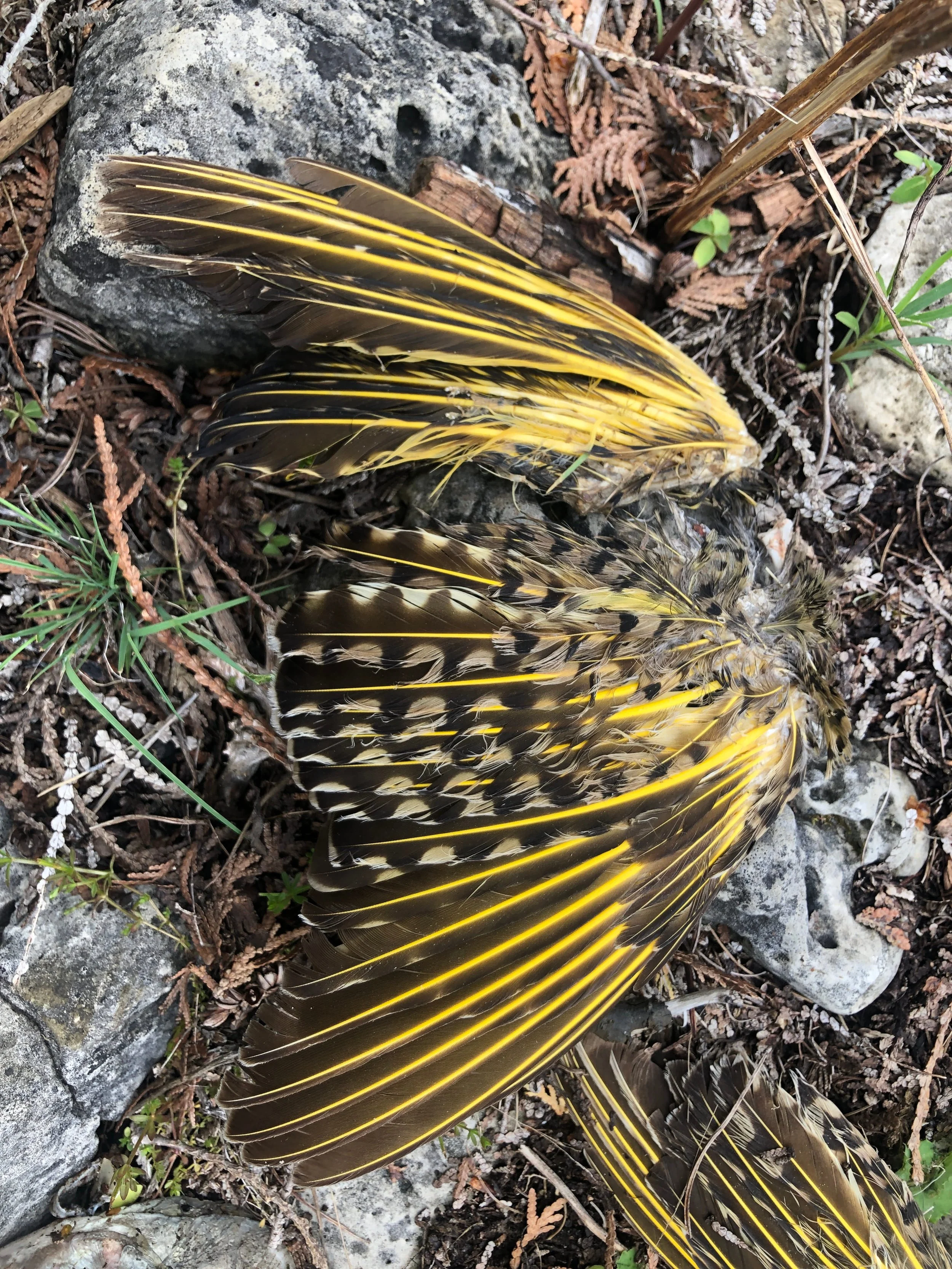
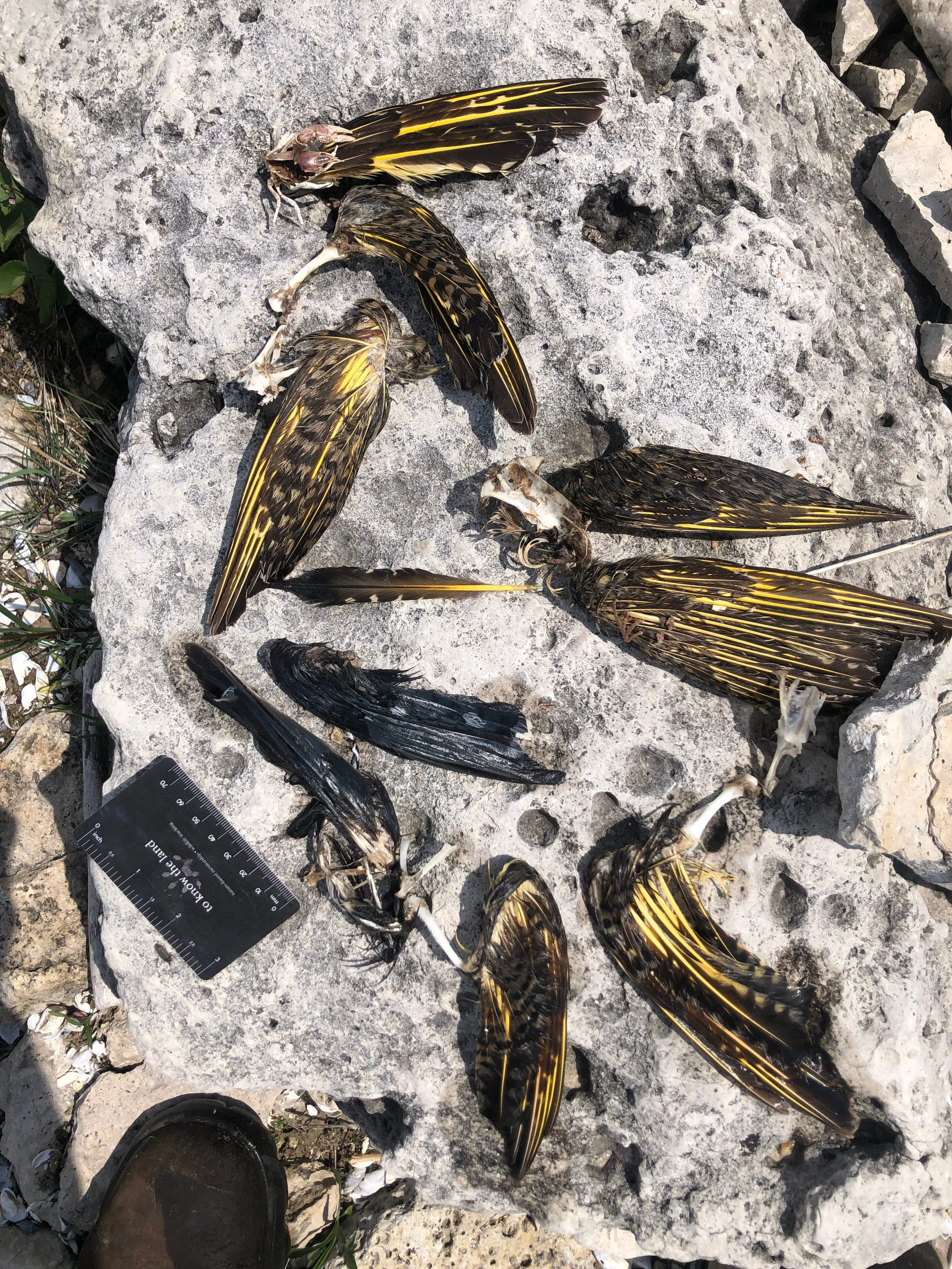
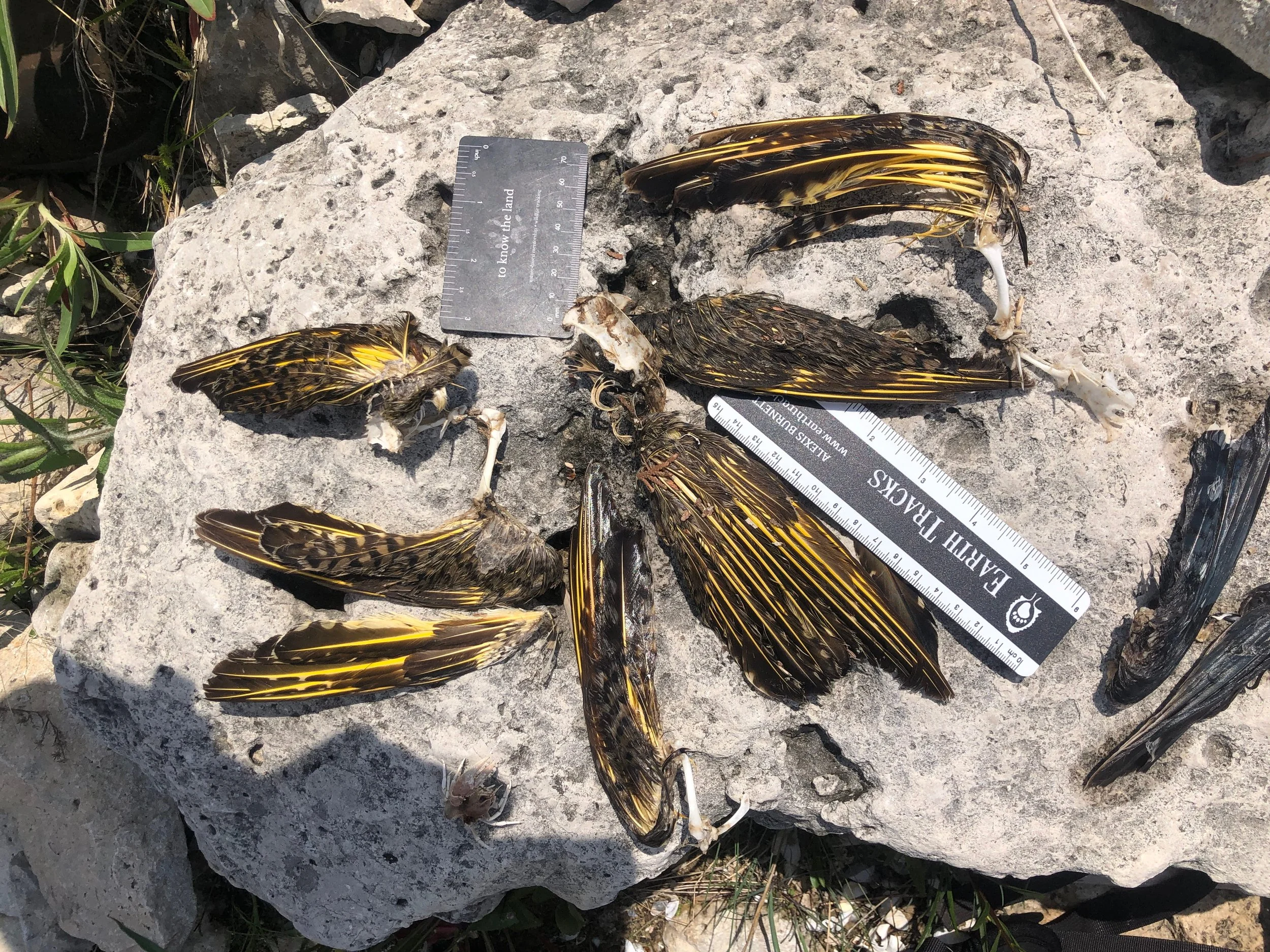
This was pretty incredible to me. I had a lot of fun walking up and down the beach on either side of the rocky spit looking for these unmistakable bright yellow feathers all bundled in a soggy wing. I also got to check out the coracoids and inspect them. What is a coracoid? The coracoid is the largest bone in the shoulder joint of a bird. The coracoids’ function is like that of a strut or a column. It is a structural component of the pectoral girdle and works by resisting compression of the chest cavity by the pectoral muscles when the wings push down. The coracoids protect the lungs from being crushed by the sternum every downstroke of the wings. I have been collecting and documenting the coracoids of many bird species over the past few years in hopes of better learning how to identify a carcass from the coracoids alone (if the feathers and superficial identifying features are displaced or to degraded to recognize).
Here are the five coracoids I collected from the Northern Flickers. They are smaller coracoids, but not as small as the coracoid of another species about the same size, who I may find in the same area as I found these; the Belted Kingfisher (Ceryle alcyon or Ogiishkimanisii). They are also more flared at the base than the Kingfisher, and not as sharp or pointed feeling along the edges as I have found with the Kingfisher.
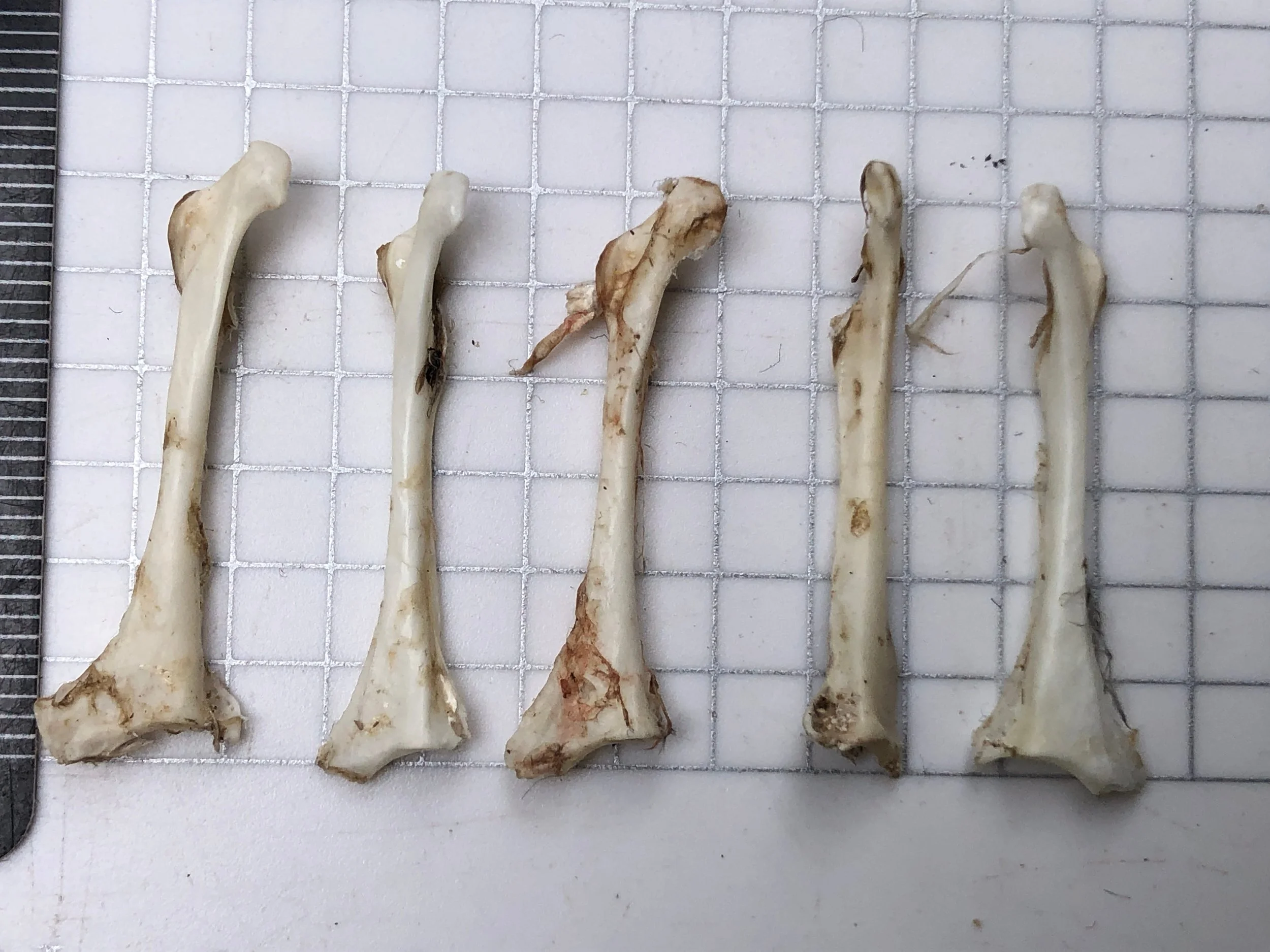
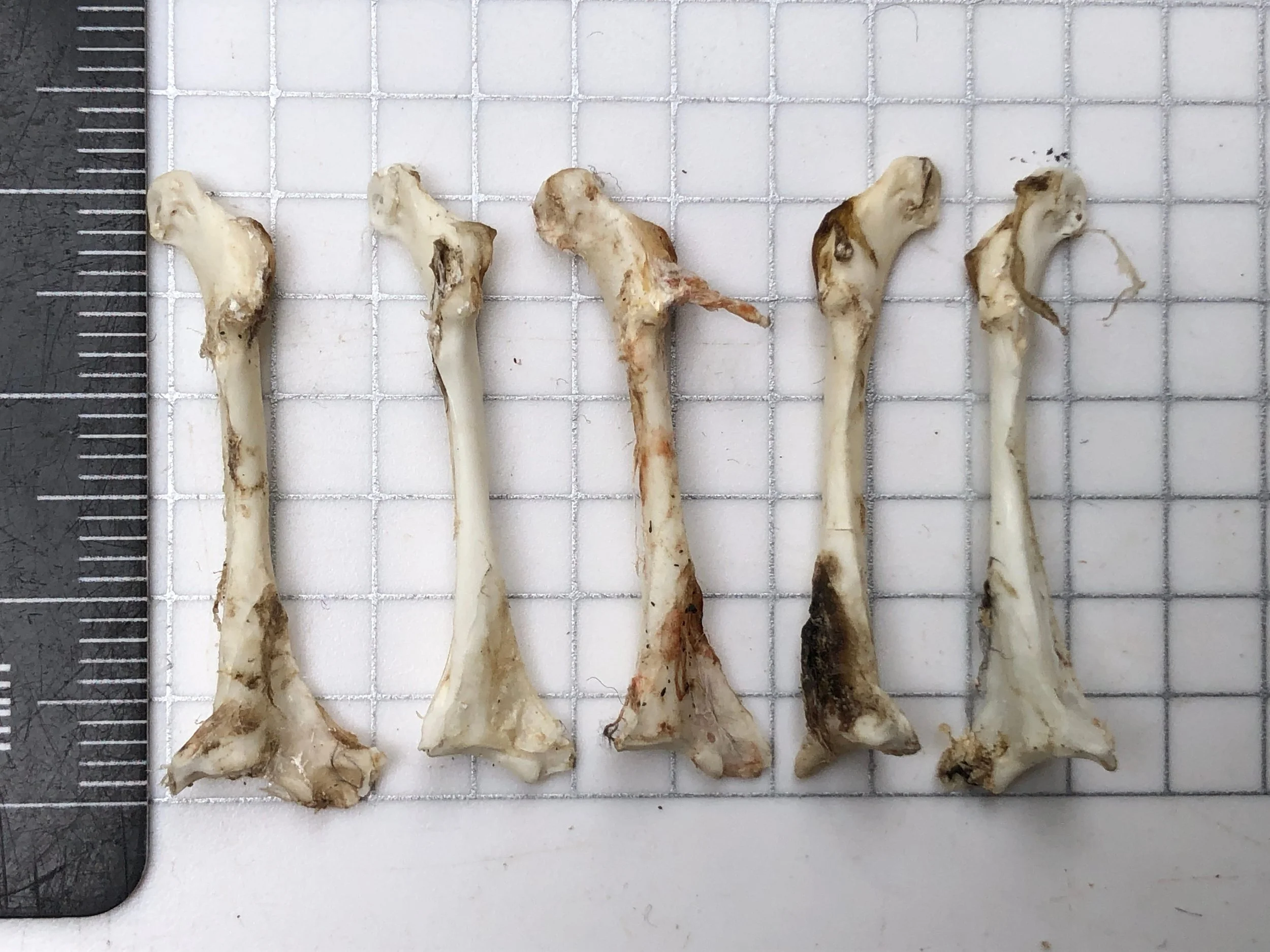
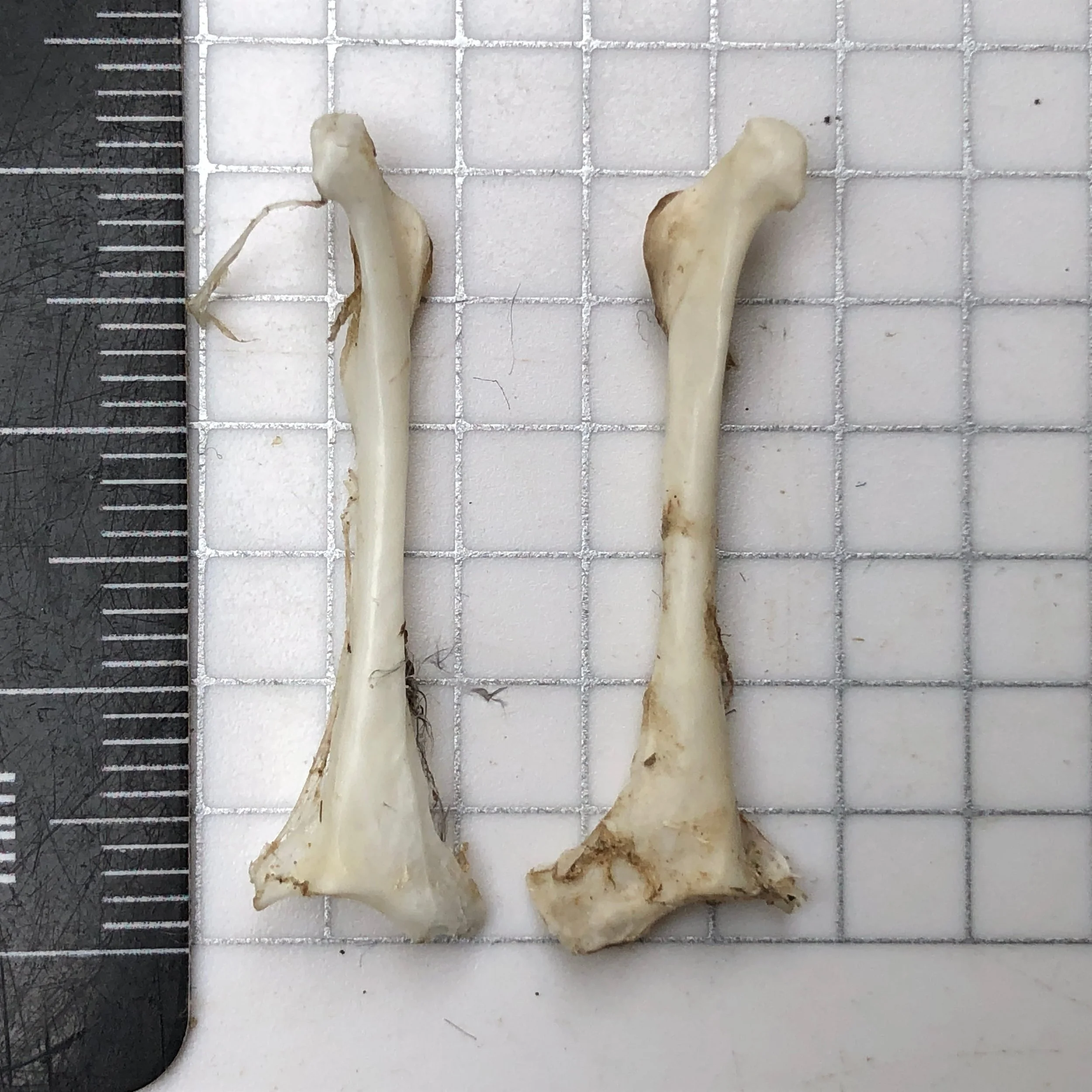
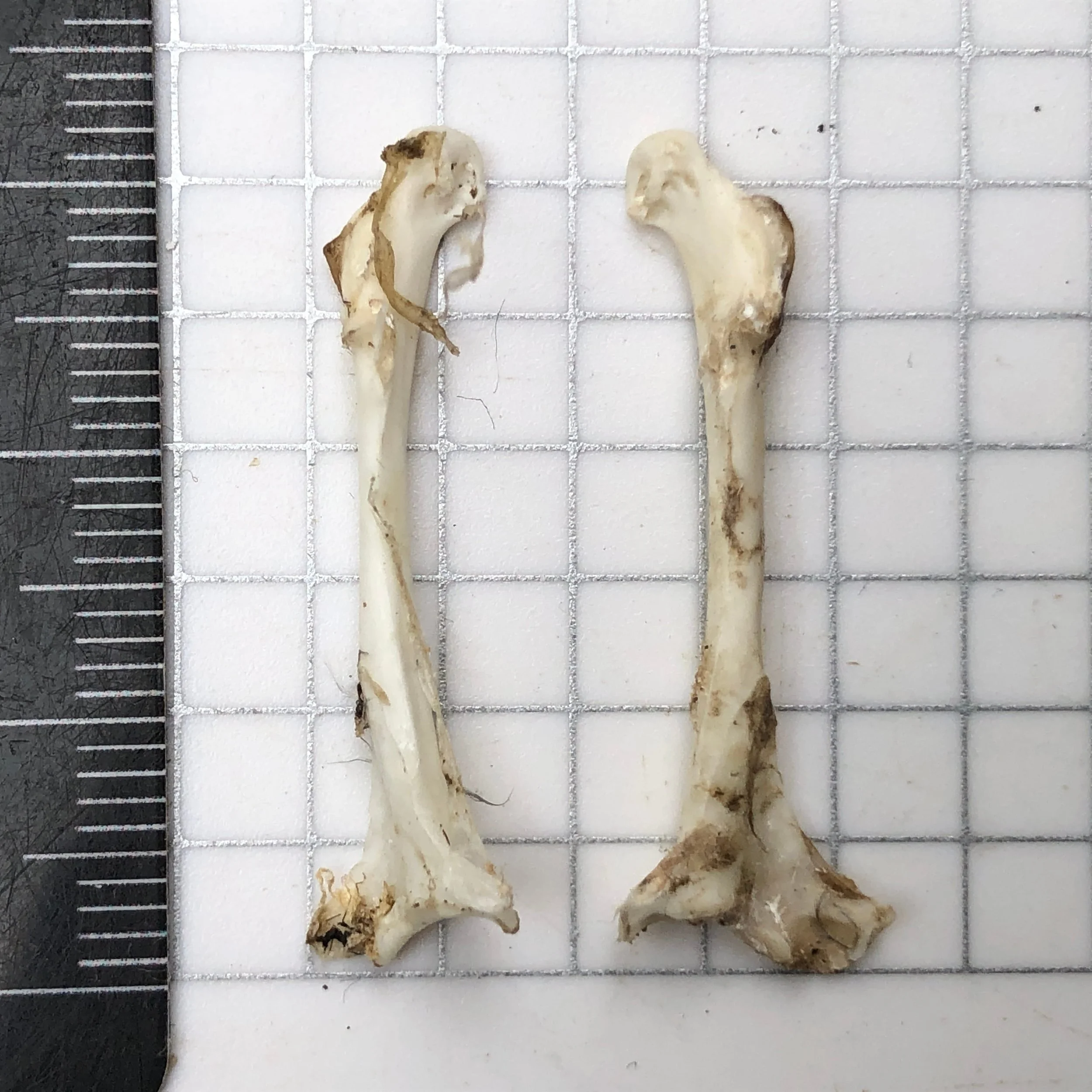
I find it useful to compare with the drawing of a Northern Flicker coracoid from Avian Osteology by Filbert, Martin, & Savage (Missouri Archaeological Society, Inc., 1996). The upturned brachial tuberosity, relatively linear or straight shaft, with the wide flared end with a longer medial side.. these will be key features I will look for in the future. I also wonder at comparing different Woodpeckers (Picidae family) and seeing if their coracoids are similar? For the Anas family, or the Ducks and Geese, there are some similar characteristics which unite the group, and I bet it could also be true for the Picidae.
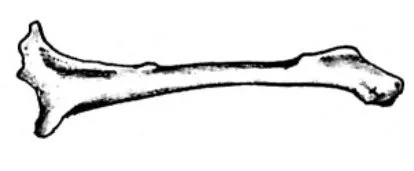
Drawing of left coracoid from Avian Osteology by B. Miles Filbert, Carry D. Martin, Howard G. Savage. Missouri Archaeological Society, Inc., 1996.
We saw and found many more cool discoveries that day (some of which are outlined by Marcus Garvie in his post about the day) including the skull of a Common Loon (Gavia immer or Maang), similar to one found the previous year in the same area.
As always it is fun to go out tracking with new constellations of people who are all invested in learning what they can and deepening that relationship with the land. It’s pretty awesome, and I am wholly, bountifully grateful for the chance to be a part of it.
To learn more :
The Ojibwe People’s Dictionary
Bird Tracks and Sign by Mark Elbroch, Eleanor Marks, Diane Boretos. Stackpole Books, 2001.
Avian Osteology by B. Miles Filbert, Carry D. Martin, Howard G. Savage. Missouri Archaeological Society, Inc., 1996.
Identifying Skeletal Remains of a Common Loon